FIFA officials confirmed that the final bracket for the 48-team World Cup is now complete. This logistical milestone settles the field for the first tournament hosted across three nations, with the United States, Mexico, and Canada preparing to welcome teams from every inhabited continent. The confirmation came on April 1, 2026. Completion of the final playoff rounds solidified the identity of the competitors, yet the announcement shifts the focus from team qualification to individual survival. Managers across the globe now face a narrowing window to select their final 26-man rosters. Intense scrutiny surrounds every tactical decision as national federations prepare for the largest sporting event in history.
African Nations Secure Final Qualification Berths
African qualification cycles concluded with a series of decisive victories that showcased the continent's deepening talent pool. Nine countries secured their places as group winners, including Egypt, Morocco, Tunisia, Algeria, and Ghana. Cape Verde, South Africa, Senegal, and Côte d’Ivoire also topped their respective tables to guarantee participation in North America. These nations represent the established elite of African soccer, but the final spot required a more difficult path through the playoffs. The Democratic Republic of Congo became the tenth African representative after a grueling postseason battle to join the 48-team field. Mohamed Salah played a central role in ensuring Egypt returned to the world stage after the disappointment of missing the 2022 tournament in Qatar. During a critical match in Casablanca, Salah scored twice to lead Hossam Hassan’s side to a 3-0 victory over Djibouti. Egypt secured its finals berth with a game in hand, marking the fourth time the Pharaohs have reached the global tournament. Despite their status as a regional powerhouse, the Egyptian national team has never won a match at the finals. Historical mishaps have plagued their previous attempts to establish a global footprint.
Bizarrely, the Pharaohs did qualify for the first World Cup, in 1930, but missed their boat from Marseille to South America after a storm delayed them.
Severe weather in the Mediterranean prevented the 1930 Egyptian team from reaching the inaugural tournament in Uruguay. This historic blunder remains a unique footnote in international sports history. Modern travel eliminates such risks, but the pressure to perform remains higher than ever for Mohamed Salah and his teammates. Success in the African qualifiers suggests a renewed focus under Hossam Hassan, who has prioritized defensive discipline and efficient counter-attacking. Egypt enters the 2026 tournament seeking to break its winless streak on American soil. Senegal and Côte d’Ivoire also arrive with high expectations, having dominated their qualification groups with nearly flawless records.
England Squad Pressures for Phil McNulty
Phil McNulty, the chief football writer for BBC Sport, has sparked a national debate by projecting his 26-man England squad for the upcoming finals. Selection for the Three Lions remains one of the most scrutinized processes in British sport. Phil McNulty argues that the expanded roster size allows for greater tactical flexibility, yet it also creates more opportunities for high-profile exclusions. Supporters in London and Manchester are already dissecting his choices, specifically in the midfield where surplus talent exceeds available spots. Balancing veteran experience with the explosive energy of younger players is a challenge that has historically troubled England managers.
England enters the 2026 tournament as a primary contender for the trophy. Recent performances in European competition have strengthened confidence, but the weight of expectation often leads to cautious tactical approaches. Phil McNulty suggests that the depth of the current talent pool is the greatest in thirty years. Such abundance forces the coaching staff to consider players who can impact a game from the bench rather than just those who fit the starting eleven. Fans expect a deep run into the knockout stages, especially given the favorable travel logistics for the English side in North America.
Injuries during the final weeks of the domestic season will likely dictate the final selections. Phil McNulty notes that several key defenders are currently racing against time to prove their fitness. Depth at the fullback positions is a particular concern, with three potential starters currently undergoing rehabilitation. National team staff members are monitoring recovery protocols daily. Competition for the final three spots on the plane will likely come down to the performance of players in the final month of the Premier League season.
Mauricio Pochettino Sets USMNT Selection Deadline
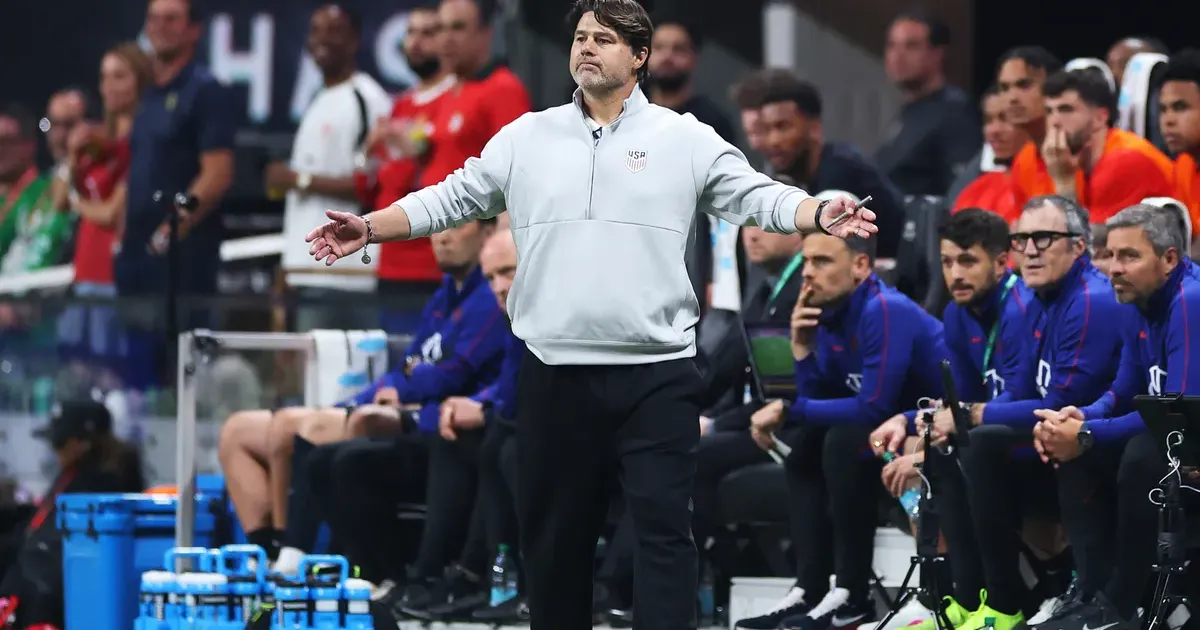
Mauricio Pochettino has established a clear timeline for the United States Men’s National Team roster announcement. The head coach plans to reveal his final selections on May 26, shortly before the USMNT participates in high-stakes friendly matches. These pre-tournament fixtures against Senegal and Germany will serve as the final evaluation period for players on the roster bubble. Mauricio Pochettino has emphasized that no player is guaranteed a spot regardless of their past contributions to the national program. This meritocratic approach has increased the intensity of training camps as athletes compete for limited positions.
Preparation for the home tournament involves balancing commercial obligations with athletic readiness. Mauricio Pochettino must manage a squad that carries the hopes of a nation eager to prove its soccer maturity. The friendly against Senegal is particularly serious because it offers a direct comparison against a top-tier African opponent. Following that match, the USMNT will face Germany in a test of tactical organization and defensive resilience. Both games are sold out, reflecting the soaring interest in soccer across the United States. Pochettino intends to use these matches to solidify his starting lineup for the opening game in June.
Roster decisions for the USMNT are complicated by the diverse leagues in which American players compete. Mauricio Pochettino and his scouting team have spent the last six months traveling between Europe and Major League Soccer venues. Finding a cohesive unit from such a geographically dispersed group of players is a persistent challenge for the coaching staff. Mauricio Pochettino has focused on a high-pressing system that requires peak physical conditioning. Players who cannot meet the aerobic demands of this style are likely to find themselves excluded from the final list. Consistency in performance during the spring months will be the deciding factor for several midfielders currently fighting for inclusion.
Expansion logistics and host-city readiness will shape how fair the early rounds feel for teams and supporters.
FIFA organizers are managing the historic complexity of a 48 teams format spread across three countries. The move from 32 to 48 participants has required huge increases in training facilities and hotel accommodations. Local organizing committees in cities like Atlanta, Toronto, and Mexico City have spent billions on infrastructure upgrades to handle the influx of fans. Travel requirements for teams have tripled, requiring a complex hub-and-spoke transportation model. FIFA expects the tournament to generate record-breaking revenue, though critics point to the environmental cost of such an expansive event.
Broadcasters have adjusted their schedules to accommodate the additional matches. The group stage will now feature more simultaneous games, creating a non-stop cycle of content for global audiences. Revenue projections for the tournament have reached new heights, with some estimates suggesting a total economic impact exceeding $11 billion for the host nations. This financial windfall is a primary driver behind the expansion. Every host city is competing to provide the best fan experience, with enormous fan zones planned in metropolitan centers. The tournament is no longer just a sporting event but a continent-wide festival of commerce and culture.
Logistical experts are currently finalizing the security protocols for the opening ceremonies. Coordination between the FBI, the RCMP, and Mexican federal police has reached a high level of integration. Safety remains the top priority for organizers as they prepare for millions of international visitors. Training for thousands of volunteers is already underway in all sixteen host cities. The successful delivery of the tournament will depend on the seamless interaction of these disparate agencies. Preparations are on schedule for the June kickoff.
Roster decisions have become tournament strategy because one late injury or omission can change the entire group-stage plan.