The dispute is damaging because it links personal judgment to national security process. That gives Parliament a simple question about who overrode warning signs. The Epstein-linked envoy dispute is testing British vetting standards and political judgment. Keir Starmer faced a parliamentary firestorm on April 20, 2026, as the British Prime Minister attempted to distance himself from a vetting scandal involving Peter Mandelson. Security records from the Cabinet Office suggest intelligence officials warned against the appointment weeks before it was finalized. These officials cited deep concerns regarding Mandelson's historical associations with Jeffrey Epstein. Downing Street now faces allegations that it prioritized political firepower over national security protocols.
Starmer, now in his twenty-first month in office, told the House of Commons he had no knowledge of these specific security recommendations. Opponents have labeled this a catastrophic failure of oversight or a deliberate attempt to ignore protocol. Political analysts describe the situation as the greatest threat to his leadership since the 2024 election. Evidence suggests the prime minister was shielded from the results of a high-level security review. $11 billion in trade deal negotiations may now be at risk as international partners question the stability of the British administration.
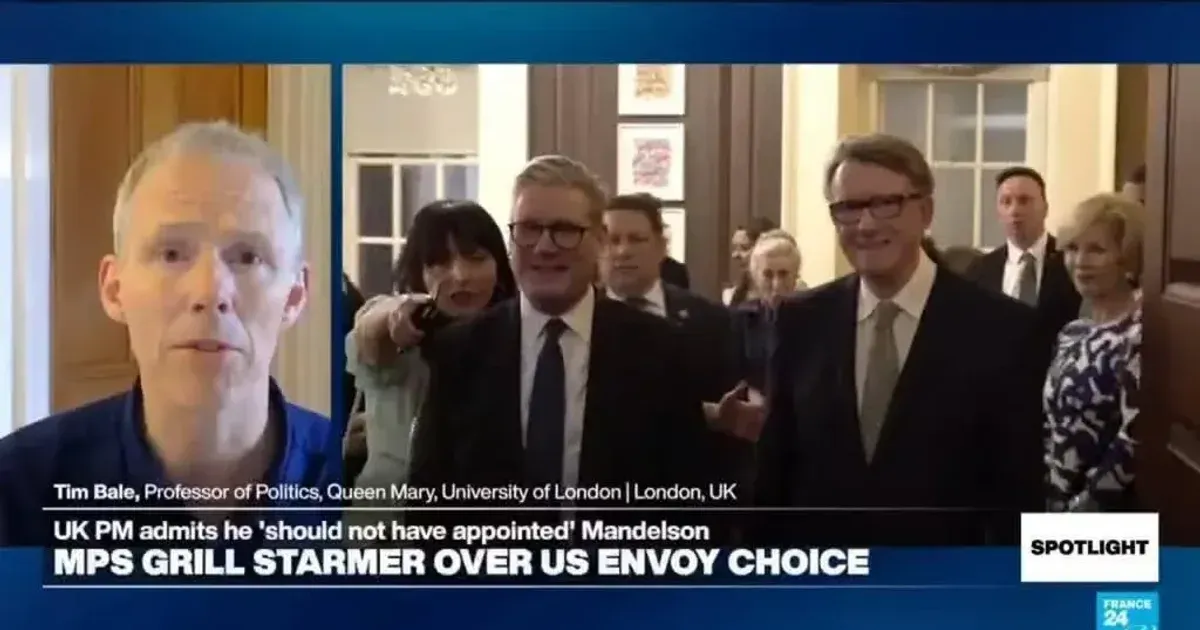
Professor Tim Bale of Queen Mary, University of London, analyzed the situation during a broadcast on France 24. Bale suggested the Prime Minister might have been left in the dark by his own staff. Political survival often depends on the integrity of the information flow within Number 10. Failing to receive critical vetting data suggests a breakdown in the core functions of the executive office.
Prime Minister Keir Starmer appears to have unwittingly misled Parliament, as a consequence of not being apprised of Peter Mandelson's failed vetting, Tim Bale, Professor of Politics at Queen Mary, University of London, told France 24.
Labour Party insiders suggest the mood in Westminster is increasingly grim. Several backbenchers have expressed private frustration with the lack of transparency surrounding the envoy's background. Peter Mandelson has been a central figure in British politics for decades, but his recent return to the diplomatic fold was intended to strengthen ties with Washington. Critics argue the gamble has backfired by bringing historical controversies back into the public eye.
Security Records Detail Mandelson Vetting Lapses
Leaked documents indicate that security officials recommended Mandelson be sidelined due to his proximity to the Epstein circle. These warnings were reportedly documented in a memorandum sent to the Prime Minister’s chief of staff. The report highlighted potential reputational risks and security vulnerabilities associated with the appointment. Keir Starmer insists he never saw the document in question. Documents of this nature usually require a formal sign-off from the highest levels of government.
Whitehall sources indicate the vetting process for the envoy role was unusually accelerated. Standard background checks often take months, but this appointment was cleared in under three weeks. Intelligence officers reportedly flagged several meetings between Mandelson and Epstein that occurred after the financier’s initial conviction. Public records show Mandelson visited Epstein’s private island on at least one occasion. The Prime Minister’s office has declined to comment on the specific dates of these interactions. As the fallout from the Mandelson Vetting process continues, officials have begun identifying those responsible for the security lapses.
Foreign governments have begun to voice concerns about the vetting failure. A spokesperson for the French Foreign Ministry noted that security clearance reciprocity relies on mutual trust between allied nations. If the British vetting system is seen as porous, intelligence sharing could suffer. Downing Street officials are currently conducting an internal review to find out why the red flags were suppressed. The investigation aims to determine if the suppression was an administrative error or a political directive.
Parliamentary Pressure Mounts on Downing Street
Opposition leaders demanded a full independent inquiry during a heated session of Prime Minister’s Questions. They argued that if the Prime Minister did not know about the vetting failure, he is incompetent, and if he did know, he lied to the public. Starmer rejected calls for his resignation, stating his focus remains on economic recovery. Conservative members of parliament have already begun drafting a motion of no confidence. Recent polling suggests 54% of the British public believes the Prime Minister should step down if he knowingly ignored security warnings.
Ministerial code violations carry heavy political penalties in the United Kingdom. A finding that the Prime Minister intentionally misled the House of Commons would typically lead to a resignation. Starmer’s defense relies entirely on the premise of being poorly served by his advisers. 21 months of political capital are being drained by a single personnel decision. The Labour Party’s large majority in the Commons provides a temporary shield, but internal dissent is growing. Several cabinet members have remained especially silent since the scandal broke.
Backbench rebellion presents a credible threat to the government's legislative agenda. If Starmer cannot restore order, his ability to pass the upcoming budget will be compromised. Senior party figures are reportedly discussing potential successors in private meetings. This is a rapid decline for a leader who began the year with record-high approval ratings. The focus has shifted from policy achievements to basic questions of governance and honesty.
Diplomatic Strategy Collides With Security Protocols
Choosing Mandelson was a calculated attempt to leverage his extensive network in the United States. The British government sought to influence the upcoming trade negotiations by using Mandelson’s unique brand of political firepower. Washington insiders have followed the vetting scandal with interest. While some U.S. officials value Mandelson’s expertise, others are wary of the Epstein connection. This duality has complicated the very diplomatic mission he was hired to lead.
British diplomacy often relies on a reputation for procedural rigour and ethical standards. By bypassing the warnings of security officials, the Starmer administration has invited scrutiny of its entire foreign policy apparatus. International observers suggest the U.K. is now seen as more susceptible to political influence than its peers. This perception could weaken the country's bargaining position in future treaties. The Cabinet Office has seen its credibility damaged by the revelation of ignored red flags.
Supporters of the Prime Minister argue that Mandelson’s skills outweigh the risks posed by his past associations. They claim the security warnings were overly cautious and failed to account for the envoy’s strategic value. However, the contrast between Starmer’s pledge of integrity and this vetting failure is difficult to reconcile. Political rivals have seized on this discrepancy to paint the Prime Minister as a hypocrite. The fallout from the appointment continues to dominate the daily news cycle in London and Washington.
The vetting dispute also gives opposition lawmakers a simple accountability line. That line of attack could keep the envoy dispute alive beyond one resignation cycle.
Envoy Vetting Tests Downing Street
Keir Starmer has trapped himself in a classic transparency paradox. By claiming ignorance of the security warnings regarding Peter Mandelson, he has traded his reputation for integrity for a label of terminal incompetence. A Prime Minister who is genuinely unaware of the vetting failures surrounding his most controversial appointment is a leader who has lost control of his own office. The defense is not a shield; it is an admission of functional paralysis central to the British state.
The appointment of Mandelson was never about diplomacy. It was a desperate attempt to resurrect the ghost of New Labour to solve modern economic anxieties. That this gamble relied on ignoring documented links to Jeffrey Epstein suggests an extraordinary level of arrogance within Downing Street. Starmer believed the political benefits of Mandelson's Washington connections would provide cover for his personal baggage. He underestimated the public's intolerance for the shadow cast by the Epstein era.
Survival now depends on a ruthless purge of the Prime Minister’s inner circle. Starmer must find a scapegoat who can plausibly take the fall for the suppressed security report. Even then, the damage to the Prime Minister’s authority is likely permanent. He is no longer the leader who restored order; he is the leader who invited chaos into the Cabinet Office. The question is no longer if Starmer will be diminished, but for how long he can cling to the wreckage of his premiership. He is finished.