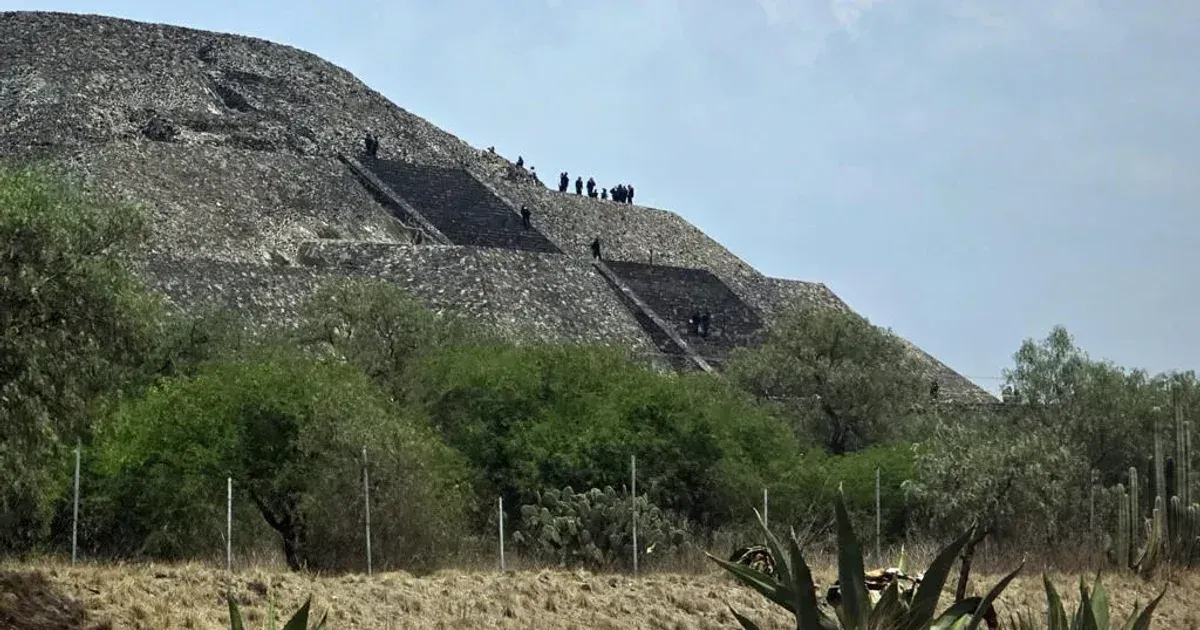
The location raises the stakes because tourist security depends on visible enforcement. The Teotihuacan shooting turned a tourist landmark into a security accountability case. Mexican federal police reported on April 20, 2026, that a gunman targeted international travelers at the Teotihuacan pyramids, resulting in the death of a Canadian woman. Violence erupted at the UNESCO World Heritage site north of Mexico City during peak visiting hours, causing hundreds of tourists to flee the archaeological zone. Local emergency services treated multiple victims on the scene while security forces established a perimeter around the Pyramid of the Sun.
Witness accounts describe a scene of sudden chaos near the entrance of the ancient complex. Gunfire echoed across the Avenue of the Dead, a central thoroughfare that connects the major structures of the site. Security officials from the state of Mexico confirmed that the assailant turned the weapon on himself once he was cornered by responding officers. The motive for the attack remains unclear as investigators begin reviewing surveillance footage from the surrounding area.
Medical teams evacuated six people to nearby hospitals for treatment of gunshot wounds and related injuries. While Mexico City usually maintains a higher security profile than surrounding rural regions, the Teotihuacan site sits within a jurisdiction that has faced sporadic challenges regarding local policing. First responders arrived within minutes of the initial reports, but the Canadian woman was pronounced dead at the scene from multiple ballistic injuries.
Violence Disrupts Teotihuacan Archaeological Site
Archaeological staff and vendors who work daily at the site expressed disbelief at the scale of the violence. Teotihuacan is typically a symbol of Mexican heritage and a primary engine for regional tourism revenue. Security protocols for the site are managed by a combination of the National Institute of Anthropology and History and state-level police forces. Daily attendance figures often exceed several thousand visitors, making the location a high-profile target for any public disturbance.
Diplomatic officials from Canada issued a statement shortly after the identity of the deceased was confirmed. They indicated they are providing consular assistance to the family of the victim while coordinating with Mexican authorities to repatriate the remains. Canadian travel advisories for Mexico have long highlighted risks in certain states, though the Teotihuacan region is generally considered safe for guided tours. Global travel agencies began canceling scheduled excursions to the pyramids as news of the fatality reached international media outlets.
State security personnel conducted a sweep of the grounds to ensure no secondary devices or additional suspects were present. They found the shooter's body near a cluster of souvenir stalls where the initial shots were fired. Preliminary reports from the state prosecutor's office suggest the gunman was a local resident, though formal identification is pending a full forensic autopsy. Police recovered a semi-automatic handgun from the immediate vicinity of the perpetrator.
Security Failure Near Mexico City Pyramids
Questions regarding the presence of armed guards within the archaeological perimeter surfaced immediately during the initial investigation. Recent budget adjustments influenced the number of active-duty officers stationed at the main gates during the spring season. Many tourists noticed a lack of metal detectors or bag checks at certain entry points which allowed the weapon to be brought onto the premises. Security experts frequently debate the balance between maintaining an open historical site and implementing rigorous screening measures.
National Guard units deployed to the site on the afternoon of April 20, 2026, to reinforce the existing police presence. This deployment is a standard procedure when international citizens are victims of violent crime in high-traffic zones. Intelligence analysts noted that the incident likely targeted the visibility of the location rather than the specific nationality of the victims. Crime statistics in the state of Mexico show a rise in armed robbery, but mass shootings at historical monuments are rare.
President Claudia Sheinbaum says she instructed authorities to 'thoroughly investigate' incident outside Mexico City.
Tourism officials fear the long-term impact on the $11 billion annual revenue generated by international visitors to central Mexico. Travelers often perceive the capital and its surrounding historical sites as a bubble of relative safety compared to the northern border states. If that perception shifts, the economic consequences could affect thousands of local families who rely on the hospitality sector. Officials have not yet announced when the pyramids will reopen to the public.
Sheinbaum Orders Investigation into Pyramid Shooting
President Claudia Sheinbaum addressed the nation in a televised briefing to assure the international community of Mexico's commitment to safety. She emphasized that the federal government would take charge of the investigation to ensure transparency and speed. Her administration has faced persistent criticism regarding the 'hugs not bullets' policy legacy, which some political opponents claim has emboldened criminals. The president countered these claims by highlighting recent arrests of high-ranking cartel members in other regions.
Legal experts suggest the investigation will focus on how the assailant bypassed several layers of state and federal oversight. Federal law in Mexico strictly regulates the possession of firearms, yet the black market continues to provide access to handguns. Investigators are looking into the gunman's digital history and personal associations to determine if the attack was pre-planned or a spontaneous act of violence. Forensic teams are currently tracing the serial number of the weapon found at the scene.
Records from the Teotihuacan site management show that security cameras were operational during the shooting. Footage reportedly shows the gunman walking toward a group of tourists before drawing his weapon and firing at close range. The Canadian woman was standing near the front of the group when she was hit. Sheinbaum has promised a full report on the security lapses within forty-eight hours.
Teotihuacan Shooting Tests Tourist Safety
Does the Mexican state possess the actual capacity to protect its most valuable cultural assets when the perimeter of those assets is essentially porous? Rhetoric from the National Palace often suggests that the National Guard provides a sufficient deterrent, but the blood on the stones of Teotihuacan proves otherwise. This incident is more than a tragedy for a Canadian family; it is a catastrophic failure of the Sheinbaum administration’s ability to secure the very locations that define the nation’s international brand. When a lone gunman can stroll into a UNESCO site and execute a foreigner before killing himself, the concept of 'sovereign control' becomes a polite fiction. Economic dependence on tourism has turned Mexico into a hostage of its own safety records. The government will likely respond with a heavy-handed, temporary show of force involving armored vehicles and camouflage-clad troops, but these are aesthetic solutions to structural problems. Real security requires a total overhaul of the corrupt local police forces that frequently ignore the precursors to such violence. If the government cannot guarantee the safety of travelers at its primary historical monument, it cannot expect the continued flow of foreign capital that sustains the national budget. The pyramids survived the collapse of a civilization, but they might not survive the incompetence of modern Mexican security policy. Total failure.