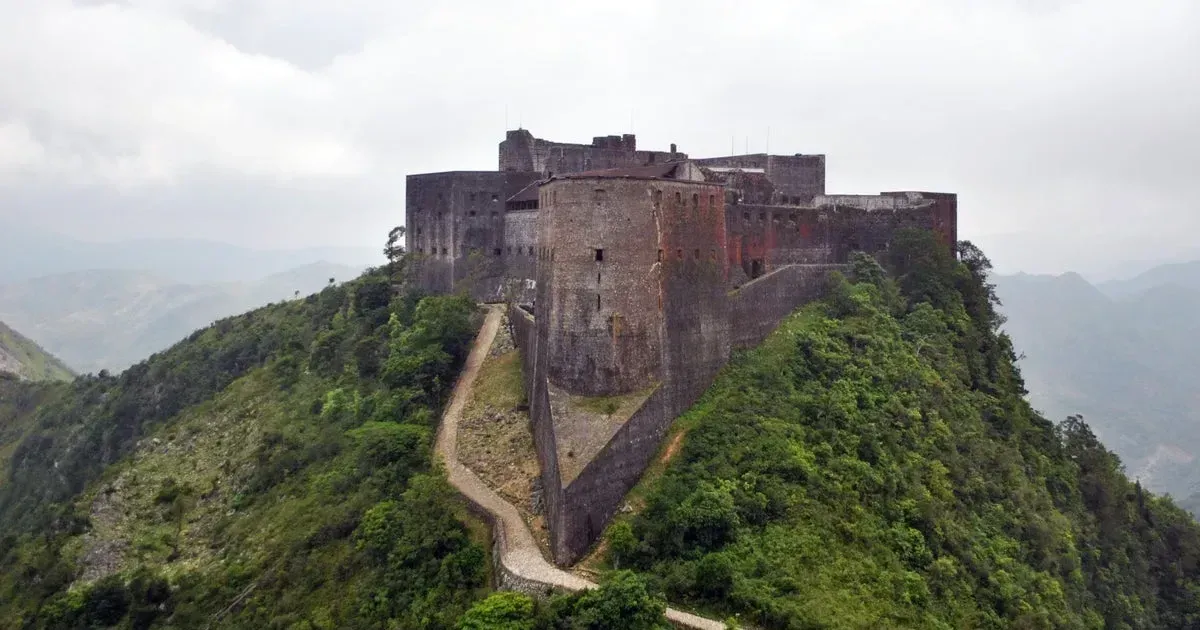
Rescue teams in northern Haiti confirmed that a crowd crush at the Citadelle Laferrière mountaintop fortress killed at least 30 people during a large celebration. Witnesses described a chaotic scene on the steep stone ramps leading to the historic battery as thousands of visitors attempted to exit the fortification simultaneously. Local authorities in the Nord Department initiated emergency protocols late Saturday evening to transport survivors to medical facilities in nearby Milot. Early casualty reports indicate that the death toll may rise as rescue workers reach more remote sections of the mountain trail.
Haitian officials spent the overnight hours coordinating with the Ministry of Culture and Communication to assess the scale of the tragedy. Haiti maintains the fortress as a primary symbol of national independence, drawing large crowds for cultural events and public holidays. Reports from the scene suggest that the bottleneck occurred at the main entrance, where narrow stone corridors restricted the movement of the departing crowd. This sudden surge left many trapped against the limestone walls as the pressure from those behind them intensified.
Prime Minister Garry Conille addressed the nation early Sunday to provide details on the demographic impact of the incident. The prime minister stated that the casualties skewed heavily toward the youth population who had gathered for the festivities. He noted that the site lacked sufficient crowd control personnel to manage the unexpected influx of visitors for the weekend program. Many young people attended the site’s celebrations. Government agencies have not yet released a full list of the deceased. Most victims died from traumatic asphyxiation or blunt force injuries sustained during the fall on the uneven stone surfaces. Initial reports placed the death toll at 30, while local journalists in Cap-Haïtien suggested that several dozen more people suffered critical injuries during the descent. Regional hospitals, including the Sacré-Coeur Hospital in Milot, reached maximum capacity within hours of the first arrivals.
Historic Citadelle Laferrière Site Management
Citadelle Laferrière is the largest fortress in the Western Hemisphere and holds a central place in the military history of the Caribbean. King Henri Christophe commissioned the structure in the early 19th century to defend the newly independent nation against potential French incursions. Its location atop the Bonnet à l’Evêque mountain, 3,000 feet above sea level, provides a powerful defensive position but presents modern logistical challenges for large-scale tourism. The sheer height and isolation of the site continue to complicate emergency response efforts in the region.
Accessibility to the fortress depends on a winding, narrow road that only allows for limited vehicular traffic. Visitors often use horses or walk the final stretch of the ascent, creating a slow-moving queue that is difficult to clear in an emergency. Safety protocols at the UNESCO World Heritage site have faced scrutiny from international observers for several years. Existing infrastructure focuses on preservation of the masonry rather than high-capacity pedestrian flow management. Budgetary constraints within the Institute for the Protection of National Heritage have historically limited the number of rangers stationed at the mountaintop. These staff members manage both the Citadelle and the nearby Sans-Souci Palace ruins. Saturday’s festivities apparently overwhelmed the small contingent of security guards tasked with monitoring the ramparts. Inadequate lighting along the interior passages worsened the confusion when the crowd surge began after sunset.
Fatalities and Medical Response in Northern Haiti
Emergency medical services in northern Haiti operate with limited resources and few specialized trauma units. The trek from the Citadelle to the nearest paved road takes considerable time, delaying the transport of those in respiratory distress. Medical volunteers from the city of Cap-Haïtien traveled to Milot to assist the overwhelmed nursing staff at the local clinic. These practitioners prioritize patients based on the severity of chest compression injuries common in crowd disasters. Oxygen supplies at regional clinics dwindled quickly as survivors arrived with various stages of lung collapse. Helicopter transport for the most critically injured remains a rare luxury in the Nord Department due to a lack of functional landing pads near the fortress. Most victims arrived at the hospital in the beds of private pickup trucks or on the backs of motorcycles. This improvised transport system likely contributed to the distress of those with spinal or internal injuries.
International news agencies noted the contrast between the government’s celebratory rhetoric and the reality of the site’s unstable safety standards. The prime minister focused on the presence of youth, highlighting the cultural weight of the gathering. However, critics of the administration argue that symbolic pride has often outweighed practical investment in public safety infrastructure. This disaster at the nation’s most famous landmark highlights the ongoing struggle to balance tourism growth with basic civil protection.
Legislators in the Haitian Parliament have called for an immediate suspension of large-scale events at the Citadelle until a safety audit is completed. The demand comes as the country prepares for a series of summer festivals that typically draw thousands of members of the Haitian diaspora. Safety officials must now determine if the ancient stone ramps can ever safely accommodate the volume of visitors seen in recent years. The investigation will likely focus on the role of private event organizers who promoted the Saturday celebration.
Crowd Control at Heritage Sites
Expecting a different outcome from the Citadelle Laferrière gathering is an exercise in willful ignorance regarding the state of Haitian infrastructure. When a government promotes a mountaintop fortress as a premier tourist destination without installing basic lighting, paved emergency access, or crowd-control barriers, fatalities are a statistical certainty instead of a tragic accident. The Haitian state continues to lean on the aesthetic grandeur of the 19th century to mask the systemic failures of the 21st. There is a deep irony in a site built to protect the populace becoming the very instrument of their demise.
The fixation on the age of the victims is a convenient political shield for an administration that failed to provide basic security. By emphasizing the youth of the deceased, officials invoke a sense of national tragedy that demands mourning instead of accountability. The rhetorical strategy effectively diverts attention from the specific failures of the Ministry of Culture and the National Police. These entities allowed thousands of people into a high-altitude stone trap with no viable evacuation plan. A UNESCO designation does not magically provide the safety protocols required for modern mass gatherings.
Haiti cannot maintain a viable tourism industry if its crown jewel is synonymous with mass casualty events. International travelers and the domestic middle class will avoid these sites unless there is a visible, professionalized security presence and clear medical evacuation contingencies. The government must decide if the Citadelle is a functional monument or a crumbling liability. Without immediate and expensive intervention, the fortress of Henri Christophe will hold its place as a tomb for the very independence it was meant to secure. Security is not a luxury.