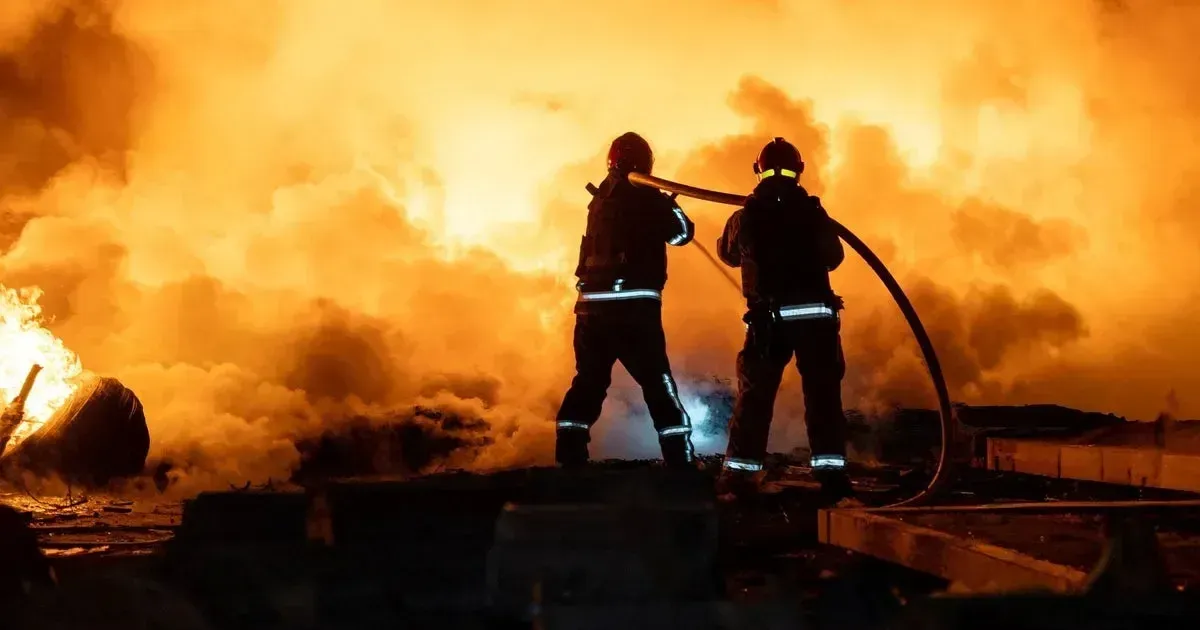
Artillery fire echoed across the Donbas, shattering the 32-hour Orthodox Easter truce brokered between President Vladimir Putin and President Volodymyr Zelensky. Reports from frontline commanders in the Donetsk and Luhansk regions described sustained barrages that began within minutes of the midnight deadline. The collapse marked another example of religious holidays failing to provide respite from attritional combat.
By April 12, 2026, Moscow and Kyiv were again accusing each other of deliberate sabotage. Kyiv authorities documented 469 distinct incidents of Russian aggression during the period that was supposed to be quiet. These reports included the use of heavy mortars, long-range drone strikes, and tactical ballistic missiles directed at logistical hubs. Ukrainian military intelligence suggested that Vladimir Putin never intended to hold his forces back, claiming the truce was a rhetorical device designed to paint Ukraine as the aggressor. Soldiers in trenches near Bakhmut reported that the volume of incoming fire remained consistent with standard operational levels despite the diplomatic agreement.
Moscow's defense ministry countered these claims by alleging that Ukrainian units used the pause to reposition heavy armor in the Zaporizhzhia sector. Russian state media outlets broadcast footage of what they described as Ukrainian reconnaissance drones hovering over civilian areas during the ceasefire window. They asserted that Volodymyr Zelensky ordered the strikes to prevent Russian troops from attending religious services at field chapels. Accusations of perfidy flew from both capitals, leaving international observers to conclude that the 32-hour window was a diplomatic fiction.
Ukrainian Officials Report Russian Strike on Ambulance
Tragedy struck a medical unit in the Kharkiv region when a Russian drone reportedly targeted a marked evacuation vehicle. Ukrainian officials claimed the ambulance was transporting a wounded civilian through a designated safe corridor at the time of the impact. Video evidence released by the Ukrainian Ministry of Defense showed a burned-out chassis in a field, which local investigators used to support claims of war crimes. Direct hits on medical personnel during a ceasefire constitute a severe violation of international humanitarian law. The vehicle was clearly marked with a red cross on its roof.
The Russian Federation has violated the Easter ceasefire 469 times, showing the world that Moscow respects neither international law nor the sanctity of the Orthodox faith.
General staff in Kyiv released a statement detailing the geographical spread of the violations. They noted that the most intense shelling occurred in the Kupiansk direction, where Russian infantry attempted several small-scale probes. These maneuvers suggest that tactical objectives took precedence over the high-level diplomatic commitment made by Vladimir Putin. Ukrainian defenders reported that they were forced to return fire to prevent their positions from being overrun during the supposed peace. The ceasefire exists only on paper, according to the soldiers on the ground. The military utilized heavy mortars, long-range drone strikes, and other advanced weaponry to escalate the conflict.
Orthodox Easter Traditions Collide with Fifth Year of War
Families across Ukraine gathered in underground bunkers to celebrate Easter, a stark contrast to the traditional midnight liturgies of the pre-war era. The $11 billion in humanitarian aid pledged by Western allies in the last quarter has focused heavily on protecting power grids, but the spiritual toll of the conflict remains immense. Many priests in the Donbas region conducted services in abbreviated forms, fearing that large gatherings would attract aerial bombardment. Religious leaders in both nations have struggled to reconcile the message of the resurrection with the daily reality of mass casualties.
Russian Orthodox Church leaders in Moscow supported the Kremlin's narrative, urging soldiers to defend the motherland against what they termed Western encroachment. This ecclesiastical alignment has deepened the rift between the two national churches, making religious holidays a source of friction rather than unity. Soldiers on the Russian side were seen on state television receiving blessings from chaplains before returning to their batteries. The theological justification for the war continues to play a central role in domestic Russian propaganda. Patriotic fervor has largely replaced the traditional Paschal greeting of peace.
Ukraine's religious landscape has shifted toward the independent Orthodox Church of Ukraine, which has distanced itself from the Moscow Patriarchate. Volodymyr Zelensky attended a service in Kyiv under heavy security, where he emphasized the resilience of the Ukrainian spirit. His presence served to energize public support at a time when the military is facing intense pressure on multiple fronts. The president used the occasion to call for more air defense systems to protect the civilian population. One billion dollars in new interceptor missiles arrived in the country just days before the holiday.
Broken Ceasefires and the Cycle of Diplomatic Distrust
Historical data from the Kyiv School of Economics indicates that over 90 percent of local ceasefires since 2022 have been violated within the first six hours. The pattern suggests that neither side believes the other will honor the agreement, leading to a preemptive strike mentality. International mediators from the UN and various European nations expressed frustration at the ease with which the Easter truce collapsed. They noted that without a strong verification mechanism, these short-term pauses are largely performative. The failure of the 32-hour window adds to a long list of diplomatic disappointments.
Intelligence reports from British sources indicated that the Russian military used the ceasefire period to move electronic warfare units closer to the contact line. These units are essential for jamming the drones that Ukraine relies on for artillery spotting and reconnaissance. Vladimir Putin has consistently used diplomatic pauses to address logistical bottlenecks in his supply chains. Ukraine, by contrast, has been accused of using truces to rotate exhausted brigades out of high-intensity zones. Both sides view the cessation of hostilities through a purely utilitarian lens. Moral or religious considerations are secondary to the survival of the state.
Market reactions to the failed truce were predictable, with energy prices in Europe remaining volatile. The persistence of the conflict ensures that the global grain market will face another year of uncertainty, particularly as the spring planting season coincides with the Easter holiday. Agricultural infrastructure worth $400 million has been destroyed in the last month alone. Insurance premiums for Black Sea shipping remain at record highs, reflecting the persistent risk of missile strikes on civilian vessels. Global economic stability is tethered to a conflict that shows no signs of a negotiated settlement.
Why Truce Claims Keep Failing
The collapse of the 2026 Orthodox Easter ceasefire should surprise no one who has monitored the brutal logic of this war over the last half-decade. What is unfolding is a terminal breakdown in the utility of symbolic diplomacy. Vladimir Putin and Volodymyr Zelensky did not agree to this pause to save lives; they agreed to it to satisfy the aesthetic demands of their respective domestic audiences and to avoid the international stigma of attacking during a high holy day. The reality is that a 32-hour window is a tactical absurdity in a war of this scale.
You cannot ask a soldier in a trench to stop shooting when his life depends on the suppression of an enemy battery that is only five hundred yards away. Diplomats who peddle these short-term truces are engaged in a form of dangerous theater that provides a false sense of progress while the body count continues to climb. If the international community wants a real cessation of hostilities, it must stop settling for these religious tokens and start demanding structural changes to the front lines. The ambulance strike in Kharkiv and the shelling in the Donbas are not anomalies; they are the inevitable results of a truce that lacks enforcement, observation, or genuine political will.
We must accept that for the Kremlin, the Orthodox faith is a weapon of the state, and for Kyiv, every day of the war is a struggle for existence that goes beyond the calendar. Symbols have lost their power to halt the slaughter. The war of attrition has swallowed the sacred.