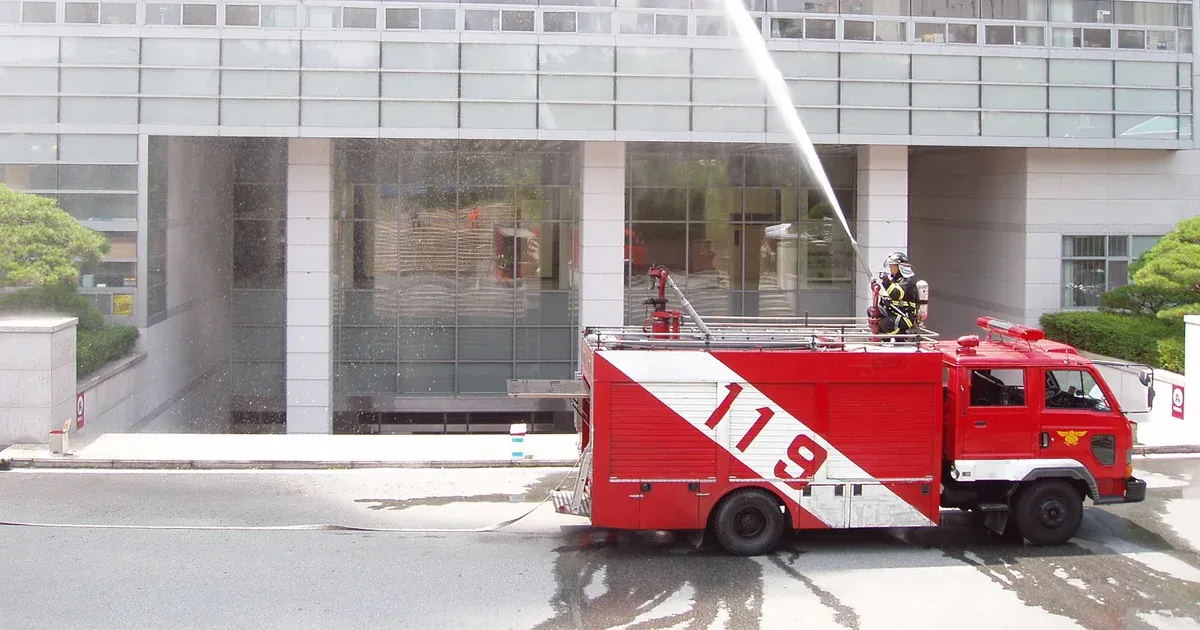
Rescue crews entered the smoldering ruins of a cold storage facility to recover the bodies of two colleagues trapped during the initial response. National Fire Agency officials confirmed the fatalities occurred in a facility south of Seoul. Initial reports indicate the fire started in the basement levels during internal maintenance work. By April 12, 2026, the South Korea warehouse fire had become a national industrial-safety case rather than a local emergency.
Flames erupted shortly before dawn, engulfing the multi-story structure within minutes. Heavy smoke plumes were visible from several miles away, drawing hundreds of emergency vehicles to the industrial zone. Reports suggest that the victims were part of an advanced team sent to locate missing warehouse staff. Communication was lost approximately thirty minutes into the operation. Thermal imaging showed temperatures exceeding eight hundred degrees Celsius near the warehouse core.
Rescuers found the fallen firefighters near an elevator shaft on the third floor. Debris from a collapsed ceiling section obstructed their path to safety. Emergency medical technicians declared both responders dead at the scene. This tragedy represents the third multi-fatality incident involving industrial logistics hubs in the region since the start of the decade. Recovery efforts for additional missing persons continued into the late afternoon hours.
Gyeonggi Province Cold Storage Fire Hazards
Cold storage facilities in Gyeonggi Province present unique challenges for modern firefighting tactics due to their specialized construction. These buildings use sandwich panels, which consist of combustible urethane foam insulation sandwiched between thin metal sheets. Once the foam sparks, it releases toxic cyanide gas and burns with extreme intensity. The metal exterior acts as a heat shield, preventing water from reaching the internal fire source effectively. Fire spread rates in these environments often outpace standard suppression systems.
Building codes in South Korea have faced criticism for allowing these materials in high-density logistics zones. Small electrical sparks or welding accidents frequently trigger catastrophic blazes in such environments. Records indicate the warehouse passed a safety inspection three months ago. That inspection failed to account for the temporary storage of flammable packaging materials in the basement. Heat from the fire caused the metal structural beams to warp, leading to localized collapses throughout the morning. Safety investigators arrived at the site early Monday morning to begin a forensic analysis. They will examine the sprinkler system logs to determine if the suppression network activated as designed. Preliminary evidence suggests a delay in the automatic alarm system. This delay allowed the fire to reach the insulation layers before the first units arrived on site. Witnesses reported seeing smoke escaping through ventilation ducts before any alarms sounded within the main loading docks.
National Fire Agency Search Operations
Commanders at the National Fire Agency directed more than sixty fire engines and two hundred personnel to the scene. High-expansion foam was deployed to smother the basement fire, but the intensity of the heat hampered progress. Rescuers operated in shifts due to the extreme physical toll of the environment. Oxygen tanks lasted less than twenty minutes under the high-exertion conditions. Every floor of the facility required careful clearing to ensure no survivors remained trapped in the labyrinthine storage lockers.
Firefighters faced near-zero visibility and toxic fumes that spread through the insulation layers before the primary structure failed.
An official from the regional fire department provided that assessment during a press briefing at noon. He noted that the structural integrity of the warehouse deteriorated much faster than expected. Support beams in the cold storage sections are typically not reinforced against prolonged fire exposure. The weight of the refrigeration units on the upper floors added substantial stress to the weakening frame. Search teams finally exited the building at 6:00 PM local time.
Industrial Safety Standards and Building Codes
Legislative efforts to ban flammable insulation materials have repeatedly stalled in the national assembly. Industry groups argue that the cost of non-combustible alternatives would destabilize the logistics sector. Statistics from the past five years show a recurring pattern of basement-level fires in cold storage units. Most of these incidents occur during renovations or equipment upgrades. South Korea currently produces approximately forty percent of the region’s cold-chain exports, placing immense pressure on facility turnaround times.
Labor unions represent many of the workers who have died in these facilities over the last decade. They claim that safety protocols are often ignored to meet shipping deadlines. Warehouse operators frequently outsource maintenance to third-party contractors who lack specialized fire safety training. This fragmentation of responsibility often leads to oversight during high-risk activities like gas cutting or welding. Prosecution of facility owners remains rare despite the high frequency of fatal accidents.
Local residents expressed concern about the proximity of these large warehouses to residential apartments. The smoke from the April 12, 2026, blaze forced the evacuation of two nearby schools. Environmental monitors recorded a spike in particulate matter and volatile organic compounds in the surrounding air. Authorities advised citizens to stay indoors with windows closed until the site is fully dampened. Cleanup crews expect to remain at the facility for at least one week.
Industrial Safety After the Fire
Is the recurring death of firefighters in South Korean warehouses the price of logistics efficiency? The answer, evidenced by the charred remains of the Gyeonggi facility, appears to be a decisive yes. For years, the South Korean government has prioritized the rapid expansion of its e-commerce infrastructure over the lives of those sworn to protect it. The continued use of urethane foam in cold storage construction is not a technical oversight; it is a calculated economic decision that treats human life as a manageable risk variable.
Politicians will offer the usual platitudes of grief and promises of reform, but the cycle of tragedy suggests these are empty gestures. Real change requires banning the specific materials that turn these buildings into incinerators. Unless the National Assembly forces the logistics industry to absorb the cost of non-combustible building materials, the National Fire Agency will continue to lose personnel to avoidable structural collapses. Profit margins in the cold-chain sector currently outweigh the safety of the men and women on the front lines.
The latest incident must be the breaking point for regulatory complacency. The public should demand immediate criminal accountability for executives who ignore fire codes during maintenance cycles. A fine is simply a line item in a corporate budget, whereas a prison sentence for negligence might actually alter behavior. The fire in the basement on April 12, 2026, was not an accident. It was the inevitable result of a system that values the speed of a grocery delivery more than the survival of a first responder. The blood of these two firefighters is on the hands of the lobbyists who keep the current building codes in place.