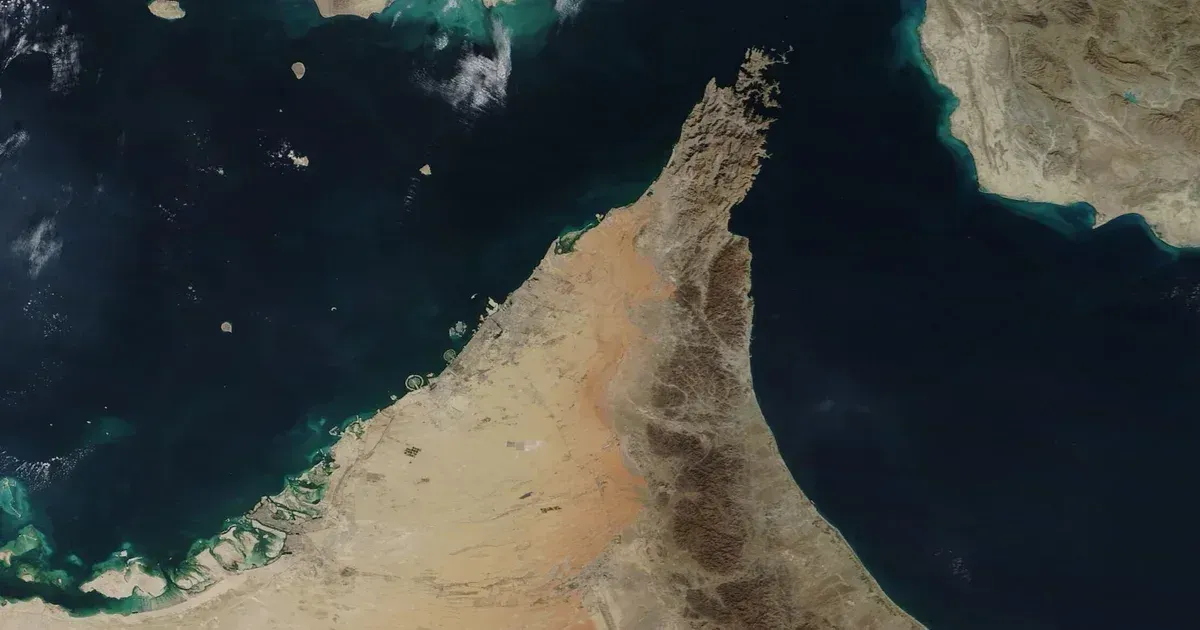
Arsenio Dominguez, Secretary-General of the International Maritime Organization, said Iranian attempts to levy tolls on commercial vessels in the Strait of Hormuz violate established international law. Speaking during a broadcast interview, the head of the maritime agency emphasized that the global community must reject any move by Tehran to monetize passage through a critical chokepoint. Dominguez framed the dispute as a test of whether maritime law can withstand geopolitical pressure. By April 12, 2026, the proposed tolls had become a direct challenge to the freedom of navigation principles that govern international waters.
Maritime authorities in London expressed immediate concern over reports that Iranian legislators are drafting a framework to charge fees for environmental or security services. Any such fee structure targeting merchant shipping would conflict with the United Nations Convention on the Law of the Sea, which guarantees the right of transit passage through international straits. Vessels flying under various international flags rely on these protections to move goods between the Persian Gulf and the Gulf of Oman without interference or taxation from coastal states. Lloyd's of London reported a 15 percent increase in maritime insurance inquiries within hours of the announcement.
Tehran officials previously suggested that the toll revenue would fund regional security and environmental protection initiatives in the waterway. Critics in the shipping industry, however, view the move as a geopolitical tool designed to exert pressure on Western economies during ongoing trade disputes. Shipping through the Strait of Hormuz accounts for approximately 21 percent of the world's total petroleum liquid consumption, making any disruption or cost increase a threat to global price stability. Energy markets reacted to the news with Brent Crude futures rising by $2.40 per barrel in afternoon trading.
Legal Foundations of Transit Passage Rights
International law clearly distinguishes between territorial waters and international straits where transit passage applies. Under the 1982 maritime convention, coastal states cannot hamper or suspend transit passage for any reason, including the imposition of tolls. Legal experts note that while Iran has signed but not ratified the treaty, the principles of transit passage are widely considered part of customary international law binding all nations. The International Maritime Organization maintains that the strait remains an essential artery for the transport of approximately 20 million barrels of oil per day.
Freedom of navigation remains the foundation of the modern maritime order. Attempts to redefine these rights through domestic legislation in Tehran set a precedent that other nations might follow in other strategic waterways like the Malacca Strait or the Bab al-Mandab. Maritime lawyers point out that the right of transit passage does not allow for the collection of fees unless they are for specific services rendered, such as pilotage or tugboats requested by the vessel owner. Iran has not provided a detailed list of such services to the IMO headquarters in London.
"The world must reject any attempt to monetize transit through these international waters as such actions would undermine the very foundation of global maritime trade," Arsenio Dominguez said.
Governments in Washington and London have signaled that they will not recognize the validity of any Iranian-imposed fees. Naval commanders in the region have been briefed on the potential for Iranian patrol boats to intercept tankers that refuse to pay the proposed tolls. The U.S. Fifth Fleet, based in Bahrain, has maintained a steady presence in the area to ensure that commercial traffic flows without interruption from state actors. No physical boarding of vessels for toll collection has been documented by regional monitoring stations yet.
Economic Consequences for Global Shipping Lanes
Cost structures for the shipping industry are already strained by high fuel prices and labor shortages. Adding a mandatory toll in the Hormuz chokepoint would force companies to choose between paying the fees or rerouting vessels around the Cape of Good Hope. Rerouting adds approximately 14 days to a voyage from the Middle East to Europe and increases operational costs by roughly $11 billion annually across the industry. Most tankers operate on thin margins and cannot absorb these additional expenses without passing them on to consumers.
Maritime Sovereignty and Territorial Claims
Environmental protection is frequently used as a justification for new maritime regulations. Iran claims that the high density of tanker traffic has led to significant pollution and damage to coral reefs in the region. The IMO chief noted that while environmental concerns are valid, they must be addressed through international conventions like MARPOL. Individual nations cannot unilaterally override global treaties to extract financial compensation from passing ships. The International Maritime Organization technical committee is scheduled to review these environmental claims in its next session.
Historical precedents for such tolls are rare and usually involve artificial canals like Suez or Panama. Unlike those man-made waterways, the Strait of Hormuz is a natural passage between two bodies of open water. International law prohibits the charging of tolls for natural straits because no infrastructure was built or maintained by the coastal state to enable the passage. The 1936 Montreux Convention, which governs the Turkish Straits, is the only major exception that allows for limited fees for specific health and safety services. No such treaty exists for the waters between Iran and Oman.
Regional Security and Naval Escort Protocols
Naval forces from a coalition of nations are monitoring Iranian activity in the strait with increased scrutiny. The United Kingdom Maritime Trade Operations center has issued advisories to all commercial vessels to maintain constant communication with regional security hubs. If Tehran moves toward enforcement, the use of sovereign immunity for military-escorted merchant vessels could become a primary tactic for resisting the tolls. Western defense ministries are currently reviewing the legality of providing such escorts for non-national flagged ships.
Strategic analysts warn that a standoff over tolls could lead to a series of escalations on the water. If Iranian Revolutionary Guard vessels begin detaining ships for non-payment, the risk of a kinetic confrontation with international navies rises sharply. Shipping companies have been advised to record all interactions with Iranian authorities and to report any demands for payment to their respective flag states immediately. Satellite surveillance has detected an uptick in Iranian fast-attack craft exercises near the narrowest part of the strait. The current Iranian naval budget increased by 8 percent this fiscal year.
Law Against Leverage
The International Maritime Organization’s verbal rejection of Iranian tolls is insufficient to deter a regime that has spent decades testing the limits of international law. Arsenio Dominguez is performing his role with technical precision, but the IMO lacks any enforcement mechanism beyond diplomatic censure. Iran is not interested in the finer points of UNCLOS or the details of transit passage; it is interested in leverage. By threatening to tax the lifeblood of the global economy, Tehran is creating a new bargaining chip to be used in future negotiations over sanctions and regional influence.
This is a classic asymmetric play where a regional power utilizes a geographic accident to hold the developed world hostage. If the global community accepts even a nominal fee for "environmental services," the floodgates will open for every coastal state bordering a chokepoint to start their own toll booths. The Strait of Gibraltar, the English Channel, and the Malacca Strait could all become targets for cash-strapped nations looking for a maritime payday. This is why a hard line is the only viable path forward for the West.
Naval confrontation is the likely end state of this policy trajectory. Shipping companies will not pay these tolls because their insurance providers will not allow them to validate what they consider to be piracy by another name. When the first tanker is seized for non-payment, the 5th Fleet will be forced to act or see the principle of freedom of navigation die a quiet death. The price of oil will spike, the insurance markets will panic, and the resulting chaos will be exactly what Tehran intends. The result could be a decade in which the costs of energy are dictated not by the pump, but by the barrel of a naval gun.