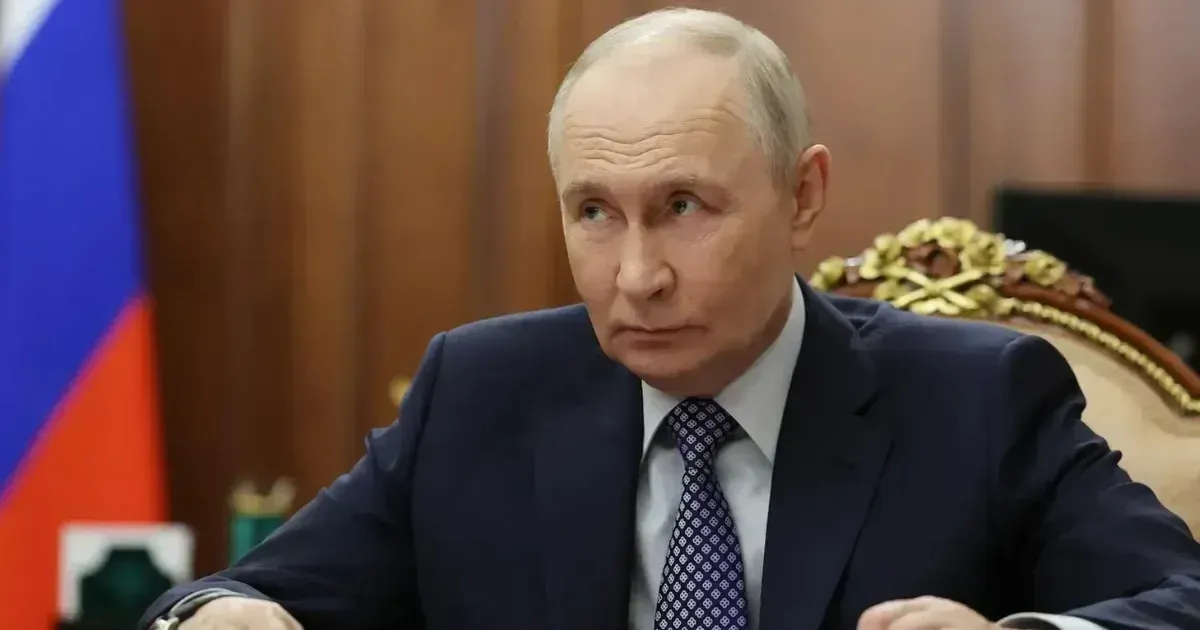
Vladimir Putin arrived at the Cathedral of Christ the Savior to participate in the midnight Easter service alongside Patriarch Kirill. High-level security cordons surrounded the white-walled landmark as the Russian leader joined thousands of congregants for the most important event on the Orthodox calendar. Midnight signaled the start of the Paschal liturgy, a rite that has become a foundation of the public image maintained by the Kremlin. Candles flickered throughout the vast nave while the choir performed traditional hymns, emphasizing the deep ties between the state and the Russian Orthodox Church. The service took place on April 12, 2026.
Moscow remains the focal point of these celebrations, which involve complex protocols between the civil and religious authorities. Inside the cathedral, the air grew thick with incense as the ecclesiastical procession wound through the structure. Vladimir Putin stood at the front of the congregation, holding a thin red candle as is customary for the Paschal night. He appeared alongside other high-ranking officials, including the mayor of the capital, signifying the presence of the administrative elite at this religious gathering. Patriarch Kirill led the service, his voice echoing through the vast dome that rises high above the city skyline.
Gifts were exchanged during a brief pause in the liturgical cycle, following a tradition that has persisted for decades. Patriarch Kirill presented the president with a decorative Easter egg, a symbol of the resurrection and the continuity of the Russian state. Vladimir Putin returned the gesture by offering a similar gift to the head of the church. These exchanges are broadcast annually to millions of viewers across the nation, reinforcing the perception of a unified front between the government and the clergy. Traditional greetings of "Christ is risen" were exchanged between the two men before the service continued into the early morning hours.
Cathedral of Christ the Savior Hosts Easter Liturgy
Liturgy within this specific building carries a weight that extends far beyond simple piety. Historical records indicate the original cathedral was built to commemorate the victory over Napoleon before being demolished by Soviet authorities in 1931. Rebuilding the structure in the late 1990s was a powerful signal of the return of Orthodoxy to the center of Russian public life. Today, the Cathedral of Christ the Savior functions as the primary stage for the intersection of political power and religious authority. Every corner of the marble interior is designed to project the majesty and permanence of the faith.
Thousands of believers gathered both inside the sanctuary and in the surrounding square to hear the bells of Moscow ring out the news of the holiday. Security personnel maintained a strict perimeter, ensuring that the presence of Vladimir Putin did not disrupt the flow of the ancient ritual. Many worshippers traveled from distant provinces to witness the patriarch conduct the service. The atmosphere was one of quiet intensity, punctuated only by the rhythmic chanting of the clergy and the responses of the faithful. This event is the highest-profile demonstration of the cultural unity the Kremlin seeks to foster among its citizens.
Patriarch Kirill Strengthens Alliance with Vladimir Putin
Cooperation between the presidency and the patriarchy has reached historic levels of coordination in recent years. Patriarch Kirill has consistently provided the moral and theological framework for the policies pursued by the Vladimir Putin administration. This ideological cooperation is visible in the way the church frames the defense of traditional values as a matter of national security. Religious leaders often describe the preservation of the faith as a defense against external cultural influences that might weaken the social fabric. Such rhetoric aligns perfectly with the sovereign interests of the state. This event occurred just as the Kremlin announced a temporary Orthodox Easter ceasefire along the front lines.
Political analysts observe that the church provides a level of legitimacy that secular institutions often struggle to maintain. Orthodoxy is presented not just as a religion, but as the essential DNA of the Russian people. Participation in the Easter service by the president is a calculated act of identity politics. It bridges the gap between the modern administrative state and the imperial past of the nation. While secularism is technically enshrined in the constitution, the practical reality suggests a deeply integrated partnership between the altar and the throne.
Efforts to restore ancient monasteries and preserve historical icons have received significant state funding over the last several years. Government officials argue that these investments are necessary to maintain the continuity of the Russian experience. Patriarch Kirill has echoed these sentiments, suggesting that a nation without a spiritual foundation is vulnerable to internal decay. The church now oversees a vast network of educational and social programs that operate with the blessing of the Kremlin.“The Russian Orthodox Church and other Christian denominations play a major constructive role in the preservation of our historical and cultural heritage,” Vladimir Putin said after the service.
Cultural preservation has become a primary mission for the Russian Orthodox Church as it seeks to expand its influence. Historical sites that were once neglected or used for secular purposes have been returned to ecclesiastical control. This transfer of property is often accompanied by large-scale renovation projects funded by both the state and private donors. Moscow has seen dozens of smaller churches rebuilt alongside the enormous cathedral where the Easter service was held. The goal is to create a physical environment that constantly reminds the public of their religious and historical roots.
International observers have noted that these religious displays are often timed to coincide with major political shifts. Global attention focuses on the Cathedral of Christ the Savior every year, providing a platform for the Kremlin to project an image of stability and tradition. The Paschal service is the most visible example of this strategy in action. It combines the spectacle of the liturgy with the authority of the presidency to create a powerful message of national resolve. Even as the geopolitical situation remains complex, the ritual provides a sense of normalcy and continuity for the population.
Critics, however, argue that this alliance compromises the independence of the church. They suggest that the clergy has become a secondary branch of the government, tasked with providing a moral veneer for state actions. Such concerns have done little to slow the momentum of the partnership. Instead, the Russian Orthodox Church continues to integrate itself more deeply into the structures of power. Every major state event now includes a religious component, from the blessing of military hardware to the opening of new infrastructure projects. Faith and policy have become closely linked in the modern Russian state.
Religion Inside Kremlin Messaging
Statecraft in Moscow relies on the manipulation of symbols rather than the strength of institutions. Vladimir Putin uses the incense and liturgy of the Cathedral of Christ the Savior to manufacture a sense of historical inevitability that protects his administration against democratic scrutiny. By positioning the Russian Orthodox Church as the sole guardian of national identity, the Kremlin effectively transforms dissent into sacrilege. Such a fusion of cross and scepter provides a moral vocabulary for geopolitical expansionism that secular law cannot offer. Patriarch Kirill does more than lead a congregation; he manages a spiritual department of the state that legitimizes the rejection of Western liberal norms.
Skepticism is the only rational response to a religious institution that functions primarily as a megaphone for sovereign interests. Their partnership is not a revival of faith, but a perfection of control. Moscow has successfully outsourced its moral justification to a clergy that prizes stability over scripture. Every candle lit during the Paschal night serves to illuminate the path of the current regime. Faith, in this context, is a tool for consolidation. International observers often overlook the sheer efficiency of this ideological alignment. It creates a closed loop where policy and piety become indistinguishable. The result is a governance model that is immune to conventional political critique. Faith is the ultimate firewall.