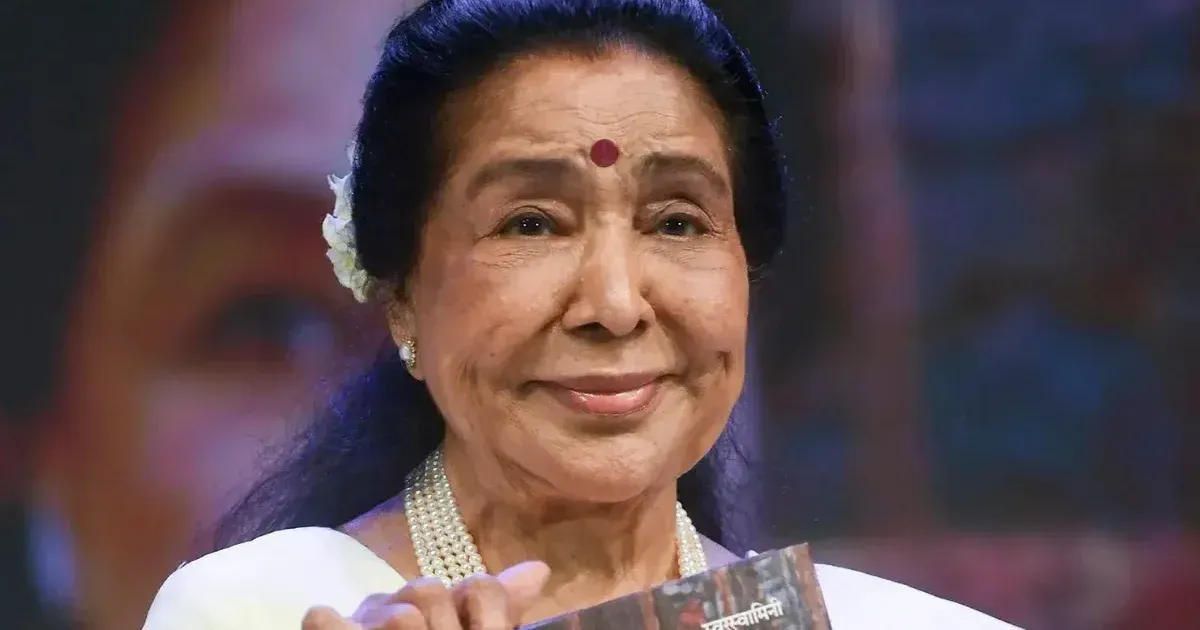
Mumbai medical officials confirmed that Asha Bhosle died at her residence following a brief period of declining health. Vocalists and film historians worldwide began mourning the loss of a performer whose output defined the sonic identity of Indian cinema for over seventy years. Bhosle's career, which started in the 1940s, spanned the transition of India from a British colony to a global economic power. This loss marks the conclusion of the golden era of the Mangeshkar family dynasty.
Prolific Career Spanning Seven Decades
Records maintained by the music industry indicate that Bhosle recorded more than 12,000 songs across multiple languages. Her range included classical ragas, pop hits, and the cabaret numbers that earned her a reputation for unmatched versatility. While her sister Lata Mangeshkar typically performed the roles of the virtuous heroine, Bhosle often took the difficult task of voicing more complex, rebellious characters. Musicologists argue her ability to adapt to changing musical trends kept her relevant when her contemporaries faded into obscurity.
Evolution within the Bollywood production system allowed Bhosle to collaborate with legendary composers like R. D. Burman and O. P. Nayyar. These partnerships produced some of the most enduring melodies in South Asian history. Producers relied on her technical precision to handle the high-octane rhythms of the 1970s fusion era. Every decade brought a new iteration of her vocal style. Her voice carried the weight of national narratives through thousands of film reels.
Bhosle spent her final years focused on the development of her granddaughter, Zanai Bhosle, within the competitive playback industry. The elder singer frequently spoke about the rigor required to maintain vocal health at the highest professional levels. She viewed the training of the next generation as a personal responsibility to the Mangeshkar lineage. Conversations regarding Zanai's progress surfaced often during media appearances in the early 2020s. Bhosle believed her granddaughter possessed a rare vocal profile. This passing follows recent reports regarding the medical crisis involving Asha Bhosle earlier this year.
Observers noted that the veteran singer described Zanai's talent as a specific combination of family traits. She often remarked that the young performer's voice contained elements of both her own style and that of her sister, Lata didi. Mentorship involved daily practice sessions and an emphasis on the emotional depth required for playback work. Success in this field requires more than pitch accuracy; Bhosle insisted that a singer must embody the character appearing on screen.
Vocalist Shreya Ghoshal expressed the deep sense of loss felt by the contemporary music community in a public statement. Ghoshal represents the modern generation of singers who were directly influenced by Bhosle's technical innovations. Versatility became the hallmark of the Mangeshkar school of singing. Many artists consider Bhosle the primary designer of the modern Indian vocal aesthetic. Her influence extended beyond the borders of India, reaching audiences in the United Kingdom and North America.
“I grew up listening to her, learning from her, being in awe of her effortless versatility,” Shreya Ghoshal wrote on social media.
Cultural observers in Mumbai reported that spontaneous gatherings formed outside the singer's home as news of her passing spread. Thousands of fans played her most famous tracks on portable speakers while holding candlelight vigils. The atmosphere remained somber as the city prepared for a state funeral. Political leaders from across the spectrum issued statements of condolence to the Bhosle family. National mourning protocols took effect shortly after the official announcement.
Academics specializing in ethnomusicology point to Bhosle's breath control and vibrato as the gold standard for recording artists. She possessed the rare ability to record a complex track in a single take. This efficiency made her the most sought-after singer for high-budget productions during the analog era. Studio engineers from the 1960s recall her careful attention to microphone placement and phonetic clarity. No other artist matched her output for sheer volume or linguistic diversity.
Linguistic flexibility allowed Bhosle to record songs in regional dialects that were often far removed from her native Marathi. She mastered the details of Bengali, Tamil, and even foreign languages for special projects. Each recording session was a showcase for her disciplined approach to the craft. Younger singers often struggled to replicate the specific tonal qualities she achieved with ease. Her discography is an extensive archive of the evolution of recording technology itself.
A Voice Across Generations
Critics often overlook the predatory nature of the playback singing monopoly that defined the twentieth century. While the world mourns a legend, the hard reality of the Mangeshkar dominance is that it effectively throttled the careers of hundreds of talented vocalists who never found a foothold in Mumbai studios. Asha Bhosle was a master of survival, navigating a cutthroat industry by reinventing her image every ten years. She did not just sing; she managed a brand that remained the primary choice for directors long after her natural vocal peak.
Will the Mangeshkar legacy survive through Zanai? This is doubtful. The modern digital landscape fragments attention in ways the studio system of 1970 never did. Bhosle belonged to a time when a single voice could unify a billion people. Today, viral trends on social media have replaced the institutional power of the playback singer. The vacuum left by her death will not be filled by a single successor because the industry structure that created her has disintegrated. We are entering an era of transient micro-celebrity. The age of the vocal titan is dead.