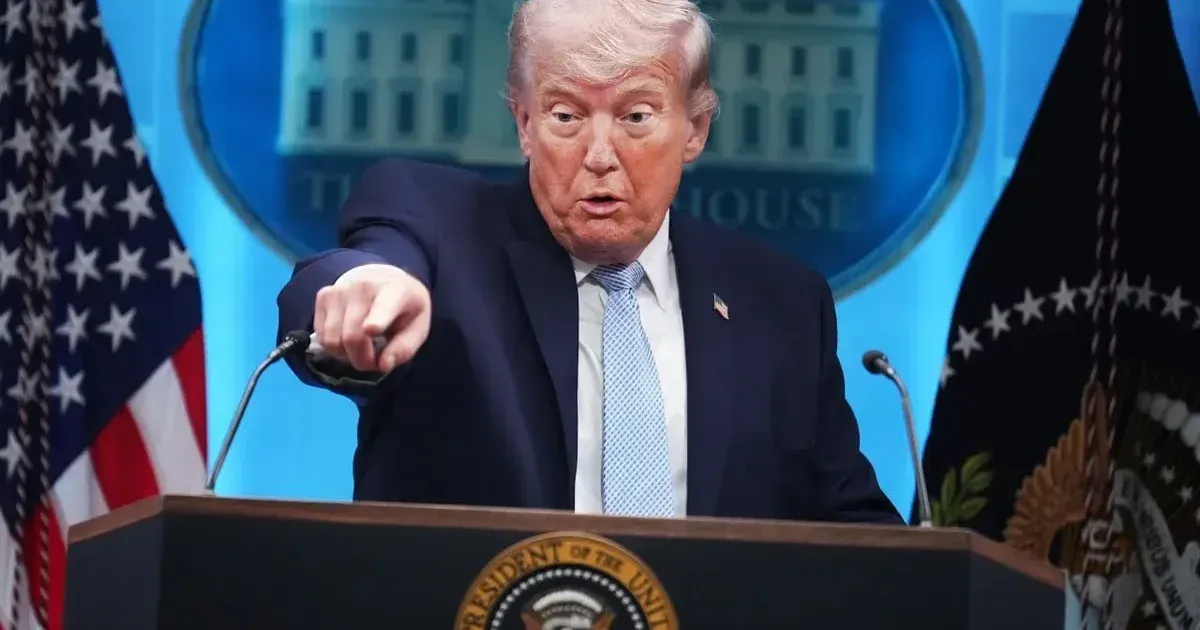
Donald Trump issued a directive ordering the United States Navy to initiate a full maritime blockade of the Strait of Hormuz. Mandated as a response to the breakdown of security negotiations in Pakistan, the operation aims to halt all shipping traffic moving through the world's most critical energy chokepoint. American naval assets began positioning themselves at the mouth of the Persian Gulf within hours of the announcement. This deployment marks the most significant use of maritime force in the region since the mid-twentieth century.
Negotiations in Islamabad between American and Iranian officials ended without a resolution regarding nuclear enrichment and regional proxy activities. Failure to reach a consensus led the White House to abandon diplomatic channels in favor of direct military interdiction. JD Vance stated that the administration had provided its final and best offer to Tehran before the talks collapsed. Peace efforts had sustained a five-day ceasefire that now appears permanently dissolved.
Islamabad Negotiations Collapse and Regional Fallout
Diplomatic delegations departed the Pakistani capital late Saturday evening after three days of intensive discussions. Sources familiar with the proceedings indicated that disagreement over sanctions relief and maritime tolls created an impassable divide. Iran insisted on maintaining its right to collect transit fees from commercial vessels passing through its territorial waters in the strait. Washington viewed these fees as an illegal extortion mechanism used to fund paramilitary operations. Presidential aides confirmed that the refusal of Iranian negotiators to concede on this point triggered the blockade order.
Crude oil futures jumped 14 percent in overnight trading as shipowners scrambled to reroute tankers. Vessels currently within the Persian Gulf face an uncertain exit strategy as the U.S. Navy establishes a physical perimeter. Naval commanders received instructions to board and inspect any ship suspected of carrying cargo that benefits the Iranian economy. Refusal to comply with these inspections will result in the immediate seizure of the vessel and its crew. Projections from energy analysts suggest a prolonged blockade could push oil prices well above historical peaks.
Naval Interdiction and Strait of Hormuz Logistics
Military officials at Central Command have directed the Strait of Hormuz operation from their headquarters in Bahrain. Destroyers and cruisers from the Fifth Fleet moved into the narrow shipping lanes that connect the Gulf of Oman to the Persian Gulf. These waters measure only 21 miles wide at their narrowest point, making a total blockade logistically feasible with current American assets. Donald Trump used social media to declare that the operation would remain in effect until Iranian leadership agrees to an exhaustive new security framework.
“Effective immediately, the United States Navy, the Finest in the World, will begin the process of BLOCKADING any and all Ships trying to enter, or leave, the Strait of Hormuz,” Trump said in a social media post.
Vessels found to have paid transit tolls to Tehran are primary targets for interception. American officials argue that these payments constitute direct support for a hostile regime and violate international sanctions. Naval boarding teams have been authorized to use all necessary force to ensure compliance with the interdiction order. Marine units are providing aerial cover for the surface fleet via carrier-based strike groups stationed in the Arabian Sea. Shipments of liquefied natural gas from Qatar and crude from Kuwait are now effectively trapped behind the American naval line. This latest blockade follows Tehran's refusal to concede to the official Trump ultimatum issued by the White House.
Financial Interdiction of Iranian Oil Tolls
Tehran has yet to issue a formal military response. Iranian state media broadcast footage of coastal missile batteries being placed on high alert. Commandos from the Iranian navy have previously conducted small-scale harassment of American ships, but a full-scale blockade presents a far more dangerous scenario. Regional allies including Saudi Arabia and the United Arab Emirates have increased their own security postures in anticipation of retaliatory strikes. Intelligence reports indicate that Iranian fast-attack craft are congregating near Bandar Abbas. Commercial shipping companies have suspended all new bookings for the region.
Diplomatic Resistance and Global Economic Risk
International reactions to the blockade have been polarized. European allies expressed concern that the sudden disruption of energy supplies will trigger an industrial recession across the continent. While some leaders in the United Kingdom supported the move as a necessary security measure, others in France and Germany warned of the humanitarian consequences of a global energy crisis. China, a primary purchaser of Iranian oil, characterized the blockade as an illegal violation of the freedom of navigation. Beijing officials hinted at potential naval escorts for their own merchant tankers.
Pentagon officials maintain that the blockade is a defensive measure intended to protect international commerce from Iranian predation. They argue that by controlling the strait, the United States is ensuring that only lawful trade continues. Military analysts point out that the logistics of maintaining a permanent blockade will require a large commitment of personnel and fuel. Current deployments include two aircraft carrier strike groups and at least twelve support vessels. The operational cost of the blockade is estimated to exceed several hundred million dollars per month.
Commanders on the ground are awaiting further instructions regarding non-Iranian flagged ships. Some tankers carrying oil for American allies have requested exemptions from the boarding requirements. White House officials indicated that no such exemptions exist under the current executive order. Every ship must submit to the inspection regime or turn back. Cargo manifests and financial records are being scrutinized by specialized maritime legal teams stationed aboard the fleet. The blockade has effectively frozen the global supply chain for 20 percent of the world's petroleum.
Blockade Risk and Global Oil
Donald Trump has effectively turned the United States Navy into a global debt collection agency. By blockading the Strait of Hormuz, the administration is doing more than targeting a hostile regime; it is holding the entire global energy market hostage to a failed diplomatic process in Islamabad. History offers a grim parallel in the 1967 blockade of the Straits of Tiran, which was the immediate precursor to a devastating regional war. This is a gamble of the highest order that assumes Tehran will blink before the global economy collapses under the weight of triple-digit oil prices.
The Fifth Fleet is now a collection agency.
Washington is betting that the physical control of a 21-mile-wide waterway can compensate for a lack of coherent long-term regional strategy. This move ignores the reality that China and other emerging powers will not tolerate the permanent American strangulation of their energy supplies. If a single carrier is damaged or a single tanker is sunk by Iranian coastal batteries, the transition from blockade to regional fire will be instantaneous. Trump has burned the bridge of diplomacy and replaced it with a wall of steel, leaving no room for a graceful exit if the pressure fails to produce a surrender. The world is now one miscalculation away from a systemic economic breakdown that no central bank can fix.