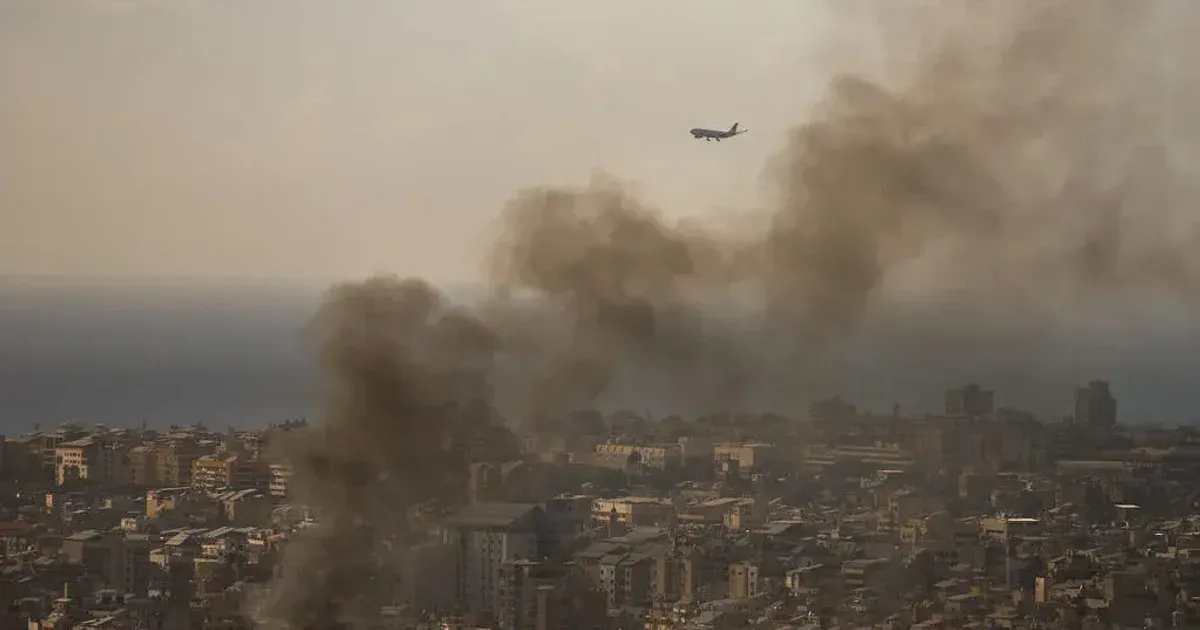
Iran rejected Donald Trump’s ultimatum over the Strait of Hormuz, calling the demand impossible under current military pressure. Tehran’s refusal followed U.S. threats against infrastructure and the rescue of an American airman. The rejection came on April 6, 2026, as both sides moved deeper into a confrontation with economic, legal and military consequences for the Persian Gulf.
Rescue operations concluded earlier today for a U.S. airman whose fighter jet crashed following an engagement with Iranian air defenses. CBS News reporters Charlie D'Agata and Taurean Small confirmed the pilot reached safety in an allied-controlled zone. Tensions reached a boiling point after this specific recovery mission concluded. The successful extraction of the pilot provided a brief moment of tactical relief but did nothing to slow the broader march toward full-scale hostilities.
Trump issued a profanity-laced warning through social media and official diplomatic channels on Monday morning. He stated that the United States would target Iranian civilian infrastructure if shipping lanes do not reopen by Tuesday. Iranian military leaders promised a much more devastating reaction to any such strike. Intelligence reports indicate that Iranian forces have increased their readiness posture across several key coastal provinces.
Military Escalation and the Airman Rescue
Special operations forces executed a high-risk extraction in the early hours of Monday. Combat search and rescue teams entered contested airspace to retrieve the downed American pilot. While the Pentagon has not released the pilot’s name, officials confirmed he is in stable condition at a regional medical facility. This rescue operation required serious coordination between naval assets and satellite intelligence.
Military commanders at Tehran central command issued a formal statement shortly after the rescue was publicized. They asserted that any violation of their territorial sovereignty would meet with reciprocal force. Iranian air defense units remain on high alert. Surface-to-air missile batteries now dot the coastline overlooking the strategic waterway where the American jet was lost.
Economic Toll of the Hormuz Blockade
Global energy markets reacted with immediate volatility. Roughly 20 percent of global petroleum liquids pass through this 21-mile-wide waterway daily. Prices for Brent crude jumped by 7 percent within hours of the Iranian rejection. Shippers are currently rerouting vessels around the Cape of Good Hope, adding weeks to delivery times and millions in fuel costs. Insurance premiums for any vessel attempting to enter the Persian Gulf have become prohibitively expensive.
Maritime experts suggest the blockade could lead to a global supply crunch by the end of the month. Several Asian economies depend almost entirely on the oil that flows through the Strait. If the passage remains closed, domestic gas prices in the United States could exceed five dollars per gallon. Analysts at major financial institutions are already revising their global growth projections downward.
"Any attacks on civilian targets would trigger a much more devastating response," the central military command of Iran stated on Monday.
Civilian infrastructure threats gave the Hormuz dispute a legal edge, because energy pressure can quickly become a question of proportionality and civilian harm.
Legal scholars point to the 1977 Additional Protocols of the Geneva Conventions when discussing the targeting of civilian sites. These international laws prohibit attacks on infrastructure essential to the survival of the population, such as water installations and power plants. Trump’s threat specifically named such facilities as potential targets for American cruise missiles. Human rights organizations expressed immediate concern over the potential for mass casualties if these threats are carried out.
Iranian officials reached out to the United Nations Security Council to protest the American ultimatum. They argued that threatening civilian infrastructure constitutes a pre-emptive war crime. Washington maintains that the blockade itself is an act of economic warfare that justifies a kinetic response. The rhetoric on both sides has moved beyond typical diplomatic posturing; it has entered the territory of existential threat.
Diplomatic Deadlock in the Persian Gulf
Attempts by European intermediaries to broker a temporary ceasefire failed over the weekend. Neither side appears willing to offer the first concession. Iran demands the lifting of all primary and secondary sanctions before discussing maritime access. The White House insists that the Strait must be cleared of mines and Iranian patrol boats before any sanctions relief is considered. These positions represent two diametrically opposed visions for regional security.
Regional allies in the Gulf find themselves in an unstable position. Some nations have offered logistical support to the U.S. Navy, while others fear Iranian retaliation against their own oil refineries. Satellite imagery shows Iranian fast-attack craft moving into position near the island of Qeshm. These vessels are capable of deploying naval mines or launching swarm attacks against larger destroyers. The tactical situation on the water is changing by the hour.
Hormuz Ultimatum Deadlock
Ultimatums delivered via social media rarely survive the scrutiny of veteran diplomats who understand the mechanics of Persian Gulf power. President Trump’s Tuesday deadline is a high-stakes gamble that ignores the historical resilience of the Iranian military apparatus. By threatening civilian infrastructure, the administration has inadvertently unified the Iranian public behind a regime that was, until recently, facing internal dissent. This tactical error strengthens the very leadership Washington seeks to pressure.
Logic suggests a stalemate, but miscalculation favors the bold. The White House appears to believe that a show of overwhelming force will break the blockade without a protracted conflict. History suggests otherwise. The Tanker War of the 1980s proved that maritime conflicts in these narrow waters are slow, grinding, and hugely costly. A single stray missile or a nervous sonar operator could trigger a regional fire that no one is truly prepared to manage.
Western powers are currently sleepwalking into a theater where they lack a clear exit strategy. If Tuesday passes without a resolution, the choice becomes clear: retreat and lose global credibility, or strike and risk a decade of war. The Iranian leadership knows this. They are betting that the American public has no appetite for another multi-trillion dollar entanglement in the Middle East. It is a cynical calculation, but it is one that has been proven right before.