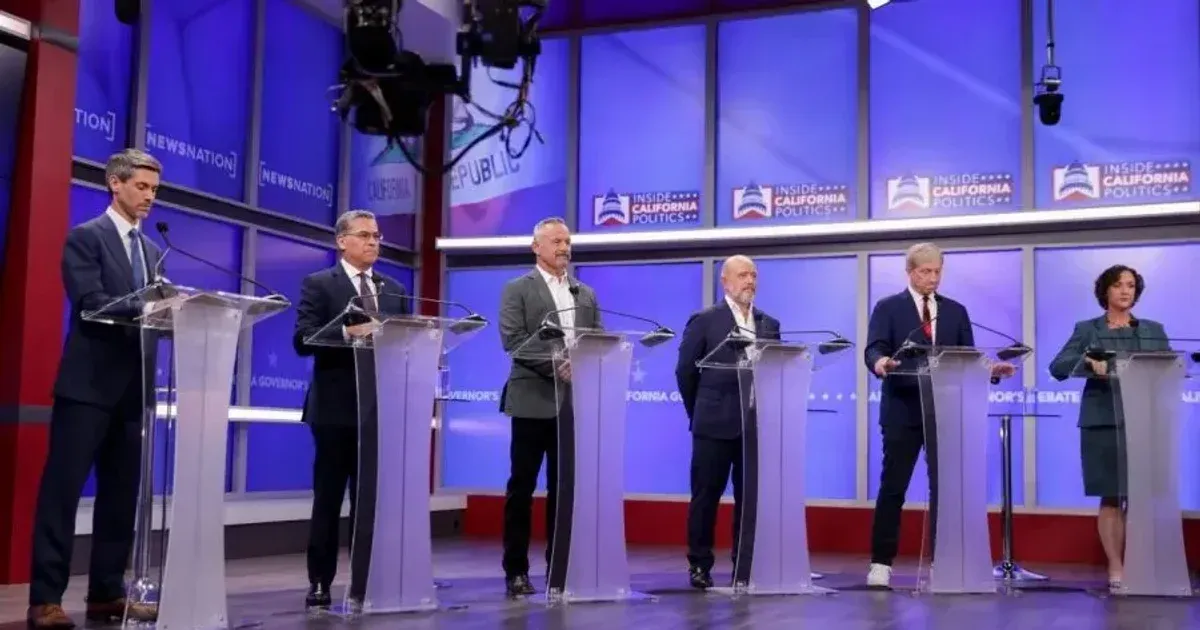
Six contenders for the California governorship gathered in Sacramento on April 23, 2026, to define a race recently upended by the sudden departure of Eric Swalwell. His resignation from the House of Representatives and withdrawal from the gubernatorial contest created an immediate leadership void. Public polls indicate a wide swath of undecided voters remain active ahead of the June primary. Candidates spent the evening attempting to seize the momentum formerly held by the perceived frontrunner.
Democratic strategists in Sacramento are struggling with a fractured field that has yet to consolidate behind a single successor. While Eric Swalwell commanded strong name recognition and fundraising prowess, his exit left millions of dollars in potential donations looking for a home. This shift forces the remaining six participants to sharpen their distinctions on stage. Voters now face a choice between progressive stalwarts and moderate pragmatists.
Confusion dominated the initial segments as candidates traded barbs over their respective legislative records. State lawmakers and local officials on stage struggled to present a unified vision for the state. California political observers noted the absence of a dominant voice capable of bridging the gap between the party's various factions. Each speaker focused on carving out a niche within the primary electorate.
Democratic Candidates Fight for Party Unity
Internal polling suggests that the Democratic base is divided over which candidate best inherits the Swalwell mantle. Some contenders emphasized their ties to the current administration, while others called for a radical departure from existing policies. This internal friction could potentially benefit a Republican challenger if the primary results are narrow.
“The absence of a clear frontrunner creates a vacuum that every candidate here is desperate to fill,” an analyst at the event said.
Debate moderators pressed the field on their plans for the state's multi-billion-dollar budget deficit. Estimates place the shortfall at $38 billion, a figure that looms over every policy proposal discussed. Candidates offered varying solutions, from tax increases on high earners to substantial cuts in social services.
Sacramento Debate Focuses on Economic Stability
Economic anxiety persists among middle-class families facing rising costs of living across the state. Several candidates proposed new subsidies for first-time homebuyers, though critics argue such measures could worsen inflation. California is still one of the most expensive places to live in the United States. Discussion of the wealth gap took center stage during the second hour of the broadcast.
Republican candidates used the debate to attack the Democratic record on crime and public safety. They pointed to retail theft statistics and open-air drug markets in major cities as evidence of policy failure. Democratic participants countered by highlighting recent investments in community policing and mental health services.
The exchange highlighted the deep ideological divide regarding criminal justice reform.
Housing Crisis Dominates Candidate Platforms
Homelessness continues to be a visible failure for many California voters. Candidates argued over the efficacy of Housing First models versus mandated treatment for individuals with substance abuse issues. State data shows that despite billions in spending, the unhoused population has not seen a substantial decrease. Participants promised new executive orders to bypass local zoning restrictions.
"The evidence points to a race where the traditional lanes of political identity are being rewritten in real-time following the exit of the presumptive leader," stated a spokesperson for the California Democratic Party.
Environmental policy provided another point of contention as the state moves toward its 2030 climate goals. Some candidates pushed for an accelerated phase-out of gas-powered vehicles, while others warned of the strain on the electric grid. Energy reliability is a top concern for voters who have experienced rolling blackouts during summer heatwaves. The debate touched upon the tension between conservation and industrial growth.
Post Swalwell Primary Dynamics and Voter Outreach
Voter turnout for the June primary is expected to be a determining factor in which two candidates advance to the general election. Historically, lower turnout favors more established candidates with strong ground operations. Eric Swalwell had built an extensive digital outreach machine that his former rivals are now trying to replicate. The next few weeks will test the organizational strength of the remaining campaigns.
Fundraising totals for the first quarter of 2026 show a tight race among the top four Democratic contenders. $11 million was raised collectively by the field in the weeks following the Swalwell exit. Such an influx of cash is already being used for aggressive television ad buys in the Los Angeles and San Francisco markets. Competition for airtime is driving up the cost of campaigning statewide.
Regional allegiances often dictate the outcome of statewide races in California. Candidates from Southern California are working to make inroads in the Central Valley, where agricultural interests dominate the political landscape. Northern California candidates are focusing on the tech sector and environmental advocates. Winning the governorship requires a coalition that spans these diverse geographic and economic zones.
Political analysts are watching for any sign of a late entrant into the race. While the filing deadline has passed, the possibility of a write-in campaign remains a topic of quiet discussion. $5 million in independent expenditure money is reportedly sitting on the sidelines waiting for a viable candidate to emerge. Persistent financial uncertainty adds a layer of volatility to an already unpredictable cycle.
Swalwell’s Exit Leaves a California Primary Vacuum
Will California ever move past its habit of selecting leaders based on name recognition rather than policy cohesion? Sacramento’s spectacle suggests that the Democratic machine is stalling without a pre-ordained heir. Voters are being served a lukewarm buffet of recycled promises and vague fiscal projections that fail to address the underlying rot in state administration. We are looking at a party that has forgotten how to compete because it has spent too long merely managing its own dominance.
Political stagnation is not just a political problem; it is an existential threat to the state's economic viability. Expect the June primary to yield a winner by default, not by mandate. The eventual governor will inherit a crown of thorns and a ledger written in red ink.