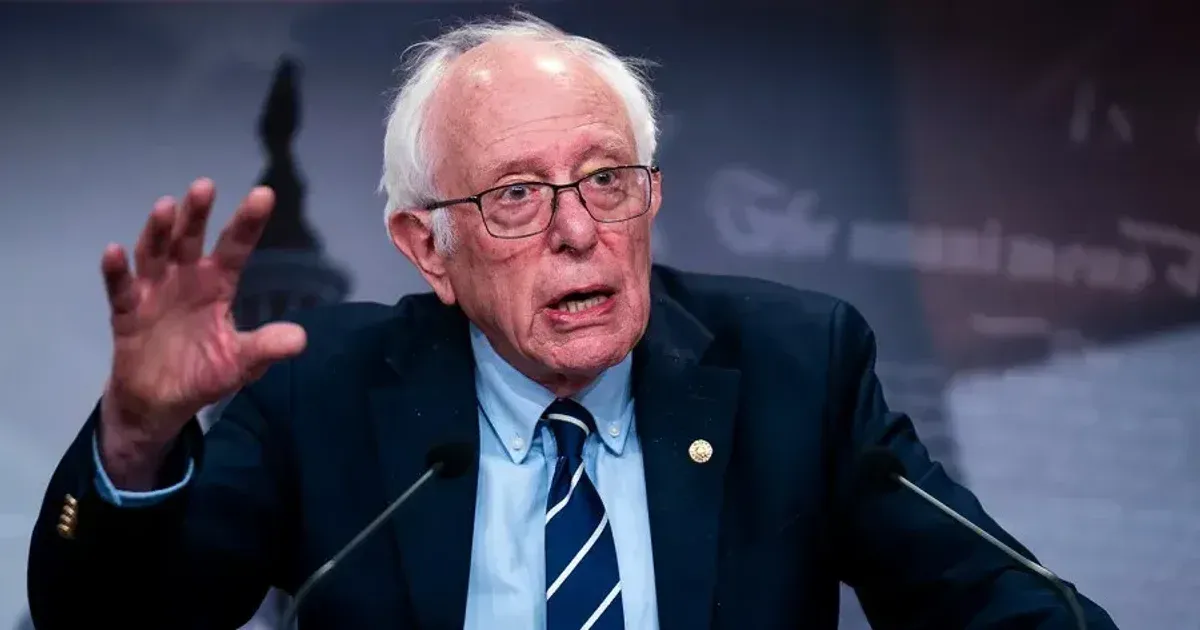
Susan Collins and Dan Sullivan broke party lines on April 23, 2026, by voting for a pharmaceutical pricing amendment that would align American medication costs with European standards. This legislative shift occurred during an early morning session where Vermont Senator Bernie Sanders introduced a measure to cap prescription prices at levels paid by residents of Canada and Europe. Three Republican senators joined the Independent lawmaker to support the price-cutting mandate. Public records indicate that the maneuver aimed to bypass traditional committee gridlock by attaching the requirement to a broader funding package. Senator Lisa Murkowski joined Collins and Sullivan in the rebellion against GOP leadership on this specific health policy.
Bernie Sanders argued during the floor debate that Americans should not pay far more for identical medications produced by the same manufacturers. His amendment sought to leverage international price benchmarks to lower out-of-pocket costs for domestic consumers. Critics within the Republican caucus argued that such price control would stifle innovation and reduce investment in life-saving research. Industry lobbyists from major pharmaceutical firms spent the hours leading up to the vote pressuring moderate Republicans to reject the benchmark model. The final tally for the amendment reflected a rare moment of cross-party alignment on high-stakes healthcare legislation.
The Sanders Prescription Drug Price Amendment
Sanders designed the amendment to require that the Secretary of Health and Human Services ensures Americans pay no more for prescription drugs than the median price in other industrialized nations. This strategy targets the substantial price gap for specialized medications like insulin and cancer treatments. While pharmaceutical companies maintain that high US prices subsidize global research, Sanders pointed to the billions in profits reported by these firms last year. Two of the most vulnerable Republicans in the chamber, Susan Collins and Dan Sullivan, viewed the vote as a necessary step for their constituents. Voters in Maine and Alaska have consistently ranked high medication costs as a primary concern in recent polling cycles.
Legislative analysts noted that the inclusion of Republican votes gives the Sanders proposal a veneer of bipartisanship that it previously lacked. Senate leaders had hoped to maintain a unified front against the price-control measures to preserve leverage in future negotiations. That unity collapsed under the pressure of upcoming election cycles. Sullivan, representing a state with some of the highest healthcare delivery costs in the nation, has increasingly signaled a willingness to break with party orthodoxy on consumer-facing issues. Murkowski also cited the financial burden on rural Alaskans during her brief remarks on the floor. Sanders concluded his argument by citing $11 billion in potential savings for Medicare beneficiaries.
Republican Defections in the Upper Chamber
Partisan discipline faced a second test when Senator John Kennedy of Louisiana introduced an amendment to the budget package involving the SAVE America Act. Kennedy sought to instruct the Senate Rules Committee to incorporate elements of the act into a reconciliation package that requires only a simple-majority vote. Four Republican senators blocked this move by voting with the Democratic caucus. Susan Collins, Lisa Murkowski, Thom Tillis, and Dan Sullivan provided the margin needed to defeat the Kennedy proposal. Their refusal to support the maneuver effectively stalled the attempt to fast-track electoral policy changes through the budgetary process.
Kennedy intended for his amendment to force a debate on non-citizen voting and federal election standards within the context of the 2026 budget. Opponents of the SAVE America Act argue that the measure imposes unnecessary burdens on state election officials and targets a non-existent problem. Four GOP defectors expressed concerns about the procedural ethics of using reconciliation for such broad policy changes. Using a budget tool to circumvent the 60-vote filibuster threshold for election laws remains a point of deep contention among Senate institutionalists. Murkowski has long advocated for maintaining traditional Senate norms over short-term partisan gains.
“I am disappointed that several of my colleagues chose to block a common-sense measure to ensure that only American citizens vote in our federal elections, especially when we had a clear path to pass it with a simple majority,” Senator John Kennedy said.
Kennedy released the statement shortly after the votes were tabulated on the Senate floor. His frustration highlights a growing rift between the populist wing of the Republican Party and the traditionalist bloc. Many GOP strategists believe that forcing votes on election integrity is a winning issue for the midterms. However, the moderate faction appears more concerned with the precedent of eroding the filibuster for non-fiscal matters. These internal divisions are complicating the efforts of leadership to present a cohesive platform for the upcoming budget cycle. Tillis, who has frequently sought middle ground on immigration and spending, joined the Alaskans and the Maine senator in this procedural stand.
Kennedy Maneuver on SAVE America Act
Efforts to pass the SAVE America Act have primarily focused on requiring proof of citizenship for federal voter registration. Kennedy argued that attaching these provisions to a budget reconciliation bill was the only viable path to enactment given the current narrow margins in the Senate. The Senate Rules Committee would have been tasked with finding the specific legislative language to satisfy the Byrd Rule, which governs what can be included in reconciliation. Failure to secure the necessary GOP support means the bill must now take the standard legislative route. This pathway likely ends in a filibuster by the Democratic minority. Conservative advocacy groups have already begun targeting the defectors in their home states with digital advertisements.
Voting patterns on these two distinct amendments suggest a sophisticated balancing act by the moderate GOP wing. While they supported a progressive health initiative from Sanders, they simultaneously blocked a conservative electoral initiative from Kennedy. The behavior indicates a prioritization of constituent-level economic relief and institutional stability over ideological purity. Collins has built a multi-decade career on this specific brand of independent legislating. Sullivan and Murkowski frequently vote as a duo on matters affecting the unique logistical needs of Alaska. Their combined influence allows them to act as a pivot point for the entire chamber. Senate Majority Leader Chuck Schumer has exploited these cracks in the opposition to advance portions of the administration's agenda.
Budget Reconciliation and Parliamentary Strategy
Budget reconciliation is a powerful tool because it allows for the passage of legislation with only 51 votes, bypassing the usual 60-vote requirement. The process is strictly limited to provisions that have a direct impact on federal spending, revenue, or the debt limit. The Senate Parliamentarian is the final arbiter of what qualifies under these rules. Kennedy argued that the administrative costs associated with election oversight provided enough of a fiscal hook to justify the move. Opponents countered that the policy implications far outweighed the budgetary impact. The defeat of the Kennedy amendment preserves the status quo for the current reconciliation cycle. Leadership must now decide whether to reintroduce these elements in separate, stand-alone bills.
Negotiations over the final funding package continue behind closed doors as the deadline approaches. The defection of three to four Republicans on key votes has fundamentally altered the math for Senate leadership. Party whips are now forced to negotiate not just with the opposition, but with their own members. The internal friction complicates the passage of a clean budget bill. Staffers for the Senate Finance Committee are currently reviewing the Sanders amendment for potential conflicts with existing healthcare statutes. The final version of the budget will likely include some versions of the drug pricing language to ensure the support of the moderate bloc. Majority support for the overall package hinges on these delicate compromises.
Moderate Republicans Hold Senate Leverage
Should we be surprised that the Senate is once again a theater of the absurd where the rules are made up and the points don't matter? The recent spectacle involving Susan Collins and the Alaskan duo of Murkowski and Sullivan confirms a harsh reality of modern governance. The Republican party is not a monolith, but a fragile coalition of institutionalists and insurgents who cannot agree on the time of day, let alone a budget. By backing the Sanders drug price amendment, these senators are effectively admitting that the free market has failed the American patient.
They are embracing European-style price control because they are terrified of their constituents' pharmacy bills. It is not principled legislating; it is a desperate survival tactic.
Equally telling is the rejection of the Kennedy maneuver. The refusal to use reconciliation for the SAVE America Act reveals a Senate still obsessed with its own fading norms while the country moves on. Kennedy tried to use the only tool available to bypass a permanent minority veto, and his own party's moderates cut him off at the knees. They claim to protect the filibuster, but they are actually protecting their own relevance as the ultimate gatekeepers. The internal sabotage ensures that neither the populist right nor the progressive left can achieve a clean win.
The result is a legislative sludge that keeps the status quo intact while the costs of living and voting continue to diverge. Power in Washington does not reside in the leadership offices; it sits in the hands of three or four people who are more concerned with their own re-election than any coherent national strategy. The Senate is paralyzed by its own design.