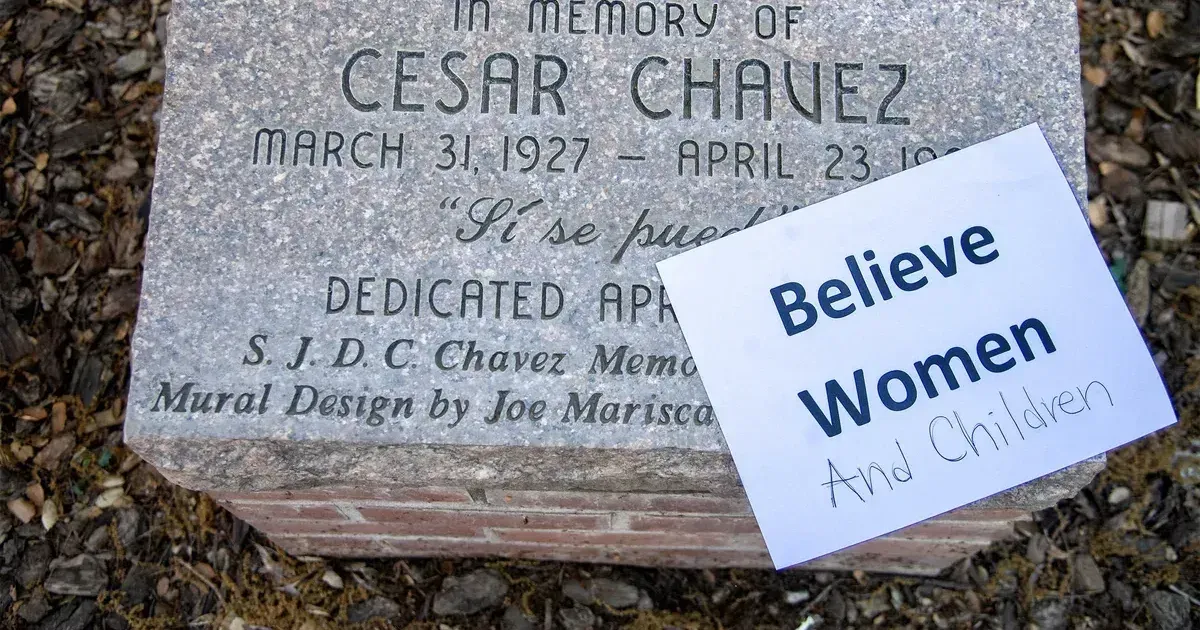
Stockton, California, officials found a makeshift sign reading "Believe women and children" pinned to a local memorial honoring Cesar Chavez on March 19. This act of protest followed recent reports detailing allegations of sexual abuse and rape involving the late labor icon. Municipalities across the American West are now moving with speed to strip the labor leader's name from public infrastructure. Survivors within the farm labor movement have come forward with accounts of abuse that specifically involve young girls who worked in the activist circles Chavez controlled. Stockton police arrived at the memorial shortly after dawn to document the unauthorized signage.
Meanwhile, BBC reports indicate that leaders in Los Angeles and other major urban centers are reviewing dozens of street names and school titles. Residents in several neighborhoods have already begun circulating petitions to demand immediate renaming. These communities once viewed Chavez as the primary face of the civil rights struggle for Hispanic farmworkers. Municipal workers in Stockton were seen evaluating the physical removal of plaques and murals located in the downtown district. The local memorial in Stockton became a flashpoint for public anger within hours of the initial allegations reaching national news cycles.
According to Washington Post reporting, city councils are managing a complex bureaucratic process to execute these name changes. Renaming a single city street can cost thousands of dollars in new signage and administrative labor. Officials in Fresno and Sacramento are facing similar pressure from student activist groups and local residents. Recent NPR coverage notes that these revelations arrived during a period of intense global instability, as attacks on gas facilities in Israel and Iran have already strained domestic attention. Domestic issues like the Chavez legacy are now competing for airtime with fears of an escalating energy crisis. Local governments often lack the contingency funds for such sudden, large-scale shifts in public iconography.
In fact, the United Farm Workers organization, which Chavez co-founded, faces its most significant reputational challenge since its inception in the 1960s. Current UFW leadership has not yet released a thorough statement addressing the specific details of the rape allegations. Supporters of the movement are struggling to separate the legislative victories for field workers from the personal conduct of their most famous founder. Union offices in the Central Valley have remained quiet as the scandal unfolds. Internal documents and historical archives from the movement are now coming under renewed scrutiny by investigative journalists and independent researchers. Survivors claim the abuse occurred behind the closed doors of movement headquarters during the height of the grape strikes.
But the speed of the removal process suggests that public patience for flawed icons has evaporated. Schools that for decades taught Chavez’s life story as a model of non-violent resistance are now pulling textbooks from their shelves. One elementary school in the Los Angeles Unified School District has already scheduled a town hall to select a replacement name. Parents expressed concern that the presence of the name creates a hostile environment for victims of sexual assault. Educators are pivoting toward broader lessons on labor history that do not focus exclusively on a single individual. The school board vote is expected by the end of the month.
Stockton Memorial Defaced During Wave of Sexual Abuse Claims
Yet the physical markers of Chavez’s influence remain embedded in the architecture of the Central Valley. Stockton’s memorial features a relief mural and a prominent bronze plaque that has stood for over twenty years. Maintenance crews in the city were instructed to leave the "Believe women and children" sign in place until a formal decision on the site's future is reached. Local activists argue that leaving the memorial intact is an insult to the victims mentioned in the recent reports. By midday, additional flowers and small notes had been left at the base of the mural.
Police have increased patrols around the site to prevent more aggressive forms of vandalism. Public sentiment in Stockton appears heavily weighted toward complete removal rather than contextualization.
For instance, the New York Post described the message left on the Stockton memorial as a direct challenge to the historical silence surrounding the UFW founder. This four-word message has become a rallying cry for those demanding the removal of all Cesar Chavez monuments. Social media platforms have seen a surge in hashtags supporting the victims who came forward. Critics of the labor leader point to these allegations as evidence of a systemic cover-up that lasted for decades. Many former members of the movement are now questioning why these stories were suppressed for so long. One survivor stated that the power structure within the union made reporting the abuse impossible during the 1970s.
"We cannot ask our children to walk down streets named after a man who hurt children, no matter what he achieved for the labor movement."
Still, some older members of the Hispanic community express a sense of deep loss as the name is scrubbed from their neighborhoods. These residents remember the 1966 march to Sacramento and the visceral impact of the grape boycotts on their daily lives. For them, Chavez was a symbol of dignity in a time of extreme racial and economic oppression. They are now forced to reconcile those memories with the chilling details of the new accusations. Public meetings have become venues for generational clashes over how to handle the disgrace of a former hero.
Older voters tend to favor adding plaques that explain the controversy, while younger residents demand the complete erasure of the name. The divide mirrors broader national debates over historic monuments.
United Farm Workers Legacy Faces National Reckoning
In particular, the California State Legislature is considering a review of the state holiday dedicated to the labor leader. Several lawmakers have privately suggested that the holiday should be rebranded to honor farmworkers in general rather than Chavez specifically. This would allow the state to maintain its commitment to labor rights without celebrating a man accused of predatory behavior. Drafting the new legislation would require months of committee hearings and public comment. Current state laws require specific criteria for the removal of names from state-funded parks and buildings.
Governor’s office representatives have declined to comment on the matter until more evidence is reviewed by the attorney general. Two assembly members have already withdrawn their support for a proposed Chavez statue in the state capital.
So the administrative machinery of the state has begun to grind against the pressure of the new testimony. Investigative teams are looking into whether any public funds were used to settle previous claims of misconduct within the union. If such settlements exist, they could implicate other high-ranking officials from that era. Historical researchers at the University of California are re-examining oral histories for any overlooked mentions of the abuse. Many of these archives were previously selected to present a sanitized version of the labor struggle. The goal of the current investigation is to determine if a pattern of behavior was known to the UFW board. Initial findings suggest that certain staff members were warned about Chavez’s proximity to young volunteers.
California School Districts Reconsider Labor Icon Names
California districts are not the only ones feeling the pressure of these revelations. School boards in Texas and Arizona are also receiving requests to change the names of their middle and high schools. Many of these schools were named during the 1990s as part of an effort to increase Hispanic representation in public spaces. Administrators are now worried that the names will distract from the educational mission of the institutions. In some cases, student government associations have already voted to remove Chavez’s portrait from common areas. These actions are often taken without waiting for official board approval. One high school in San Antonio has temporarily covered the Chavez name on its gymnasium with a banner.
Even so, the process of rebranding a school involves significant logistical hurdles. Legal teams must ensure that the new name does not infringe on any existing trademarks or copyrights. Budget committees must find the funds to update athletic uniforms, diplomas, and digital records. Some districts estimate the cost of a full name change at over $150,000 per site. The financial burden comes at a time when many schools are already facing budget cuts due to declining enrollment. Local taxpayers have expressed mixed feelings about spending large sums on name changes during an economic downturn. Most boards are looking for private donations to cover the transition costs.
By contrast, the United Farm Workers leadership has stayed largely insulated from the municipal debates. Their headquarters in Keene is still a site of quiet deliberation as they consult with legal counsel and public relations experts. The organization depends on the Chavez name for much of its fundraising and brand recognition. Losing that connection could lead to a major drop in annual revenue. Some donors have already contacted the union to express their dismay over the allegations. The UFW social media accounts have shifted their focus to current labor disputes in the berry industry. They have not posted any commemorative content featuring Chavez since the story broke.
Municipal Leaders Race to Address Monument Removals
In turn, city managers are looking for ways to handle the physical removal of statues without inciting further unrest. Removing a bronze statue requires specialized equipment and a secure storage facility. Several cities are considering placing the removed items in historical museums where they can be displayed with full context. The approach satisfies some who want the name removed from places of honor but preserved for historical study. Others argue that the statues should be melted down and the materials reused for new public art. Tensions remain high during council meetings where these options are discussed. Security personnel have been added to public galleries to maintain order.
Separately, the NPR report on the Israel-Iran conflict highlights how international crises can overshadow domestic scandals. Energy prices have spiked by 15% in the last week, diverting the attention of many working-class families who are the traditional base of the UFW. While the Chavez scandal is a major cultural event, the rising cost of living is a more immediate concern for many voters. The dynamic may slow the momentum of the renaming movement in some poorer districts. Politicians are currently forced to balance their responses to global warfare with their local obligations to address the legacy of abuse.
The dual crises have created a sense of exhaustion among the public. Gasoline prices at the pump hit a five-year high this morning.
For one, the Stockton police department has not yet identified the individuals who placed the sign on the memorial. Surveillance footage from nearby businesses is being reviewed to see if a group or an individual was responsible. The act of placing the sign is considered a minor infraction, but the political implications are significant. Many residents view the anonymous act as a brave stand for victims. Others see it as a violation of public property that should have been handled through official channels. The police chief stated that no arrests are imminent. Investigators found no evidence of permanent damage to the bronze or stone surfaces.
At the same time, the national conversation about Cesar Chavez is part of a broader trend of re-evaluating 20th-century figures. From presidents to civil rights leaders, few icons have escaped the scrutiny of the modern era. The specific nature of these claims, involving the rape of minors, places Chavez in a different category than those who simply held outdated social views. The distinction is what is driving the urgency of the renaming efforts. Labor historians are now forced to rewrite the chapters of their books that once treated Chavez as an unassailable moral authority.
New editions of several prominent biographies are already in development. The focus of these works is shifting toward the women who actually ran the day-to-day operations of the UFW.
To that end, the removal of the Chavez name is likely just the beginning of a long period of cultural realignment. More survivors may come forward as the fear of the labor icon’s shadow fades. Each new testimony will likely trigger another round of name changes and monument removals. The process is painful for a community that had so few national heroes to call its own. It is a reminder that the cost of silence is often paid by the most vulnerable members of society. Stockton’s city manager has scheduled a final vote on the memorial’s removal for next Tuesday. The meeting will be held at the city hall auditorium to accommodate the expected crowd.
The Elite Tribune Perspective
Struggling with the moral failure of a cultural icon demands more than simple geographic erasure. For too long, the American left and the labor movement treated Cesar Chavez as an infallible saint, a secular deity who could do no wrong because his cause was perceived as righteous. The blind devotion created a vacuum of accountability where predatory behavior could flourish unchecked for decades. The reports of rape and sexual abuse of young girls within the United Farm Workers are not just a stain on one man’s character; they are a condemnation of the entire power structure that protected him.
We must ask why it took until 2026 for these survivors to be heard and why the institutional memory of the UFW was so effective at silencing them. Renaming a street in Stockton or a school in Los Angeles is a necessary step, but it is a hollow gesture if it is not accompanied by a rigorous investigation into the enablers who watched it happen. The worship of individual leaders is a poison that eventually kills the movements they lead. True labor justice belongs to the workers in the fields, not to the man on the pedestal who exploited them.
We should stop naming things after individuals altogether and focus on the collective struggle instead.