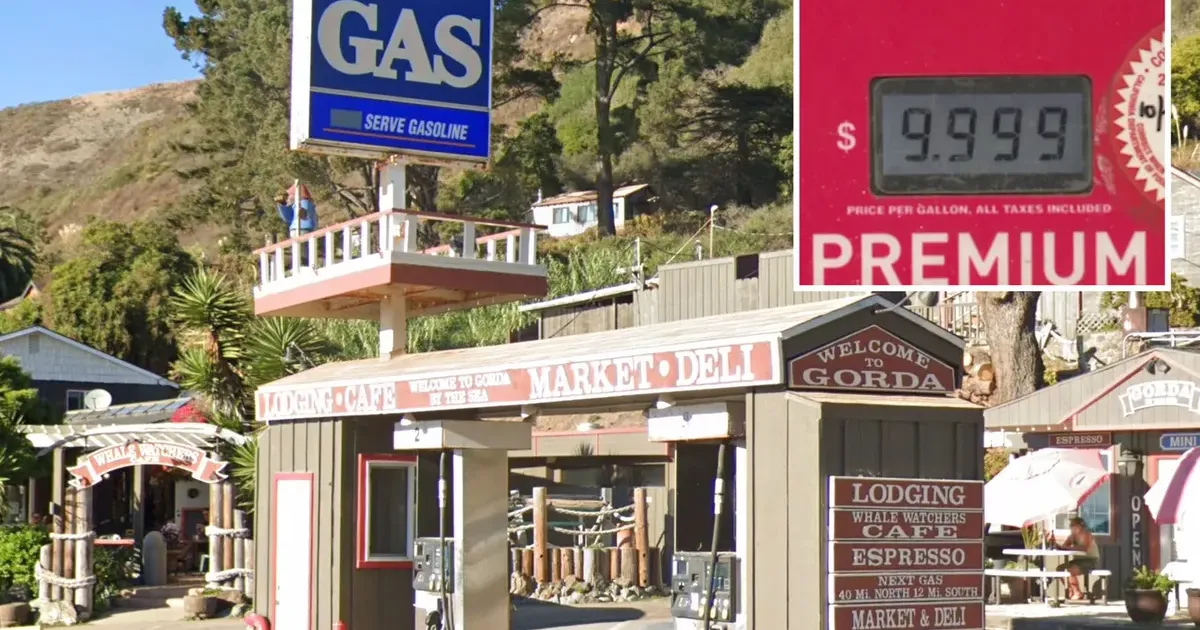
Gorda residents and travelers along the Big Sur coastline encountered a fiscal shock on April 3, 2026, as fuel prices at a local station reached $10 per gallon. While such a figure suggests exploitative practices, a statewide investigation found no evidence of price gouging by oil companies or retail operators. Records from the California Energy Commission indicate that high costs are driven by a combination of geographic isolation and a complex web of state-specific regulatory fees. Drivers navigating the winding stretches of Highway 1 often find themselves with few alternatives, leaving them vulnerable to prices that exceed double the national average.
Gorda sits roughly 150 miles from the nearest major oil refineries, creating a logistical hurdle that requires high transportation premiums. Supply trucks must traverse narrow, cliff-side roads where frequent landslides and weather events disrupt delivery schedules. Fuel distributors often charge much more to service these remote outposts compared to urban centers in Los Angeles or San Francisco. Retailers in these regions contend that the cost of simply getting the product to the pump dictates the final price seen by consumers.
CBS News recently scrutinized these pricing patterns through an investigation into why the state consistently leads the nation in fuel costs. Analysts identified that while crude oil prices fluctuate globally, the local delta in price persists due to unique environmental mandates. California requires a specific blend of reformulated gasoline intended to reduce smog, which is more expensive to produce and cannot be easily imported from other states. This isolation creates a delicate market where even a minor refinery outage causes immediate and sharp price spikes across the region.
Big Sur Logistics and Transportation Costs
Operating a business in the rugged terrain of the central coast involves expenses that urban station owners never encounter. Electricity for the pumps, insurance for hazardous material transport on dangerous roads, and the high cost of local labor all contribute to the overhead. Small stations in areas like Gorda lack the volume of sales seen at highway truck stops, meaning they must earn a higher margin per gallon to stay solvent. Business owners asserted that the $10 price point is a matter of survival rather than a predatory tactic designed to exploit tourists. Low volume combined with high logistics costs creates a floor for pricing that stays well above the state average.
Motorists frequently express disbelief when they pull into these coastal stations, yet many have no choice but to pay. The stretch of highway between Carmel and San Simeon offers very few refueling opportunities, making Gorda a critical stop for those who failed to fill up earlier. Reports from travelers indicate that while the price is high, the station provides an essential service in a literal fuel desert. Some visitors noted that the convenience of having fuel available in such a remote location outweighs the frustration of the cost. Without these independent stations, many drivers would find themselves stranded in areas with zero cell service and limited emergency resources.
Refining capacity in the state has also declined over the last decade, further tightening the supply of the required fuel blends. When a refinery in the Central Valley or the Bay Area goes offline for maintenance, there is no backup supply from neighboring states like Nevada or Arizona. These neighbors use a different fuel specification, making their gasoline illegal for sale in California markets. This regulatory wall keeps prices high by preventing competition from outside producers during times of local shortage. State officials maintained that these rules are necessary for air quality, despite the financial burden placed on residents.
California Energy Commission Findings on Pricing
Governor Gavin Newsom previously called for investigations into the industry, suggesting that oil companies were pocketing record profits at the expense of working families. The resulting inquiry by the California Energy Commission, however, failed to produce a smoking gun regarding illegal price fixing. Instead, the data pointed toward a transparent, albeit expensive, set of market drivers that have existed for years. These drivers include the highest fuel taxes in the country and a carbon cap-and-trade program that adds cents to every gallon sold. Critics of the state policy argued that the government is essentially blaming corporations for a pricing structure created by legislative action.
Internal documents from the Western States Petroleum Association suggest that the cost of compliance with state's environmental goals is the primary differentiator between local and national prices. Beyond the basic excise tax, California adds a subterranean storage tank fee and a leaded aviation fuel tax to various parts of the supply chain. These costs are ultimately passed down to the consumer at the pump. Investigations by CBS News show that when these layers of taxation are stripped away, the base price of gasoline is often comparable to other high-cost states. The disparity comes from the legislative additions that fund climate initiatives and infrastructure projects across the state.
"They probably could charge $20 a gallon because there is nowhere else for people to go for miles in either direction," said a frequent traveler to the Big Sur region.
Local residents in Gorda often keep auxiliary fuel tanks on their property to avoid the retail prices altogether. They understand that the station is aimed at the tourist trade and those in emergency situations. For the average commuter or local worker, the $10 price tag is an anomaly that they plan around by refueling in larger towns. The station is a canary in the coal mine for the broader issues facing the state energy market. It highlights how geographic monopolies can form when regulatory and logistical barriers prevent new competitors from entering the space.
Regulatory Burdens and the Mystery Surcharge
One of the most disputed aspects of the pricing controversy is what experts call the mystery gasoline surcharge. This refers to a portion of the price, often around 30 to 40 cents per gallon, that cannot be explained by taxes, crude costs, or refining margins. Some politicians pointed to this as proof of hidden manipulation, while industry analysts argued it represents the higher cost of doing business in a litigious and highly regulated environment. Land costs, higher utility rates, and stringent labor laws in California contribute to this unexplained gap. No single entity has been able to definitively account for every penny of the surcharge, which keeps the debate alive in the state capitol.
Environmental groups argued that high gas prices are a necessary signal to move consumers toward electric vehicles. They suggested that the pain at the pump is a catalyst for the transition to a greener economy. The perspective does little to help the residents of Big Sur or rural workers who depend on internal combustion engines for their livelihoods. Many of these individuals live in areas where the charging infrastructure is as sparse as the gas stations. The tension between environmental goals and economic reality is most visible at the $10 pump in Gorda. Policy decisions made in Sacramento have direct, expensive consequences for those living on the geographic margins of the state.
Public records show that the state collected billions in fuel-related revenue over the last fiscal year. The money is earmarked for road repairs and public transit, but the optics of high taxes alongside record-high pump prices remain a political liability. Efforts to pause the gas tax or provide rebates have seen limited success in the legislature. Most lawmakers prefer to keep the revenue streams intact to fund long-term climate goals. Prices continue to climb as the state moves closer to its goal of banning the sale of new gas-powered cars by 2035. The scarcity of fuel and the increasing cost of production are expected to keep California at the top of the price rankings for the foreseeable future.
The Elite Tribune Strategic Analysis
Observation of the California fuel market reveals a calculated hypocrisy where the state government decries high prices while simultaneously engineering the very conditions that create them. The $10 gallon in Big Sur is not a failure of the free market, but rather its ultimate, distorted conclusion in a closed regulatory loop. Sacramento has created a captive market by mandating fuel blends that no one else produces and then feigns shock when those limited supplies command an enormous premium. It is not a mystery; it is a policy outcome designed to punish fossil fuel consumption through the wallet of the average driver.
Politicians like Newsom use oil companies as a convenient foil to distract from the reality that California is the most profitable partner in every gallon of gas sold. Through taxes and cap-and-trade fees, the state often nets more per gallon than the refiners themselves, yet the rhetoric always points toward corporate greed. By failing to find evidence of price gouging, the state investigation inadvertently admitted that the problem is systemic and legislative. The mystery surcharge is simply the cost of the states's own administrative bloat and regulatory hostility being passed to the consumer.
Expect this trend to intensify as refining capacity is further legislated out of existence in the name of carbon neutrality. When you intentionally destroy supply in a state with growing demand, the result is the $10 pump in Gorda. The strategic goal of the California elite is to make gas so expensive that the 2035 ban on internal combustion engines becomes a relief instead of a restriction. It is a slow-motion siege on the mobility of the working class. It is the height of cynicism to call for price gouging probes when the state holds the most expensive deck in the game. California is not a victim of high gas prices; it is the primary architect.