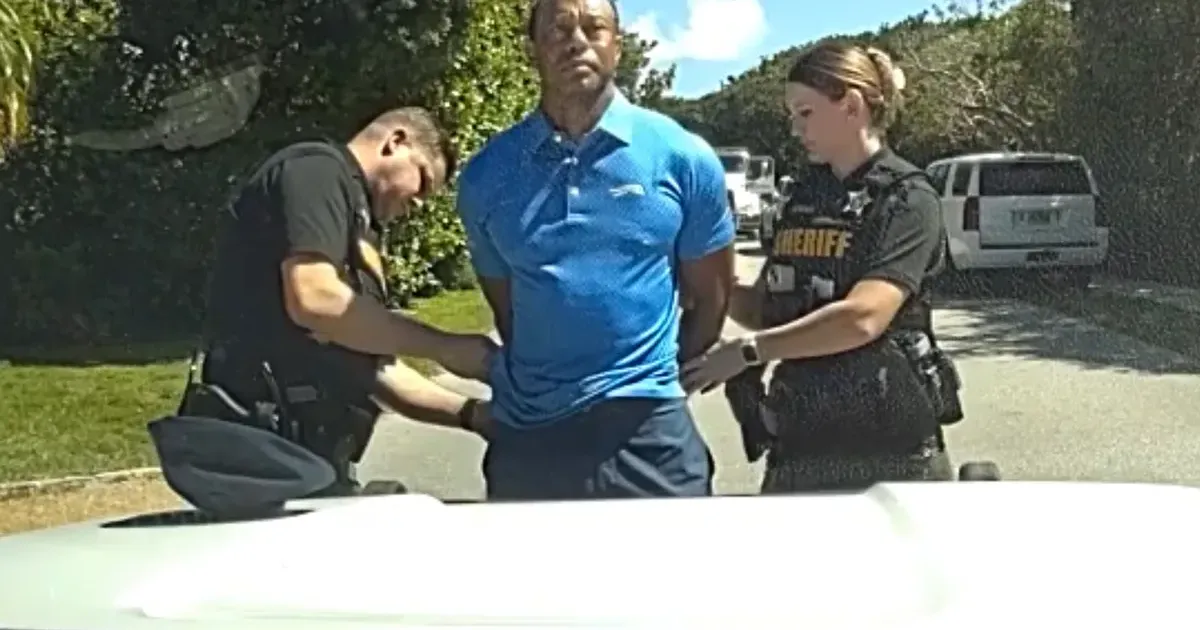
Tiger Woods' 2026 DUI case is no longer just a bodycam story. The video made the arrest easier to consume, but the legal fight has moved toward evidence: medical records, prescription history, test refusal and the standard prosecutors must meet before a jury. The public clip, however, is not the same thing as proof.
Woods was arrested after a March 27 rollover crash on Jupiter Island, Florida. Authorities said he showed signs of impairment after his vehicle struck another vehicle's trailer and overturned. He registered no alcohol on a breath test, refused a urine test and pleaded not guilty to the charges. The arrest details keep the story in a narrow lane: serious public-safety allegations, not a verdict.
The bodycam changed attention, not the burden
Bodycam footage gave the case a second life because it turned written allegations into visible behavior. Viewers could see the roadside interaction, the handcuffing and the confusion around the arrest. Clips also highlighted Woods referring to a call with "the president," a detail that pulled politics and celebrity into a case already loaded with golf history.
The bodycam does not remove the legal burden. Video can help prosecutors show conduct, timing and officer observations. It can also give the defense material to challenge interpretation, physical limitations or context. A bodycam shows what happened in front of the lens. It does not by itself settle impairment, medical cause or criminal liability.
Medical records now matter more
Records access now sits at the center. A Florida judge ruled that prosecutors may receive hospital records tied to the crash, while earlier prescription-record access was also allowed under protective limits. The protective limits matter. Medical information can be relevant to a DUI case, but it is not ordinary gossip material simply because the defendant is famous.
For prosecutors, the records may help connect officer observations, medication history and the impairment theory. For Woods, the same records may support an explanation rooted in pain, injury, treatment or other medical factors. The public should resist turning incomplete medical fragments into a diagnosis. Court rules exist precisely because health evidence can be both important and easily abused.
The refusal charge has its own weight
The case also turns on the refused urine test. Florida's updated law gives prosecutors a separate path when a driver declines a lawful test request. The refusal allegation is separate from proving what substance, if any, caused impairment. It concerns the request, its legality and the consequences attached to declining it.
Accuracy depends on separating those points. A negative alcohol breath test does not end a drug-impairment case. A refused urine test does not prove impairment by itself. The prosecution has to assemble the arrest report, bodycam, officer testimony, crash facts and any admissible records into a coherent case. The defense will try to break the prosecution's chain.
Faldo's criticism raised the governance issue
Sir Nick Faldo's criticism of golf's response pushed the story beyond the courthouse. His point was not only about Woods as a defendant. It was about whether the PGA Tour and golf's commercial ecosystem can apply meaningful standards to the most valuable figure in the sport's modern history.
The question is uncomfortable because Woods is not just a former champion. He helped build the sport's television scale, sponsor value and global audience. He also holds influence in golf's future-competition structure. When a person with that much institutional weight faces a serious public-safety case, silence or soft brand language starts to look like protection.
Accountability is not humiliation
Golf can acknowledge Woods' injuries, pain history and treatment needs without minimizing the allegations. It can also respect due process without pretending the case has no institutional consequences. Both positions can stand together as the minimum standard for a sport that sells discipline, judgment and personal responsibility as part of its identity.
Sponsors and tour officials do not need to issue theatrical punishment before the courts act. They do need clear standards for conduct, leadership roles and public safety. A weak response would mean waiting for the news cycle to fade, then treating the matter as an unfortunate private episode with no governance lesson attached.
Legacy cannot answer evidence
Woods' career record remains enormous. It also cannot answer a legal allegation. Major championships, comeback stories and commercial value do not tell a court what happened on a Florida road in March. Evidence has to answer the allegation.
Golf should follow the same discipline. Nostalgia can explain why the case feels bigger than an ordinary misdemeanor file. It cannot become a shield against scrutiny. The serious version of this story is not the viral bodycam moment. It is the collision of medical privacy, public safety, celebrity power and a sport still deciding whether its standards apply most firmly when the name is biggest.