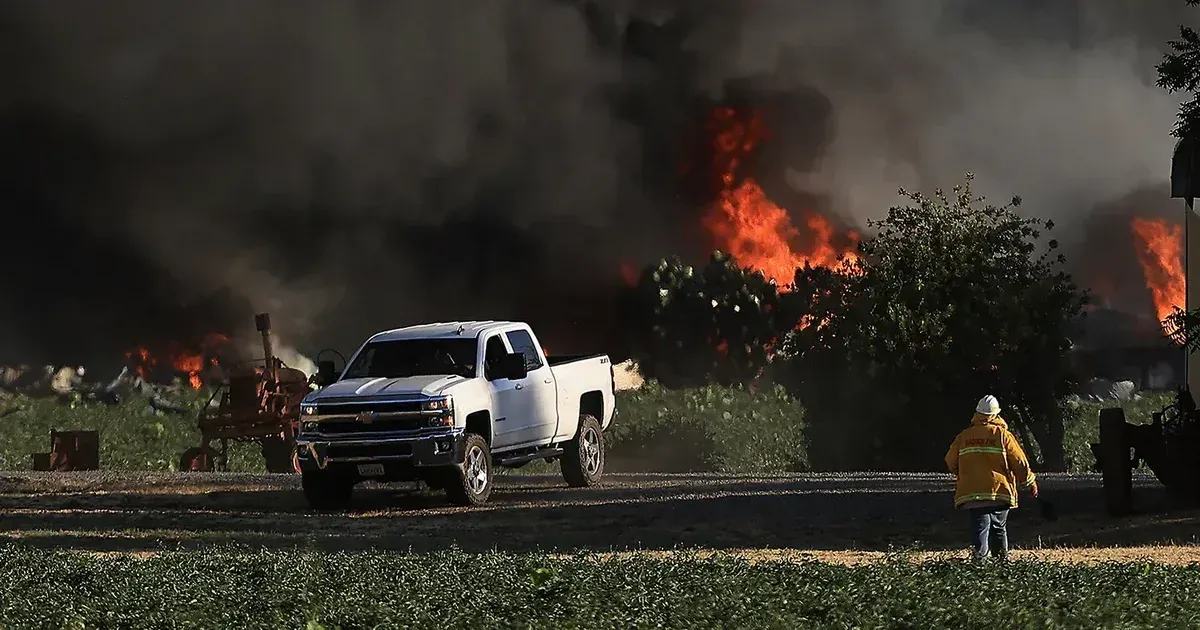
California prosecutors have filed murder charges against five people after a fireworks warehouse explosion killed seven people near Esparto, turning a rural disaster into a major criminal case over alleged illegal explosives storage. The case is drawing renewed attention because the defendants include people tied to fireworks businesses and a former law enforcement official accused of helping the operation avoid scrutiny.
The charges were announced on April 10, 2026, after a grand jury indictment tied the July 1, 2025, blast to a long-running fireworks operation in Yolo County. The indictment gives prosecutors a framework for arguing that the deaths were not an unpredictable accident, but the result of choices made before the warehouse exploded.
What Prosecutors Allege
Yolo County Deputy District Attorney Clara Nabity said the case centers on materials that prosecutors argue were more dangerous than ordinary fireworks. The explosion happened at a property associated with Devastating Pyrotechnics, about 40 miles northwest of Sacramento, and the initial blast caused the deaths of seven people, according to the grand jury findings described by authorities. Investigators also described a sprawling storage operation that had grown over time, making the site a central focus of the criminal inquiry.
One of the people charged with murder is Samuel Machado, a former Yolo County Sheriff's Department lieutenant. Prosecutors allege that Machado stored more than 1 million pounds of fireworks on his property and used his law enforcement position to avoid scrutiny as the operation expanded. The indictment names other defendants connected to Devastating Pyrotechnics and Blackstar Fireworks, while one defendant had already been in custody before additional charges were filed. That law enforcement connection is why the case is being watched beyond the immediate fireworks industry.
The charges remain allegations, and the defendants will have the chance to contest them in court. That distinction matters because the prosecution's theory appears to rely on proving that the defendants knowingly created a lethal risk, rather than only that unsafe storage conditions existed before the explosion. Defense arguments are likely to focus on knowledge, responsibility and whether the evidence supports murder counts rather than lesser workplace-safety or negligence charges.
Deaths and Community Impact
The July blast collapsed the warehouse, set off a barrage of fireworks and started a fire that spread across nearby agricultural land. Officials said two people were injured, and the search for victims continued for days because explosive hazards remained at the scene. The dead included workers and others who were at or near the warehouse when the explosion occurred. Authorities later released the victims' names after remains were recovered and family notifications were completed.
Esparto is a small farming community, and the blast had effects beyond the property line. Nearby residents described the force of the explosion as strong enough to shake homes, while officials in parts of Northern California canceled or changed Fourth of July events because fireworks stored at the site had been destroyed. For residents, the disaster turned a rural business property into a prolonged recovery zone and raised practical questions about what was being stored near homes, roads and farmland.
The case also raised questions about oversight of explosives businesses and rural storage sites. Prosecutors say the operation grew over years, while local reporting has focused on whether regulators and public officials missed warnings before the disaster. Those questions are separate from the criminal case, but they will shape how residents assess public accountability after the deaths. Civil claims and regulatory reviews may also move alongside the criminal process as families seek answers about who knew what before the blast.
Why the Case Matters
The murder charges signal an unusually aggressive response to a fireworks storage disaster. Industrial and workplace deaths often lead to safety violations, civil claims or manslaughter counts, but prosecutors in this case are arguing that the alleged conduct crossed into conscious disregard for human life. If that theory survives early court challenges, the case could influence how California prosecutors approach future disasters involving illegal explosives, unsafe storage and repeated regulatory warnings.
For the families of the seven victims, the next phase will move through arraignments, evidence disputes and possible trial proceedings. For Yolo County, the case is now a test of whether prosecutors can prove criminal liability for the people they say allowed a dangerous explosives operation to grow until it ended in mass casualties. The outcome will not undo the deaths, but it may define how courts assign responsibility when a hidden stockpile becomes a public disaster.