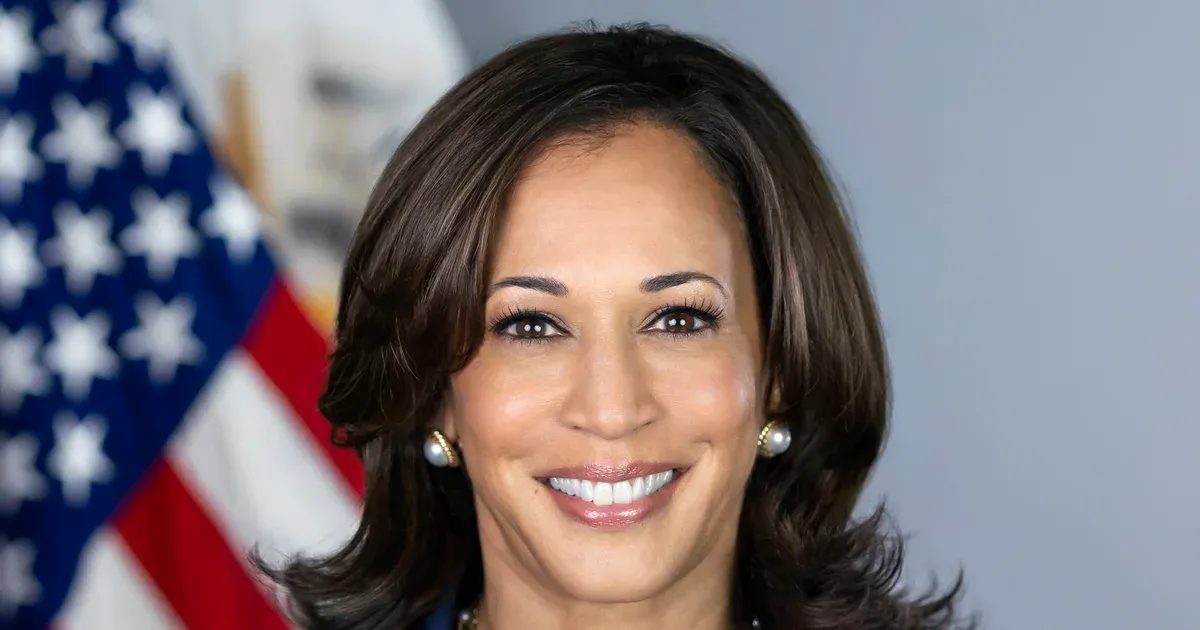
Kamala Harris addressed the National Action Network to declare she is considering a third campaign for the presidency. Harris spoke before a capacity crowd in New York City to deliver remarks that shifted her political trajectory toward the next election cycle. Attending the annual gathering of the civil rights organization, the former vice president used the platform to reconnect with a core constituency of the Democratic Party base. Democratic strategists assessed the early 2028 field on April 10, 2026, as Harris publicly weighed another run. Audience members greeted her with enthusiastic applause when she responded to inquiries about her future political intentions.
“I might, I might. I’m thinking about it,” the former vice-president told the crowd at a gathering of the National Action Network (NAN), a civil rights organization founded by Al Sharpton.
Direct confirmation of her interest followed months of speculation regarding whether the 2024 candidate would seek a return to the national stage. CBS News reporters noted that this potential campaign would represent her third bid for the White House, following her initial 2020 primary run and her subsequent time on the 2024 ticket. Sources at the event observed that her rhetoric has shifted toward a more critical stance on the current state of American governance. This strategic pivot indicates a desire to distance her future aspirations from the constraints of previous administrations.
Harris Addresses National Action Network in New York
Speakers at the event included top civil rights leaders and advocates who have long formed the backbone of urban political machines. Al Sharpton, the founder of the organization, hosted the Friday gathering which traditionally is a testing ground for Democratic hopefuls. New York City often acts as the first stop for candidates seeking to secure early endorsements and donor interest. Harris leaned into this tradition by positioning herself as a champion for marginalized communities. Local law enforcement estimated the attendance at the Manhattan venue reached several hundred delegates.
Democratic party dynamics are already shifting as several known governors and senators begin laying the groundwork for their own 2028 campaigns. Harris, however, maintains the advantage of high name recognition and an established national donor network. While some analysts suggest she faces an uphill climb due to previous electoral losses, her supporters point to her experience as a stabilizing factor. Political insiders at the NAN conference suggested that her early signals are a calculated move to freeze the field and deter other potential challengers. The event concluded with a series of panel discussions on voting rights and economic equity.
Status Quo Critique Highlights 2028 Strategy
ABC News reported that Kamala Harris took a sharp turn in her messaging by attacking the existing political order. Harris argued that the status quo in government and politics is failing to meet the needs of the electorate. Such comments represent a significant departure for a figure who was the second highest official in the federal government. Analysts interpret this as an attempt to rebrand herself as an outsider capable of disrupting a gridlocked Washington system. Discontent with the current pace of legislative progress appeared to be a central theme of her address.
Voters have expressed growing frustration with inflation, housing costs, and international instability. Harris tapped into these sentiments by suggesting that the current methods of governance require a fundamental overhaul. Her critique was not limited to opposition parties but extended to the general architecture of modern political engagement. Critics immediately pointed out the irony of a former vice president criticizing the status quo she helped maintain for four years. The speech lasted approximately forty minutes and covered a range of domestic policy initiatives.
Historical Context of a Third Presidential Bid
Records indicate that few modern politicians successfully secure their party nomination on a third attempt after failing twice before. Ronald Reagan and Richard Nixon are among the rare figures who transformed early losses into eventual White House victories. Harris faces the challenge of convincing the public that her third iteration will offer a different outcome than the 2020 or 2024 cycles. Historical data suggests that candidates who persist through multiple cycles often struggle with the perception of being yesterday's news. Her team appears to be studying these historical parallels to avoid the pitfalls of past perennial candidates.
Third campaigns often require a complete rethinking of the candidate's public persona. Harris seems to be testing a more populist and confrontational style compared to her previous prosecutorial approach. By focusing on the failures of the status quo, she is attempting to align herself with the insurgent energy that has defined recent American elections. Whether the Democratic primary electorate will embrace this shift stays a central question for 2028. Many donors are waiting for further polling data before committing resources to a specific candidate.
Civil Rights Activism Shapes a Potential Platform
Civil rights has always been the ideological home for the former vice president. By choosing the National Action Network as the site for her announcement, she is prioritizing the concerns of Black voters and urban organizers. This demographic remains the most loyal and influential block within the Democratic primary process. Sharpton emphasized the importance of representation and the need for candidates who understand the specific challenges facing minority communities. The focus on social justice is a clear indicator of her intended primary strategy.
National polls currently show a divided field with no clear frontrunner for the 2028 nomination. Harris intends to use her existing platform to stay relevant while younger leaders like Gavin Newsom or Josh Shapiro begin their own maneuvers. Her remarks on April 10, 2026, suggest a long-term plan to dominate the conversation early. Political observers in New York noted that her staff have already begun reaching out to key leaders in early primary states. This early movement is designed to project strength and institutional support. Every sentence of her speech was carefully calibrated to maximize media impact.
Harris Struggles to Make Reinvention Credible
Is the American electorate prepared for a third iteration of a candidate who has yet to define a singular legislative legacy? Kamala Harris is engaging in a transparently desperate attempt to reinvent herself as a disruptor of the very status quo she spent years defending from within the West Wing. The maneuver is more than a policy shift but a total abandonment of the moderate, institutionalist branding that defined her vice presidency. By attacking the current political order, she effectively admits that her own tenure failed to produce the results the country demands. It is a cynical calculation that assumes voters have short memories and an infinite appetite for rebranding.
Harris lacks the populist credibility to carry out this pivot convincingly. Claiming the status quo is broken while standing on a stage populated by the same political gatekeepers she has consorted with for decades rings hollow. Her return to the National Action Network is a retreat to the safest possible harbor, a move that suggests she cannot compete on the broader stage without the protection of identity-based alliances. The Democratic Party now faces a choice between looking forward to new leadership or doubling down on a candidate who has already demonstrated a limited ceiling with general election voters. The verdict is clear. It is a move born of necessity rather than strength. Harris knows her window is closing, and her only path to relevance is to burn the house she helped build. Voters will likely see through the veneer of this sudden radicalization. Ambition without results is a hard sell. A third defeat beckons.