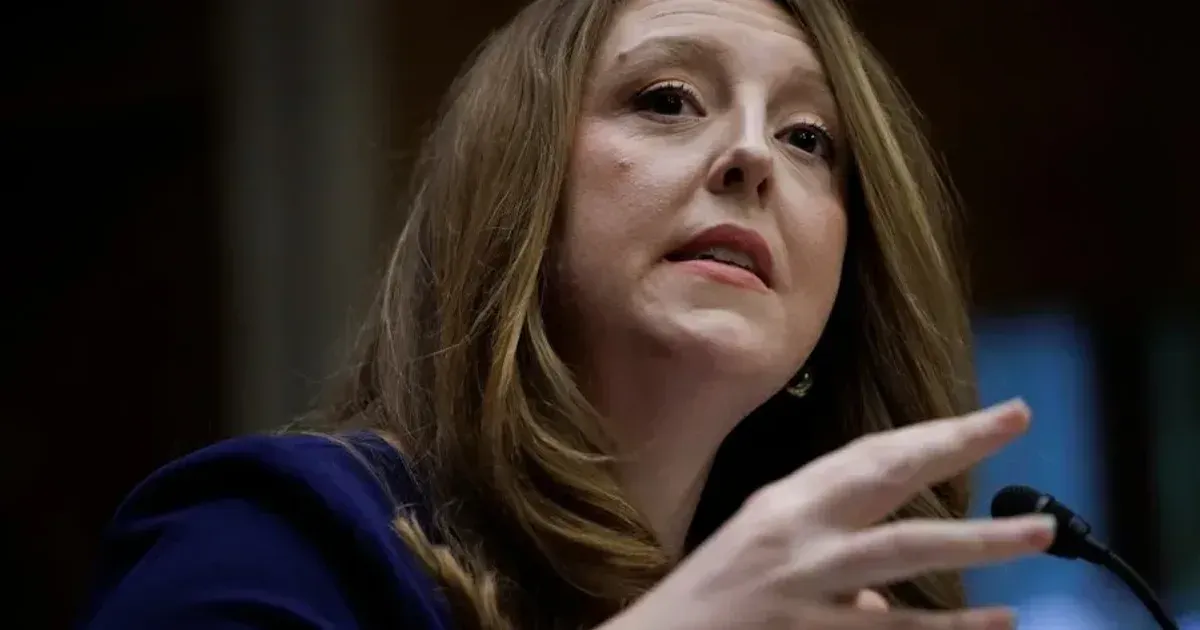
Casey Means provided specific written confirmation of her support for the measles vaccine in documents delivered to members of the Senate this week. Written responses obtained by MS NOW indicate that the Surgeon General nominee moved to eliminate ambiguity surrounding her previous stance on childhood immunizations. Critics had previously accused her of dodging direct questions during public testimony, leading to concerns regarding her commitment to long-standing public health protocols. This reversal aims to steady a confirmation process that appeared to be stumbling over ideological hurdles in late February. Nominees for top medical posts rarely face such intense scrutiny over basic immunization science. But the current political climate in 2026 has forced a collision between the health freedom movement and the administrative requirements of the federal government. Casey Means, a Stanford-trained physician known for her focus on metabolic health, found herself at the center of this friction when she initially refused to give a simple yes or no answer regarding the safety and necessity of the MMR shot. Lawmakers from both sides of the aisle interpreted her hesitation as a potential threat to national herd immunity levels.
Means Clarifies Vaccine Position
Senate Health, Education, Labor, and Pensions Committee members spent hours last month pressing Means on her views. Republican and Democratic senators alike pointed to rising infection rates as a reason for concern. During the live hearing, Means used broad language about choice and bodily autonomy, which satisfied some populist supporters but alienated the medical establishment. Skepticism grew when she suggested that the focus should remain on general wellness rather than specific pharmaceutical interventions. Senators demanded more clarity before moving her nomination to a floor vote. Public health experts warned that a Surgeon General who wavers on vaccines could inadvertently trigger a collapse in public trust. Records show that measles cases have reached a ten-year high in several Western countries. Data suggests that even a small drop in vaccination rates can lead to localized epidemics that cost the healthcare system millions. In her recent written follow-up, Means sought to repair the damage by stating that vaccinations are essential tools for preventing infectious disease. She specifically named the measles shot as a necessary component of pediatric care.
I believe that vaccines save lives and that people should take the measles vaccine.
Means wrote these words to clarify her intent after her oral testimony left many questions unanswered. Her written responses go further than her live appearance. She acknowledged the success of the measles vaccine in nearly eradicating the virus in the United States decades ago. She maintains that her broader mission will involve investigating the root causes of chronic illness and metabolic dysfunction. She appears to be attempting a difficult balancing act between her base of alternative health advocates and the pragmatic needs of the Centers for Disease Control and Prevention.
Senate Confirmation Pressure Rises
Measles remains one of the most contagious respiratory viruses known to science. A single infected person can spread the pathogen to up to 18 others in an unvaccinated population. Because the virus can hang in the air for up to two hours after an infected person leaves a room, containment is notoriously difficult. Health officials in the UK and US have struggled with clusters of cases in communities where vaccine uptake has slipped below the 95 percent threshold required for herd immunity. This situation makes the Surgeon General's messaging a matter of life and death for vulnerable populations. One outbreak in early 2025 resulted in dozens of hospitalizations and costs exceeding $2 million for a single county health department. Economists estimate that the global economic burden of vaccine-preventable diseases could reach $15 billion annually if current trends continue.
Measles Risk Shapes the Hearing
The math for confirmation remains tight.
Politicians realize that confirming a Surgeon General who contradicts basic medical consensus is a risky move in an election year. Moderate Republicans in particular expressed unease about endorsing a nominee who might be seen as anti-science. The transition team likely encouraged Means to adopt a more traditional tone in her written responses. This maneuver allows her to maintain her core philosophy of metabolic health while checking the necessary boxes to satisfy the Senate's institutionalists. It is a pragmatic shift intended to secure the votes needed for a simple majority.
Internal memos from the transition office suggest a desire to move past the vaccine controversy quickly. They want the public focus to return to her plans for overhauling the American food system and addressing the obesity crisis. These are the areas where Means has the strongest support and expertise. Yet the measles question acted as a gatekeeper. Until she cleared the hurdle of basic immunization support, her more ambitious policy goals remained stuck in committee limbo. The written responses act as a key to unlock the next phase of her confirmation. Means also addressed concerns about the safety of the vaccine manufacturing process in her letters. She stated that while she supports rigorous oversight and continuous safety monitoring, she does not believe the current vaccine schedule should be discarded. The detail was missing from her televised testimony. It suggests a more refined approach to her public communications strategy. The goal is now to portray her as a reformer who still respects the foundations of modern medicine.
Reaction from the American Academy of Pediatrics has been cautiously optimistic. Many doctors were relieved to see a firm commitment to measles vaccination in writing. They had spent weeks lobbying Senate offices to demand a clear statement from the nominee. The medical community remains wary of any language that might discourage parents from protecting their children. Some doctors still worry that her private views might differ from her official testimony, but they acknowledge that her written word carries serious weight in a professional context.
Health freedom groups have expressed a sense of betrayal. Some of her most vocal supporters on social media platforms had hoped she would use the Surgeon General's office to challenge the validity of all mandatory immunizations. For these activists, her endorsement of the measles shot is a surrender to the medical establishment. It creates a new set of challenges for Means as she tries to keep her original coalition intact while assuming a position of federal authority. She must now manage the expectations of two diametrically opposed camps. National health data continues to show that the US is at a crossroads regarding public health policy. If confirmed, Means will inherit a fractured system and a skeptical public. Her ability to handle these tensions will define her tenure as Surgeon General. She will be expected to lead the response to future outbreaks with the same clarity she finally provided to the Senate this week. The document she submitted to MS NOW is now a matter of public record that will follow her throughout her time in office.
Public Health Nominees Need Plain Answers
Should we be surprised that a political nominee would abandon their populist language the moment a federal salary and a fancy title are on the line? Casey Means spent years building a brand as a disruptor who questioned the fundamental pillars of the medical-industrial complex. When faced with the cold reality of a Senate vote count, she pivoted back to the safe, establishment-approved talking points about the measles vaccine. It is not a profile in courage; it is an exercise in bureaucratic survival. The health freedom crowd was sold a revolutionary, but they are getting a politician who knows how to read the room.
Means wants to have it both ways by keeping her metabolism-focused base happy while providing just enough cover for moderate senators to hit the 'yes' button. The calculated ambiguity is dangerous in a public health official. We deserve a Surgeon General who doesn't need a month of reflection and a batch of written follow-up questions to conclude that measles vaccines are a good idea. By playing these games, Means has already damaged her credibility before she has even taken the oath of office.
If she is this easily swayed by the threat of a failed confirmation, how will she stand up to the pharmaceutical lobbyists or the food industry giants she claims to want to take on? The answer is likely that she won't.