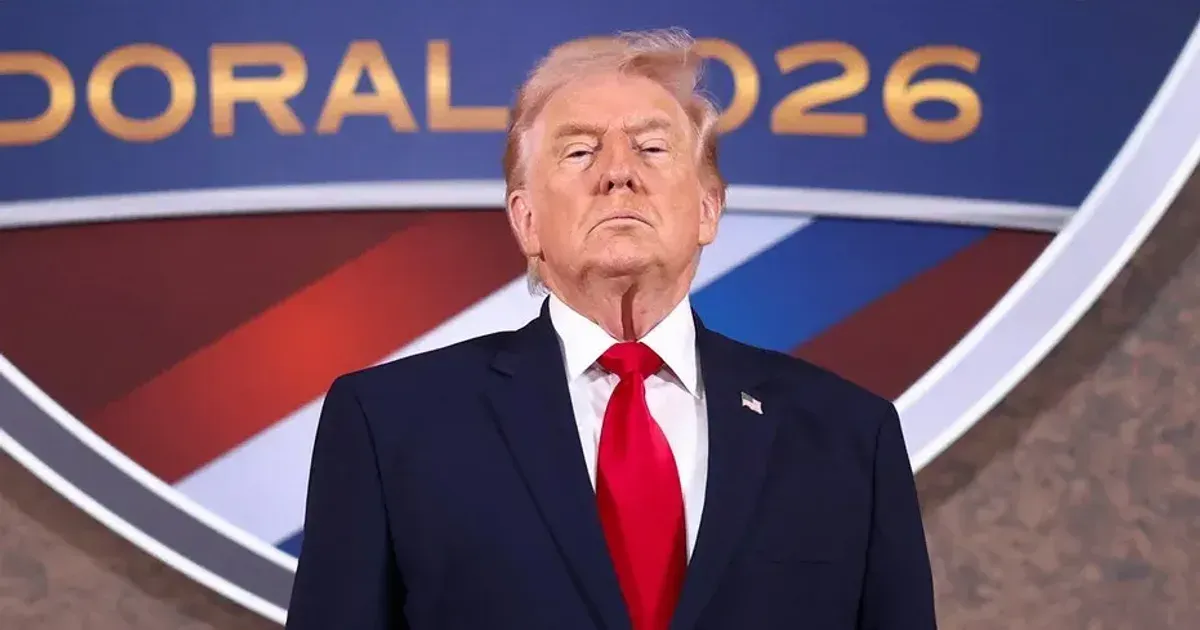
Mar-a-Lago echoed with the language of triumph on Sunday morning as presidential advisers distributed briefs on the tactical suppression of Persian Gulf hostilities. Donald Trump and Israeli officials stated that the primary phase of Operation Epic Fury successfully crippled military infrastructure in Iran, yet the geopolitical reality remains far more unstable than the victory laps suggest. The conflict began on February 28, and within two weeks, joint air operations neutralized dozens of missile sites and naval assets. But the victory claimed by Washington faces immediate friction from a global energy sector that is now reeling. Crude oil prices jumped 43% this month to close at $103 a barrel on Friday. Tehran maintains major leverage through its geographic proximity to the Strait of Hormuz, where shipping lanes are effectively shuttered. While the administration touts military dominance, the economic blowback is manifesting at American gas stations with localized spikes of 50 cents per gallon. Analysts at AAA reported the national average for regular gasoline reached $3.63 per gallon on Friday. Diesel prices followed a steeper path to $4.89 per gallon, creating a logistical hurdle for domestic trucking and freight industries. The story of a clean victory is complicated by the very affordability metrics that define the current political era.
The numbers do not lie.
Trump Claims Victory in Iran Campaign
Military commanders in Tel Aviv and Washington coordinated a barrage that disabled the majority of Iran's conventional naval fleet during the first ten days of March. Yet the remnants of the Iranian Revolutionary Guard Corps still possess the capacity to deploy naval mines and use small, fast-attack craft to harass commercial tankers. These asymmetrical tactics have rendered the Strait of Hormuz a high-risk zone for international insurers and logistics firms. Meanwhile, shipping traffic through the Bab el-Mandeb and the Persian Gulf has slowed to a crawl as companies wait for security guarantees. The U.S. Navy has increased its presence, but maritime safety remains elusive.
Global commodity markets reacted with swift instability to the blockade. Middle East exports of essential fertilizer ingredients, such as potash and phosphates, are being throttled by the closure of key shipping routes. This disruption threatens to trigger future food inflation just as domestic prices were beginning to stabilize. The agricultural sector in the Midwest relies heavily on these raw materials for the spring planting season. The administration contends that the military objectives take precedence over short-term market fluctuations.
Gasoline, which reached a peak of over $6 a gallon in some states under my predecessor, it was quite honestly a disaster, is now below $2.30 a gallon in most states.
President Trump highlighted those low prices during his State of the Union address on February 27, just hours before the conflict ignited. But the subsequent surge to $3.63 per gallon has forced a shift in the Republican messaging strategy. Trump characterized the recent price hike on Truth Social as a very small price to pay for national security. His previous campaign language focused almost exclusively on the necessity of cheap fuel for the American working class. This decision marks a sharp break from the populist energy policies that helped secure his return to the White House.
Oil Markets Resist the Message
Congressional Republicans now find themselves on the defensive as the Democratic opposition weaponizes the gas price data. For instance, several key swing-state representatives have expressed concern that energy costs will dominate the upcoming midterm elections. To reduce the political damage, the president directed the Strategic Petroleum Reserve to release 172 million gallons of crude oil on Wednesday. This 172 million-gallon release is a major intervention intended to flood the market and suppress the $100-per-barrel ceiling. Even the immediate impact on retail gas prices has been negligible as refining capacity remains the primary bottleneck.
Voters in the industrial heartland are feeling the squeeze most acutely at the diesel pump. Heavy industry and logistics firms have reported a sudden increase in operational costs, which they are beginning to pass on to consumers. At the same time, the administration is betting that the public will tolerate these costs if the military campaign yields a definitive regime change in Tehran. But the battered Iranian leadership is far from surrender. Tehran still maintains control over its uranium stockpiles, which remain a primary concern for international observers and the International Atomic Energy Agency.
Hormuz Risk Keeps Prices Unsteady
America's economic superpower has historically relied on its scale and diversity to absorb external shocks. Through interest rate increases and armed conflicts in Europe, the U.S. economy has proven strikingly durable over the last three years. In particular, the unemployment rate remained at a manageable 4.4% last month, a figure that is lower than the majority of monthly averages since the 1940s. Data from the Atlanta Fed suggests that first-quarter GDP is on track to grow at a 2.7% rate. This resilience allows the administration to pursue an aggressive foreign policy without the immediate fear of a deep recession.
Market analysts at Bloomberg and Reuters have noted that the U.S. is now a net exporter of energy, which provides a buffer that did not exist during the oil shocks of the 1970s. The domestic AI boom has continued to drive capital investment, creating a secondary layer of growth that is decoupled from traditional energy markets. Yet the dependency on global supply chains for specialized chemicals and fertilizer ingredients remains a vulnerability. If the conflict in the Persian Gulf extends into the summer, the cumulative stress on the agricultural sector could erode the gains seen in the broader economy. Oil closed above $100 per barrel for the first time since 2022 on Thursday.
Negotiations regarding the Iranian nuclear program have completely stalled as military operations continue. While the U.S. and Israel have successfully targeted delivery systems, the core scientific knowledge and enriched material remain largely intact. According to intelligence reports, Tehran has moved its most critical assets into deep underground facilities that are difficult to reach with conventional munitions. Yet the push to end the war is complicated by these very assets, which Iran uses as a bargaining chip to prevent a total invasion. The question of whether Israel will take the final step to strike these hardened facilities remains unanswered.
Regional allies in the Gulf, including Saudi Arabia and the United Arab Emirates, have maintained a cautious silence regarding the escalation. These nations are balancing their security partnership with Washington against the threat of Iranian retaliation on their own oil infrastructure. For instance, the 2019 attacks on the Abqaiq processing facility serve as a historical precedent for what a pressured Tehran might attempt. The U.S. has deployed additional Patriot missile batteries to the region. Tehran remains a nuclear-capable wild card.
Victory Claims Do Not Calm Markets
Is the American public prepared to trade its economic stability for a scorched-earth victory in the Middle East? Conventional wisdom suggests that voters care more about their wallets than foreign regime change, yet the current administration is gambling on a shift in that hierarchy. By calling the surge in gas prices a very small price to pay, the president has effectively abandoned the affordability platform that defined his rise. It is not just a tactical shift; it is a fundamental realignment of priorities that could alienate the very base that demands isolationist restraint. We see a recurring pattern where military hubris overrides economic reality, and the 172 million gallon release from the Strategic Petroleum Reserve is a desperate move to mask a structural failure. If the Strait of Hormuz remains blocked, no amount of domestic oil can prevent a global inflationary spiral that will eventually reach the American consumer. The administration claims that the Iranian regime is on the brink of collapse, but a cornered adversary with nuclear ambitions is often more dangerous than a stable one.
True victory in the region requires not just neutralizing missile sites; it requires an economic strategy that the current White House seems to have traded for ballistic theater.