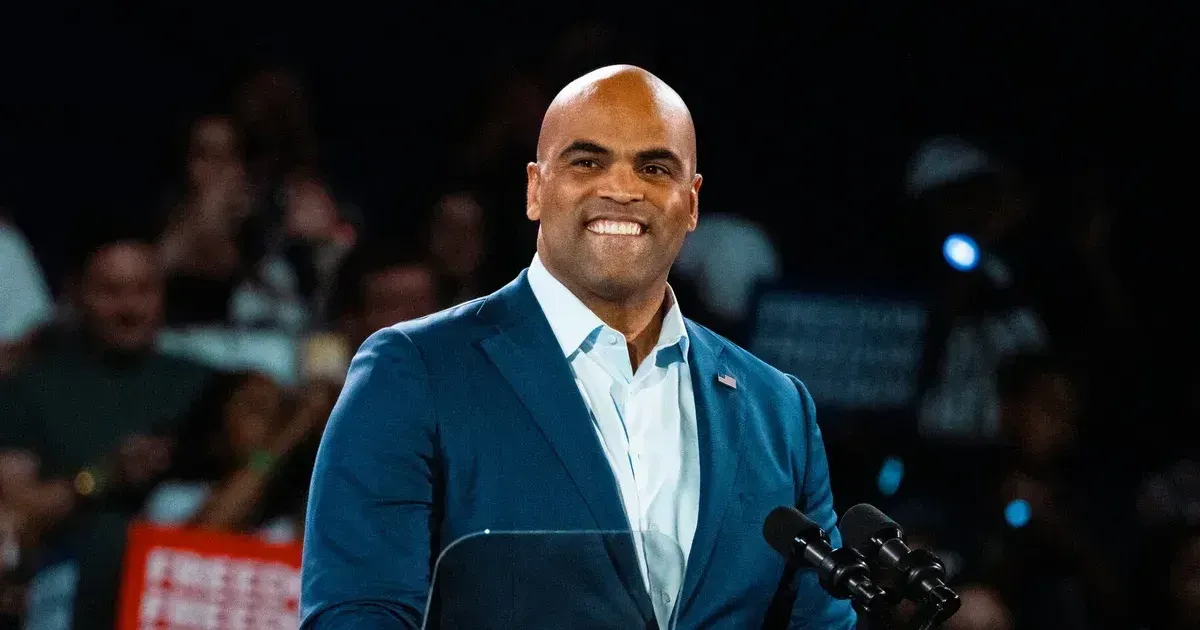
Dallas voters returned a veteran legislator to the forefront of North Texas politics during a Tuesday primary runoff. Colin Allred secured the Democratic nomination for a key House seat on May 27, 2026, after outpacing a powerful challenger. His victory over Representative Julie Johnson effectively clears his path to the general election in November. This specific contest emerged as one of the most closely watched local races in the region because both candidates were high-profile figures. Success for Allred ensures his return to a legislative environment where he previously established a significant record. The outcome reflects a preference among the local electorate for his specific brand of representation within the Dallas metropolitan area.
Results from the runoff indicate a decisive margin that favored Allred as he navigated the final stages of the primary cycle. Johnson, a sitting representative, challenged for the seat in a campaign that highlighted differing approaches to regional policy. The primary process in Texas requires a runoff when no candidate secures an absolute majority in the initial round of voting. Allred used this extended timeline to consolidate support among diverse factions of the party infrastructure. He relied on a combination of previous legislative experience and a sound fundraising network to maintain momentum through the late spring.
While Johnson maintained strong ties within certain legislative circles, the broader coalition of voters gravitated toward Allred during the final weeks of the campaign. Official tallies confirmed the shift in preference as precincts reported their final counts late Tuesday evening.
General Election Outlook in North Texas
Political analysts now view the general election as a secondary hurdle for the newly minted Democratic nominee. This Dallas-based district carries a heavily Democratic lean, making the primary winner the overwhelming favorite to secure the seat in the fall. Voter registration data and historical performance metrics suggest a Republican challenger faces an uphill climb in this specific geography. Allred enters the next phase of the cycle with the advantages of incumbency-like name recognition and a unified party base.
The district boundaries include a mix of urban centers and diversifying suburbs that have consistently trended toward Democratic candidates over the last decade. Party leadership expects this seat to remain securely within their column, allowing resources to be diverted to more competitive districts elsewhere in the state. Statistical modeling of the district reinforces the conclusion that the primary runoff was the main barrier to entry for the 2026 term.
Reporting from the race noted that Allred beat the incumbent, Representative Julie Johnson, and is now favored in the heavily Democratic Dallas-based district.
Runoff Result Reshapes November Ballot
Logistical preparations for the November ballot are already underway as the primary cycle concludes. Allred must now pivot from internal party debates to a broader platform designed to appeal to the general electorate. His campaign strategy likely involves emphasizing stability and his record of constituent service from prior terms. The transition from a runoff to a general election involves a shift in messaging that addresses wider regional concerns. Johnson’s supporters are expected to align behind Allred to ensure the party maintains its hold on the North Texas delegation.
The consolidation of support is a standard feature of the runoff system once a winner is certified. The focus for the Democratic apparatus now moves toward turnout operations to ensure the projected victory materializes during the general election cycle. Allred remains positioned to act as a primary voice for the Dallas area in the upcoming legislative session.
Funding levels and volunteer engagement often fluctuate following a disputed primary, yet Allred appears to have maintained a stable core of backers. His victory suggests that the electorate valued his previous experience in Washington over the specific platform offered by Johnson. The loss for Johnson marks a rare instance of a sitting representative falling in a primary runoff within this district. Her campaign struggled to overcome the name recognition Allred built during his previous campaigns for higher office. Observers noted that the local party infrastructure remained largely neutral until the final days of the race.
Once the trend toward Allred became clear, several local organizations signaled their support for the eventual winner. The final margin of victory provided a clear mandate for Allred as he prepares for the national stage. No substantive challenges to the result are expected from the Johnson camp, which has traditionally prioritized party unity after primary contests. Allred's return to the ballot is a continuation of the political status quo for the 33rd district area.
Democratic strategists point to this race as evidence of the enduring appeal of established figures in the North Texas political environment. The ability to win a runoff requires a specialized ground game that Allred successfully deployed across the district's various neighborhoods. His team focused on high-tendency voters who historically participate in late-cycle primary contests. The tactical focus allowed him to offset any localized advantages Johnson might have held in specific precincts. The geography of the district, which includes substantial portions of the Dallas urban core, played into Allred's strengths as a known quantity.
His campaign messaging stayed focused on national legislative priorities rather than becoming bogged down in local administrative disputes. The approach connected with a primary electorate that views the seat through the lens of national power dynamics. The final vote count provides a baseline of support that Allred will look to expand as the November contest approaches. His victory on Tuesday is the definitive end to the primary season in Dallas.