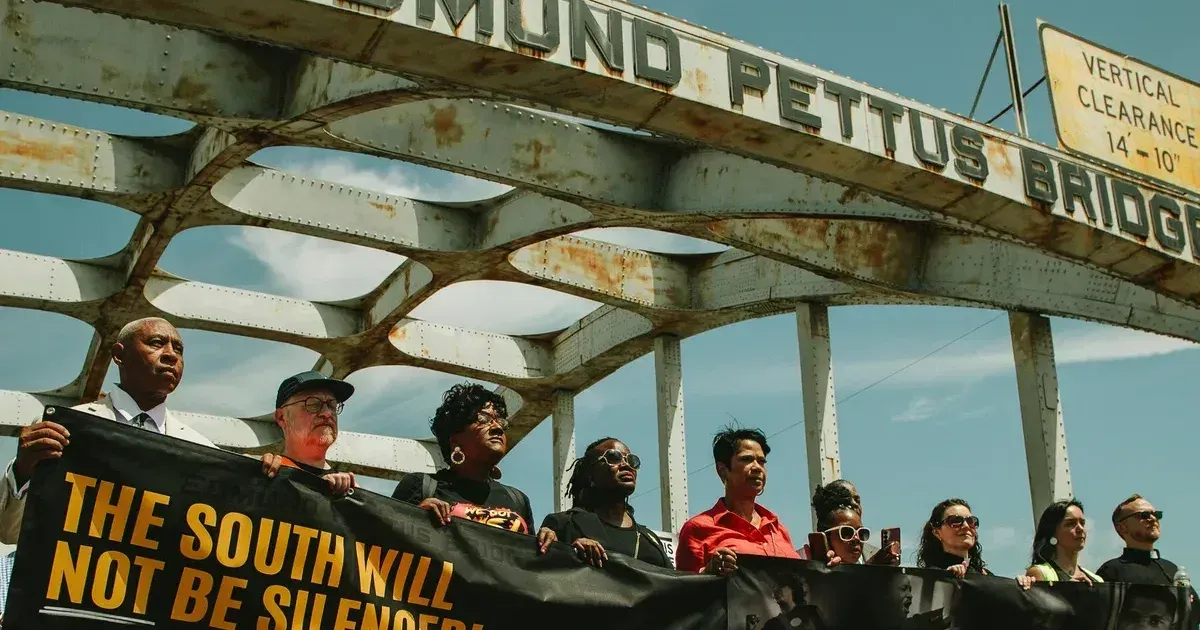
Alabama redistricting plans faced a serious legal setback after a federal court panel invalidated the latest congressional map. Section 2 of the Voting Rights Act remains the central foundation of this dispute, which has spanned several legislative cycles. Judges issued the ruling on May 26, 2026, finding that the proposed boundaries continued to marginalize Black voters in the state. Federal oversight remains a requirement for Alabama because of historical evidence of minority vote dilution across the Deep South.
Legal challenges began years ago when civil rights groups argued that a single majority-Black district was insufficient for a state where Black residents include nearly 27 percent of the population. This specific ruling follows a series of attempts by the legislature to maintain a status quo that favored Republican incumbents. Lawyers representing the plaintiffs successfully argued that the map denied minority communities an equal opportunity to elect candidates of their choice. Judges agreed that the state ignored previous instructions to create a second district with a substantial Black voting-age population.
State leaders initially resisted the mandate by submitting maps that only slightly adjusted the demographics of existing districts. Under the rejected plan, the second district reached a Black voting-age population of only 39.9 percent. Republicans claimed this was a good-faith effort to comply with the law while maintaining traditional redistricting principles. Voting rights advocates countered that anything less than a true opportunity district would fail to meet federal standards. Projections indicate that a properly drawn map would likely result in a second seat for the Democratic Party.
Legal Standards and Voting Rights Act Compliance
Attorney General Steve Marshall responded to the ruling by defending the state's authority to manage its own electoral boundaries. Voting patterns in Alabama often fall along racial lines, making the placement of district borders a high-stakes mathematical exercise. Alabama officials maintain that the court is overstepping its bounds by mandating specific racial targets. In previous filings, the state argued that the Supreme Court should reconsider the reach of federal intervention in local mapmaking. Resistance from state leaders remains the primary obstacle to a final map.
Democratic representatives celebrated the decision as a victory for representative democracy. Civil rights organizations noted that the ruling comes just months before critical filing deadlines for the next election cycle. Because the court found the map unlawful, a special master may be appointed to draw non-partisan lines. Judicial intervention occurs only when the legislature fails to produce a map that satisfies constitutional and statutory requirements. Since the 2020 Census, the state has struggled to settle on a plan that survives court scrutiny.
National political groups are closely monitoring the case because it could influence the balance of power in Washington. Each seat in the House of Representatives is essential for both parties as they prepare for the 2026 midterms. By blocking the current map, the court has effectively put every incumbent on notice that their territory might change. If a new map is adopted, it would create a more competitive landscape in a state long dominated by one-party rule.
Political Realignment and Electoral Consequences
Judicial panels often prefer for legislatures to handle their own business, but they will act when laws are broken. Statistics from recent elections show that Black voters in Alabama consistently support different candidates than the white majority. Previous attempts to pack these voters into a single district limited their overall influence on the state's delegation. Both sides have spent millions of dollars in legal fees during this multi-year confrontation. Officials in the governor's office have not yet indicated if they will call a special session to address the court's demands.
"Alabama will appeal this decision immediately to ensure our sovereign right to draw our own districts is respected," said Steve Marshall.
Several legal experts believe the case is headed back to the highest court in the nation. Pressure is mounting on the state to resolve the issue before the 2026 primary elections begin. Justice Department officials have previously intervened in similar cases to support the enforcement of the Voting Rights Act. History shows that redistricting battles in Alabama rarely end without multiple rounds of litigation. Many voters express frustration with the lack of clarity regarding their future representation.
One possible outcome is the implementation of a map drawn by a court-appointed expert. Another involves the state reaching a compromise with the plaintiffs to avoid further delays. New boundaries must be finalized by early next year to prevent chaos during the administration of the vote. Specific details regarding the census blocks and county lines will determine which party gains the upper hand. Population shifts within the state suggest that the northern and central regions require the most substantial adjustments.