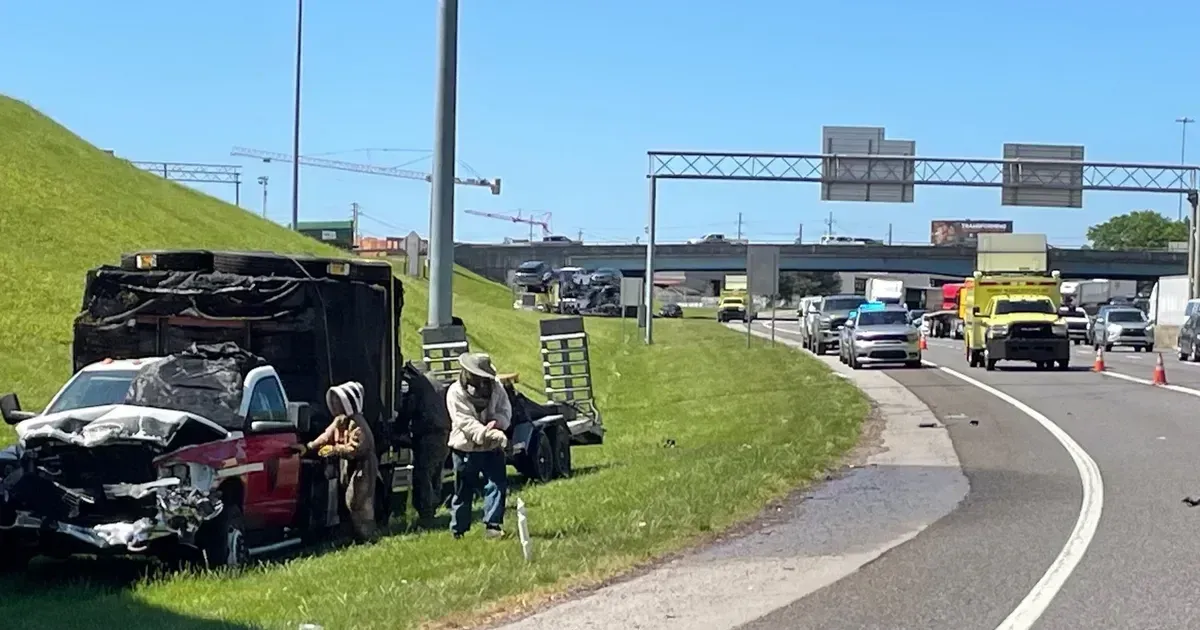
A commercial truck crash released about one million bees near an interstate ramp, creating the kind of emergency that requires patience more than speed.
Traffic officials first treated the scene as a crash response, then quickly realized the cargo would define the cleanup. The crash forced a closure on April 18, 2026, while police, transportation crews and beekeeping specialists worked around damaged hives. The immediate concern was traffic safety, but responders also had to avoid turning a manageable spill into a wider swarm problem.
Honeybees are valuable livestock as well as pollinators, so the recovery was not simply a cleanup. Each hive represented agricultural work, commercial value and a living colony under stress.
Ramp Closure Turns Unusual
Truck crashes usually bring fuel, cargo or debris concerns. This one added movement, heat, defensive insects and the need for specialists who understood how to calm and collect bees without causing more loss.
The recovery process requires specialized expertise and serious patience.
That assessment from officials captured the practical challenge. Rushing the scene could endanger responders, motorists and the bees themselves.
Drivers were kept away while crews stabilized the area. Even people not allergic to stings can be put at risk if a large number of bees becomes agitated around a crash site.
Why Bee Cargo Matters
Commercial hives are often moved for pollination work, especially around farms that depend on managed bees during narrow growing windows. A crash can therefore disrupt more than one driver or one shipment.
The interstate closure was a reminder that unusual cargo requires unusual emergency planning. Local agencies may now review how quickly they can reach beekeepers when similar incidents occur.
The scene was strange, but the response had to be disciplined: secure the road, protect the public, recover the hives and let experts handle the insects.
The incident also highlighted how specialized agricultural transport can create public-safety problems far from farms. Honeybee colonies are routinely moved to support pollination, but most drivers passing an interstate ramp do not expect a crash scene to involve active hives and protective gear.
Beekeepers usually think in terms of colony stress, temperature and queen survival. Emergency crews think first about traffic lanes, fuel leaks and injured people. A scene like this forces those two kinds of expertise to meet quickly, because the wrong movement can scatter bees or destroy hives that might otherwise be saved.
Public communication matters too. Officials need to tell drivers why a ramp remains closed even after the vehicle is stabilized. When the cargo is alive, clearing the road is not as simple as loading boxes onto another truck. Crews have to wait for the safest collection window.
The crash will likely be remembered for the unusual image, but the operational lesson is practical. Agencies that know whom to call for animal cargo, bees or other specialized loads can shorten closures and reduce risk when rare incidents happen again.
The recovery also had an environmental dimension. Honeybees are under pressure from disease, pesticides, habitat loss and weather shifts, so losing large numbers in a preventable cleanup would have been more than a cargo problem. Saving colonies where possible protects the beekeeper, the farms expecting pollination work and the wider agricultural chain that depends on managed hives. Motorists may remember the scene as strange, but emergency planners will remember the coordination challenge. A crash involving live cargo tests whether agencies can slow down, bring in the right expertise and keep public curiosity from making the scene more dangerous. The safest response was not the fastest-looking one. It was the one that treated the bees as living cargo and the road as a controlled work site. The trucking company and hive owners may still face losses even if most colonies are recovered. Damaged boxes, stressed queens, dead bees and delayed pollination schedules can all carry costs that are not obvious from traffic cameras. That is why officials often treat incidents involving bees as both public-safety events and commercial agricultural disruptions. A normal cargo spill can be swept, lifted or towed. A bee spill has to be stabilized, calmed and partly rescued before the road can truly return to normal. The incident also gives transportation companies a reason to review routing, driver briefings and emergency contacts for live cargo. When a shipment can move, sting or die from mishandling, prevention and response planning become part of the cargo's value. The event should also remind shippers that unusual cargo needs clear contingency planning. A driver hauling live bees is not only moving freight; they are moving colonies that can affect traffic, agriculture and public safety if something goes wrong. That planning lesson is likely to matter more than the novelty of the swarm once the road fully reopens. That makes the recovery work part of the story, not a footnote. A rare crash like this is memorable because it sounds almost comic, but the response is serious. It links road safety, agricultural logistics and animal handling in one scene, and that is why the final measure is not only how quickly traffic moved again, but how carefully the hives were saved.