Costa Rican trade officials have turned openly critical of a 15-year-old economic partnership with Beijing. Minister of Foreign Trade Manuel Tovar confirmed that the promised surge in agricultural and industrial exports to the Asian superpower has failed to materialize despite years of diplomatic efforts. Officials voiced their dissatisfaction on April 17, 2026, after export gains again fell short of expectations. San José established a free trade agreement with China in 2011, hoping to diversify its export portfolio beyond traditional North American and European partners. That optimism has largely evaporated as the trade deficit between the two nations continues to widen. Recent government data indicates that while Chinese consumer goods flooded the local market, Costa Rican producers struggled to navigate the complex regulatory hurdles imposed by Chinese customs authorities.
Economic ties between the two nations became a cornerstone of foreign policy in 2007 when San José broke enduring relations with Taiwan. Leaders at the time framed the pivot as a necessary step to secure access to the world’s most populous consumer market. Negotiators finalized the Free Trade Agreement (FTA) with high expectations for the coffee, beef, and fruit sectors. Instead of a balanced exchange, the relationship transformed into a one-way street for Chinese manufactured electronics and machinery. Ministry of Foreign Trade records show that the volume of trade is sharply skewed toward imports, leaving local industry leaders questioning the fundamental value of the 2011 accord.
San José Examines Trade Imbalance Data
Statistical reports released by the Ministry of Foreign Trade reveal a persistent gap that local businesses find difficult to bridge. In 2025, imports from the Asian giant reached record levels, covering everything from electric vehicles to telecommunications infrastructure. Costa Rican exports, by contrast, remained concentrated in a handful of low-margin commodities. Trade officials noted that the total value of goods shipped to Beijing is a fraction of the initial projections made during the FTA signing ceremony. Total exports to the region have stagnated around $400 million annually while imports frequently exceed $3 billion.
Commerce requires symmetry to be sustainable over the long term. Local manufacturers have reported that even when they find Chinese buyers, the logistical costs and administrative burdens outweigh the potential profits. Many small and medium enterprises have abandoned their efforts to enter the market entirely. These companies prefer to focus on the United States, where trade rules are more transparent and predictable. Export growth in the dairy and meat sectors has been particularly disappointing for regional cooperatives that invested heavily in expansion.
Export volume to China has not met the expectations held when the agreement was signed more than a decade ago, as market access remains constrained by technicalities that favor Chinese producers.
Technical barriers to trade serve as a silent filter for Costa Rican products. While the FTA officially removed many tariffs, non-tariff measures have proven just as restrictive. San José producers must comply with exhaustive sanitary and phytosanitary protocols that can take years to clear. Chinese inspectors often require site visits and specific packaging standards that differ from international norms. These requirements create a bottleneck for perishable goods like pineapple and melon. One agricultural cooperative in San Carlos reported waiting three years for a permit that never arrived.
Barriers to Chinese Market Entry
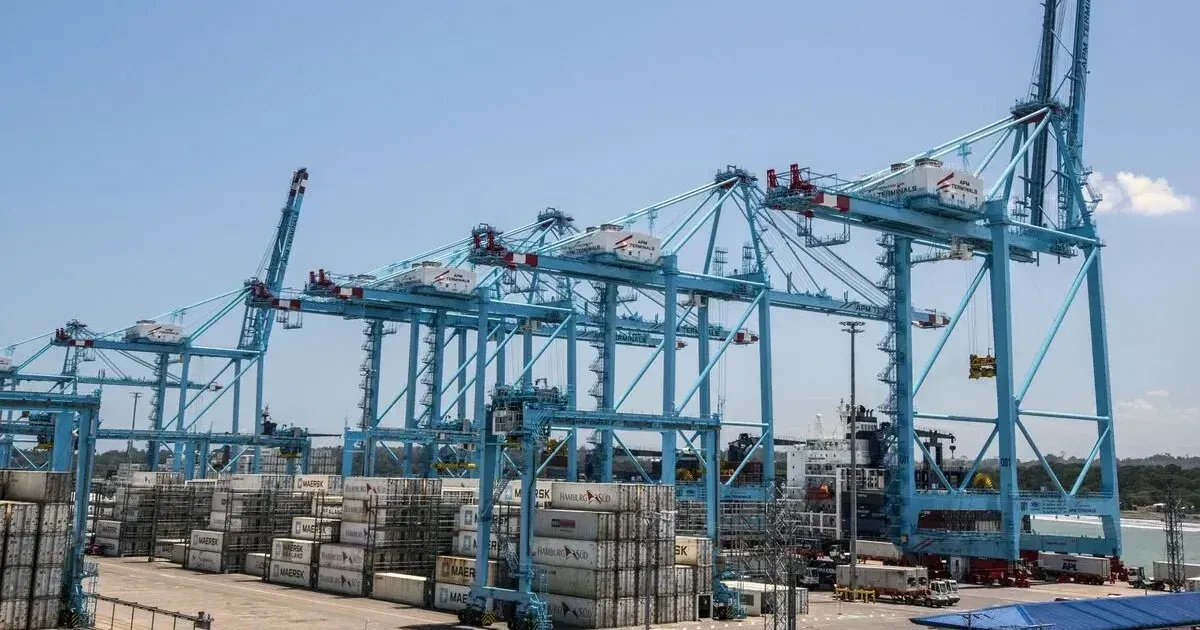
Logistics also play a role in the lopsided nature of this economic relationship. Shipping a container from the port of Moín to Shanghai involves longer transit times and higher freight rates compared to routes heading toward the Atlantic. Larger Chinese vessels often prioritize high-volume ports in South America, leaving Central American exporters with fewer options and higher costs. Geographic disadvantage is compounded by a lack of deep-water port infrastructure capable of handling the newest generation of mega-ships. Investments in port modernization have moved slowly despite repeated promises of infrastructure assistance from Beijing.
Direct investment from the Asian side has also fallen short of the heights envisioned in 2007. Initial discussions suggested that Chinese firms would establish manufacturing hubs in Costa Rica to serve as a springboard for the Americas. Very few of these projects moved beyond the memorandum of understanding phase. Most Chinese capital has instead targeted government-backed infrastructure projects rather than private-sector joint ventures. Local labor laws and environmental regulations have occasionally clashed with the operating models of Chinese state-owned enterprises. A major refinery project and a highway expansion both faced significant delays due to these cultural and legal frictions.
Agricultural Sector Frustration Grows
Beef producers initially viewed the 2011 agreement as a golden ticket to the rising middle class in Shanghai and Beijing. They discovered that the market is fiercely competitive and dominated by established players from Australia and Brazil. China maintains strict quotas and sudden health-related bans that can disrupt supply chains without warning. Costa Rican ranchers found themselves vulnerable to these sudden shifts in policy. Cattle producers have now shifted their primary focus back to regional markets in Central America and the Caribbean. Diversification efforts have yielded better results in the European Union than in East Asia.
Coffee exporters face a different set of challenges related to branding and consumer habits. While tea remains the dominant beverage in the East, coffee consumption is growing, but primarily through large international chains. These chains often source their beans from larger producers in Vietnam or Brazil to ensure consistency and lower prices. Specialized Costa Rican beans struggle to compete on price and lack the marketing budget required to build brand awareness among Chinese consumers. Total coffee shipments to the region account for less than 3% of the national crop. High-end specialty roasters have found a niche, but the volume is too small to impact the national trade balance.
Future Costa Rican trade policy now depends on whether officials can diversify without deepening the imbalance.
Government leaders are now exploring alternative partnerships to reduce their dependence on a deal that underperforms. Manuel Tovar indicated that San José is looking closely at joining the Comprehensive and Progressive Agreement for Trans-Pacific Partnership (CPTPP). This move would align the country with other Pacific Rim economies like Japan, Australia, and Vietnam. Diversification is the new mantra for the current administration. They believe that a broader network of smaller, more reliable partners is safer than relying on a single, dominant economic power. Preliminary talks with the United Arab Emirates and Israel are already underway.
Frustration with the FTA has prompted a review of all existing commercial treaties to ensure they serve the national interest. San José is not alone in this sentiment, as several neighbors have expressed similar concerns about the realities of trading with a state-directed economy. Economic diplomacy requires more than signed documents; it requires a level playing field. Many in the capital now view the current imbalance as a structural failure instead of a temporary slump. Costa Rica currently maintains 14 free trade agreements covering over 50 countries worldwide.
What Costa Rica Must Rebalance
Small nations often mistake diplomatic recognition for a guaranteed ticket to prosperity, and the current disillusionment in San José is the predictable result of such naivety. When Costa Rica pivoted toward Beijing in 2007, it traded a stable, niche relationship with Taiwan for the mirage of a billion-customer market that was never truly open. Current officials are finally acknowledging what economists have whispered for years: China is an extractor of resources and a seller of finished goods, not a benevolent partner for small-scale industrial development. Expecting a large trade surplus from a state-capitalist giant was a strategic blunder born of short-term political greed.
A lopsided trade relationship is not a bug; it is a feature of the Chinese economic model. By using non-tariff barriers and grueling sanitary protocols, Beijing effectively nullifies the advantages of an FTA while enjoying free access to the Costa Rican consumer market. San José finds itself in a classic trap where its domestic industries are hollowed out by cheap imports while its premium exports are choked by red tape. That reality is a cold lesson in the asymmetry of power. If the Ministry of Foreign Trade truly wants to correct this imbalance, it must stop pleading for fairness and start implementing reciprocal barriers. Anything less is a managed surrender of economic sovereignty.
Will the shift toward the CPTPP solve the problem? Unlikely. Costa Rica still faces a lack of competitive scale in manufacturing and a high cost of doing business locally. Shifting focus to new partners is a welcome distraction, but it does not fix the underlying productivity gap. Easy growth through FTAs is over. San José must now decide if it has the stomach to play a harder game of protectionism or if it will continue to be a retail outlet for the factories of the East. The conclusion is blunt.