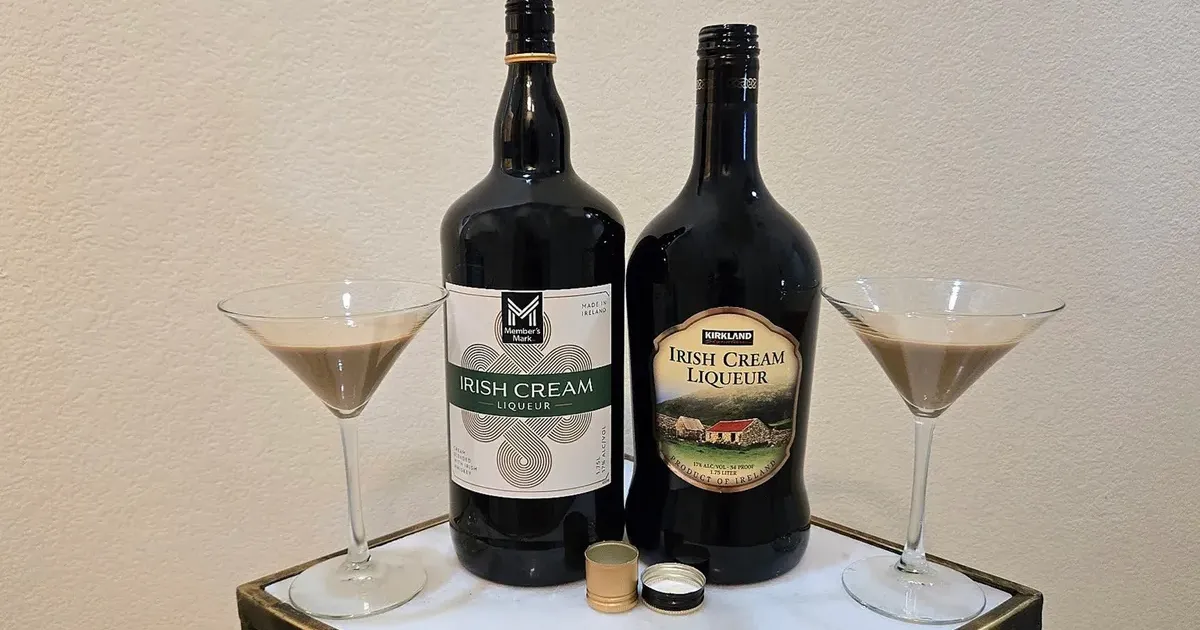
Issaquah-based retail giant Costco continues to disrupt the high-end spirits market as 2026 consumer data indicates a massive migration toward house brands. St. Patrick's Day preparations typically drive a seasonal surge in spirits sales, but the current market shows a distinct shift toward private label dominance. Shoppers often face a choice between two warehouse behemoths when looking for a bargain bottle of cream liqueur. One contender is the Kirkland Signature Irish Cream, while the other is the Member's Mark equivalent from Sam's Club. Price remains the primary lever for consumer conversion in this specific retail segment.
Quality often bridges the gap between thrift and luxury.
March 13, 2026, marks a quiet revolution in the warehouse aisles where private labels have moved beyond mere imitations to become industry standards. Comparison data reveals that Kirkland Signature Irish Cream consistently undercuts national brands like Baileys by more than half the price. A 1.75-liter bottle at Costco retails for roughly $15.00, whereas the name-brand version frequently exceeds thirty dollars for a smaller volume. Walmart-owned Sam's Club attempts to compete with its own proprietary blend, often priced within cents of its rival. But price is only one part of the equation for members who demand a premium experience from their bulk purchases.
Kirkland Irish Cream Challenges Member's Mark Dominance
Spirits experts at Tasting Table conducted a head-to-head analysis of these two warehouse giants to determine which bottle deserves a spot on the bar cart. Kirkland Signature Irish Cream stands out for its specific manufacturing process, which utilizes real dairy cream and Irish whiskey. The viscosity of the Costco blend is especially thick, providing a mouthfeel that mimics high-end artisanal liqueurs. By contrast, the Member's Mark version from Sam's Club often presents a thinner consistency. It tends to favor a stronger chocolate and vanilla profile over the distinct whiskey bite found in the Kirkland bottle. Each bottle contains exactly 17 percent alcohol by volume.
Consistency remains a hallmark of the Kirkland brand.
Blind taste tests often favor the Costco variant for its balanced sweetness. Some reviewers note that the Sam's Club offering can feel overly sugary, which may overpower the nuances of a coffee-based cocktail. Even so, the Member's Mark brand has a loyal following among those who prefer a dessert-forward liqueur. The Costco version leans into its Irish heritage with a more strong spirit base that holds up better when served over ice. For one, the dairy component in the Kirkland bottle feels richer, likely due to the sourcing of fresh cream from Irish pastures. To that end, the logistics of keeping these fresh ingredients stable for shelf life requires a sophisticated cold-chain network.
Business Center Access Expands for Standard Costco Members
Many shoppers overlook a significant perk of their annual membership fee. Costco Business Center locations operate as a distinct entity from the traditional consumer-facing warehouses, yet they are open to every person holding a standard Gold Star or Executive membership. These centers lack many of the amenities found in regular stores, such as rotisserie chickens, optical departments, or clothing aisles. Instead, they cater to the needs of restaurant owners and convenience store operators. In fact, the inventory consists of industrial-sized quantities of products that the average suburban shopper might never consider. Most of these locations are strategically placed in industrial zones with easy highway access.
Operating hours at these centers provide a distinct advantage for early risers.
Business Centers open as early as 7 a.m., which is several hours before the main warehouses unlock their doors. This schedule allows professionals to restock their supplies before the morning rush. Separately, the selection of beverages and snacks is sharply broader than what is found at a standard warehouse. You might find twenty different varieties of Gatorade or massive five-gallon buckets of soy sauce. According to Delish, the sheer scale of the Costco Business Center is often a shock to the uninitiated. This access remains one of the most underutilized benefits of the $65 annual membership fee.
Most shoppers have no idea they already have access to this
Inventory at these locations includes items rarely seen in the main warehouses, such as whole lambs or commercial-grade kitchen equipment. At the same time, the aisles are wider and the foot traffic is sharply lower, leading to a faster checkout process. Shoppers who need to stock up on bulk beverages for a large event often find the selection far superior to the consumer warehouses. Business Centers are currently located in about 15 states, primarily concentrated on the West Coast and in the Northeast. Still, the expansion of these specialized hubs continues as Costco seeks to capture more of the business-to-business market share.
Comparing Private Label Spirits Production Costs
Production of high-volume spirits requires a delicate balance of ingredient quality and logistical efficiency. Kirkland Signature products are famous for being manufactured by top-tier suppliers who also produce name-brand equivalents. While the exact distillery for the Irish cream remains a trade secret, the quality suggests a partnership with a major Irish producer. The cost savings are achieved through minimal marketing spend and the use of simple, functional packaging. Sam's Club follows a similar strategy with its Member's Mark line, leveraging the massive purchasing power of Walmart to drive down the cost of glass and labels. Wholesale margins on these items are razor-thin, but the volume sold at $15.00 per bottle generates substantial revenue.
Supply chain stability is critical for dairy-based liqueurs.
Ingredients must be sourced and blended under strict temperature controls to prevent the cream from curdling or separating. Kirkland's recipe uses a stabilizer that allows the bottle to remain shelf-stable for up to two years when unopened. And the inclusion of authentic Irish whiskey gives the product a pedigree that many other discount brands lack. By contrast, some lower-tier competitors use neutral grain spirits and artificial flavorings to mimic the taste of real Irish cream. Costco avoids these shortcuts to maintain the reputation of the Kirkland label. This pricing model forces competitors to either lower their prices or improve their quality to remain relevant.
Supply Chain Advantages of Warehouse Business Centers
Logistical prowess is the engine that drives the success of the business-oriented locations. Business Centers employ a delivery fleet that is separate from the standard warehouse distribution network. These trucks are designed to handle narrow city streets and deliver pallets directly to small businesses. In particular, the focus is on high-frequency, high-volume items that require constant replenishment. It includes everything from office paper to bulk cleaning supplies. The efficiency of this system allows Costco to keep overhead low, which in turn keeps prices down for the end consumer. Business members often utilize these services to avoid the time-consuming task of visiting the warehouse in person.
Regional differences in inventory reflect the local business field.
A Business Center in a metropolitan area like Los Angeles might stock higher quantities of small-scale restaurant supplies compared to a location in a more suburban area. Yet the core selection of Kirkland Signature products remains consistent across all locations. The consistency ensures that a business owner can rely on the same product quality regardless of where they are located. At its core, the Business Center model is an exercise in operational efficiency. The absence of a food court or a pharmacy reduces the complexity of the operation, allowing the staff to focus entirely on fulfillment. Total sales at these centers have seen steady growth as more members realize the potential for individual savings on bulk items.
The Elite Tribune Perspective
Peering into the oversized cart of a warehouse member reveals a strange, modern desperation for perceived value. We have entered an era where the brand on the label matters less than the pressure of the liquid in the bottle. Costco and Sam's Club have successfully weaponized the concept of the middleman-free life, convincing us that a 1.75-liter bottle of Irish cream is a household necessity rather than a decadent excess. Kirkland Signature is not just a brand; it is a shield against the inflation that has decimated traditional grocery stores. But we should be skeptical of this warehouse utopia.
The consolidation of our shopping habits into these massive, windowless hangars suggests a surrender of local variety for the sake of a few saved dollars. While the quality of the Kirkland Irish Cream is clearly superior to its price point, the homogenization of the American pantry is a steep price to pay. We are training ourselves to buy five gallons of pickles simply because the price per ounce is lower, ignoring the waste that often follows such irrational bulk-buying.
The Business Center secret is just another way to lure us into the system, offering the illusion of professional access to those who just want to avoid a crowded parking lot. In the end, we are not just buying cheap spirits; we are buying into a system that values volume over everything else.