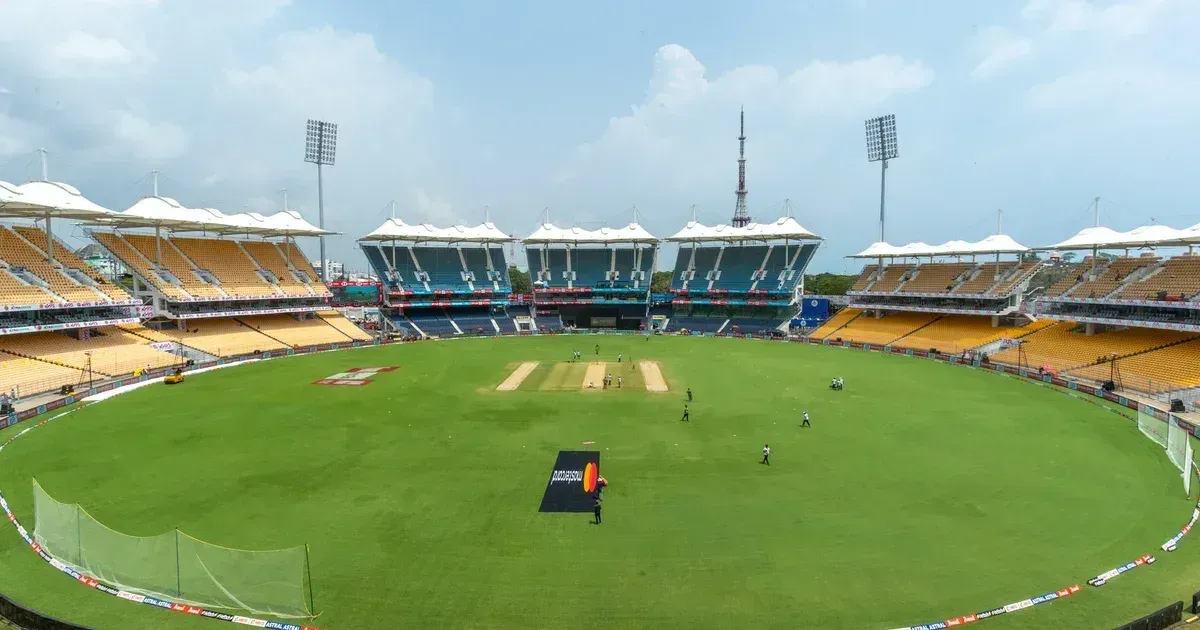
Chennai Super Kings faced Kolkata Knight Riders on April 14, 2026, during a match defined by defensive lapses and a solemn tribute to a cricketing legend. Players from both franchises entered the MA Chidambaram Stadium wearing black armbands to honor C. D. Gopinath, the former India cricketer who recently passed away. Gopinath held a unique place in national sports history because he was the last surviving member of the Indian team that secured the country's first-ever Test victory against England in 1952.

Silence fell over the Chepauk as the teams stood in formation to acknowledge a pioneer who helped establish the technical foundations of the modern Indian game. This gesture of mourning provided a heavy backdrop to a contest that eventually pivoted on a moment of uncharacteristic clumsiness from the home team captain.

Chennai Honors Legacy of C. D. Gopinath

Honoring C. D. Gopinath involved more than a simple uniform modification for the local side. The Madras-born batsman represented an era of cricket that prioritized stylistic purity and defensive discipline, qualities that appeared absent during several key phases of the evening. Gopinath played eight Tests for India between 1951 and 1960, and his presence at the MA Chidambaram Stadium had been a regular occurrence for decades. Sources within the Tamil Nadu Cricket Association noted that the tribute was coordinated quickly to ensure the final link to the 1952 breakthrough received proper recognition. His legacy persists in the record books of Chennai cricket, where his contributions as a selector and administrator mirrored his resilience at the crease.

Match officials confirmed that the decision to wear armbands was a joint initiative between the BCCI and the participating teams. Observers noted that the solemnity of the pre-match ritual briefly masked the mounting tension surrounding the performance of the Chennai leadership. Gopinath's era demanded perfection in the field, a standard that would soon be tested under the floodlights. The tribute ended just before the first ball, shifting the focus from historical reverence to the immediate pressures of the 2026 standings.

Gaikwad Struggles with Form and Field Precision

Ruturaj Gaikwad entered the match under intense scrutiny regarding his recent contributions to the scoreboard. Statistics from the 2026 season reveal a concerning pattern for the Chennai opener, who has struggled to find his rhythm at the top of the order. His recent scores of 6, 28, 7, 15, and 7 highlight a technical disconnect that has begun to impact his decision-making in other areas of the game. Critics have pointed out that the weight of captaincy often complicates the focus required for elite-level batting, especially in a high-pressure environment like the IPL. These numbers do not lie, and the lack of a half-century in five attempts puts immense pressure on the middle order.

Precision vanished during a critical over when Sunil Narine lofted a delivery directly toward Gaikwad. The ball travelled at a comfortable height and speed, categorizing it as a routine catch by professional standards. Fans watched in disbelief as the ball struck the captain's palms and spilled to the turf. Narine is a dangerous asset who rarely offers second chances, yet he found himself granted a reprieve by the very man tasked with leading the Chennai defense. Spectators at the ground described the atmosphere as one of collective shock. Failure to secure that catch allowed the momentum to shift decisively toward the visitors.

According to the official match commentary, Ruturaj Gaikwad is facing a huge issue as the Chennai Super Kings opener with returns of 6, 28, 7, 15 and 7 so far.

Disappointment radiated from the Chennai dugout as the missed opportunity began to yield expensive consequences. Fielders often talk about the psychological toll of dropping a set batsman, but the impact is doubled when the error comes from the captain. Gaikwad’s body language suggested a man battling internal doubt. His inability to convert easy defensive opportunities mirrors his current difficulties at the crease. Records from previous seasons show that Gaikwad is usually among the most reliable hands in the deep. This specific error is a data point in a larger trend of declining performance.

Narine Capitalizes on Defensive Lapses at Chepauk

Sunil Narine reacted to the dropped catch with the calculated aggression that has defined his late-career resurgence as an opener. Free from the constraints of an early exit, the Kolkata hitter began to dismantle the Chennai bowling attack with horizontal bat shots. Kolkata Knight Riders have long relied on Narine to provide explosive starts, and the mistake by Gaikwad functioned as a catalyst for a sustained assault. Bowling plans formulated during the strategy meetings were discarded as Narine found gaps in the field with ease. The pitch at Chepauk generally favors spin, but Narine used his knowledge of the surface to exploit the shorter boundaries.

Calculated risks became the hallmark of the Kolkata innings. Every boundary struck by the Kolkata Knight Riders reinforced the severity of the earlier fielding error. Analysts from Bloomberg have previously noted the high economic value of specific players in the IPL, and Narine’s ability to turn a life into a match-winning total is a primary reason for his high retention. The scoreboard pressure mounted rapidly. Chennai’s bowlers appeared demoralized by the lack of support from their captain. One missed catch can change the geometry of an entire game.

Kolkata Knight Riders maintained their tactical advantage by rotating the strike and targeting the inexperienced members of the Chennai staff. Narine’s presence at the crease forced the home side to deploy their primary spin options earlier than planned. This tactical shift left the death overs vulnerable to the power hitting of the Kolkata middle order. Execution in the field is the foundation of the Chennai philosophy, yet it failed them at the most critical juncture. Narine finished his stint with a strike rate well above 150.

Kolkata Pressure Mounts on Shaky Chennai Defense

Strategy for the Chennai Super Kings usually involves squeezing opponents during the middle overs through disciplined fielding and tight lines. These systemic strengths were absent for much of the evening on April 14, 2026. Kolkata batters took advantage of the hesitation in the inner circle, stealing singles that would typically be denied at the MA Chidambaram Stadium. Coaching staff for the home team were seen gesturing frantically from the sidelines as the defensive structure began to fray. Mistakes in the field often lead to mistakes with the ball. Bowlers began to over-compensate, leading to an increase in wides and no-balls that further padded the Kolkata total.

Communication breakdowns between the outfield and the wicketkeeper added to the sense of disarray. While Kolkata Knight Riders remained composed, the home team struggled to recover from the initial shock of the Gaikwad drop. Statistical tracking showed that Chennai’s fielding efficiency rating dropped by 22% compared to their previous three outings. The physical toll of the heat in Chennai may have played a role, but the issues appeared largely mental. Professional athletes operate on thin margins where a single lapse can trigger a cascade of failures.

Success for the Kolkata Knight Riders in 2026 has been built on exploiting the vulnerabilities of top-tier opponents. They recognized the dip in Gaikwad's confidence and targeted his area of the field. The specific tactical awareness allowed them to keep the pressure on the Chennai leadership throughout the match. By the time the final overs approached, the deficit created by the fielding lapses had become overwhelming. The match concluded with clear evidence that Chennai Super Kings must address their captain’s slump before the playoff race intensifies. Scorecards will record the runs, but the story of the game stays rooted in the missed chance.

The Elite Tribune Strategic Analysis

Is the weight of the yellow jersey finally crushing the successor to the Dhoni throne? Looking back at the history of the Chennai Super Kings, the transition of power was always going to be the franchise's greatest risk, and the events of April 14, 2026, suggest that the cracks are no longer just cosmetic. Ruturaj Gaikwad is not merely struggling with a temporary dip in batting form; he is exhibiting the classic symptoms of leadership-induced paralysis. When a captain drops a sitter, he loses the moral authority to demand perfection from his teammates, and in a league as cutthroat as the IPL, that loss of authority is a terminal condition.

The numbers are damning. Five consecutive failures at the top of the order combined with a catastrophic failure in the field indicate a player whose processing speed has been compromised by the burden of tactical management. While the sentimentality of the tribute to C. D. Gopinath offered a brief respite, the cold reality of the $11 billion IPL ecosystem is that it does not reward heritage over results. Chennai has built its brand on the myth of stability, yet persisting with a captain who is currently a liability in two departments is not stability. It is stubbornness.

Kolkata Knight Riders provided the blueprint for how to dismantle a wounded giant. They didn't just play the ball; they played the man. The strategic choice to target Gaikwad’s psyche by keeping Narine aggressive was a masterstroke that exposed the fragility of the current Chennai setup. If the Super Kings management does not act to decouple the captaincy from Gaikwad’s batting role, they risk sacrificing the entire 2026 season on the altar of a failed succession plan. The era of patience must end. Results are the only currency that matters in Chepauk. Fix it now.