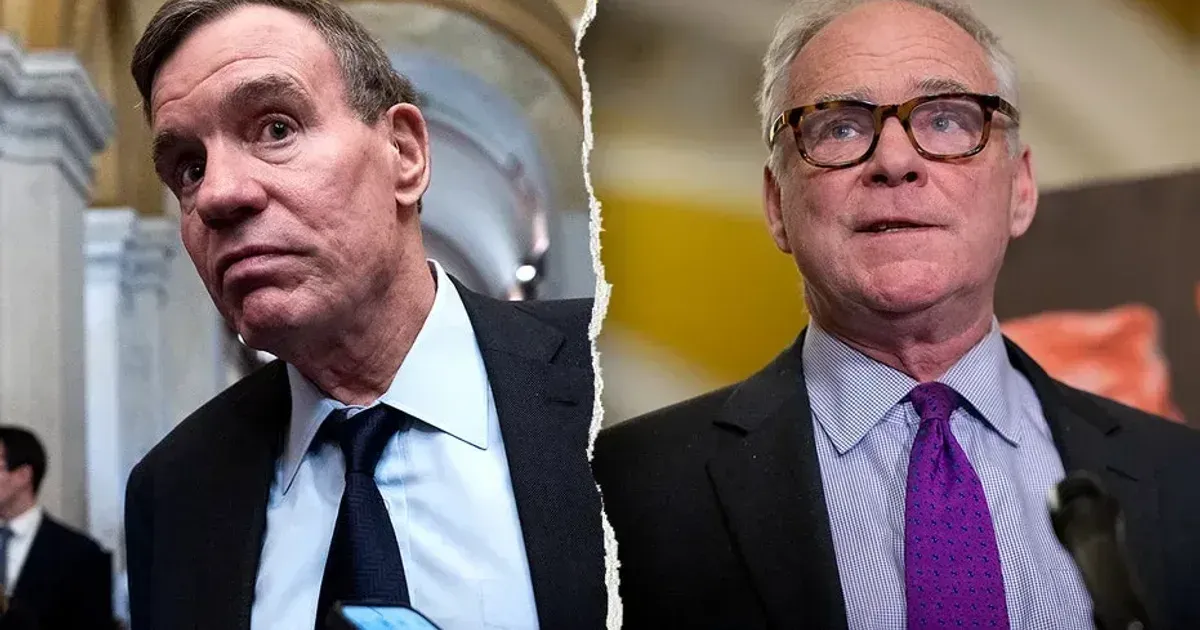
Capitol Hill entered its fifth week of fiscal paralysis on Saturday as the partial shutdown of the Department of Homeland Security reached a grim milestone. Negotiations remain frozen despite a lethal shooting at Old Dominion University that federal investigators now classify as an act of domestic terrorism. The Virginia attack has intensified a stalemate that began on Feb. 14 and leaves essential security agencies operating on emergency reserves or without pay for thousands of federal employees. Virginia Senators Mark Warner and Tim Kaine continue to hold the line against Republican-led funding bills. They insist that any restoration of the budget must include aggressive reforms for Immigration and Customs Enforcement and Customs and Border Protection. This legislative wall stands firm even as local law enforcement struggles with the fallout of a tragedy in Norfolk that claimed the life of an active-duty military officer. Senate Republicans argue the refusal to fund the department invites further instability at a time of heightened international tension.
DHS Funding Fight Continues
Senate Minority Leader Chuck Schumer has coordinated a unified front among Democrats to block funding until specific operational changes are met. These demands include a total ban on masks for ICE agents during enforcement actions and an end to roaming street patrols in residential areas. Democrats view these measures as necessary to restore public trust in immigrant communities. Republicans characterize the demands as a distraction from the primary mission of national defense. Sen. John Cornyn of Texas noted that ICE already received specific allocations through the Big Beautiful Bill last year, making the current blockade redundant. Kaine defended his position by pointing to several attempts by his party to fund specific branches of the department. He argued that Senate Republicans are the ones preventing money from reaching the Transportation Security Administration, the Coast Guard, and the Cybersecurity and Infrastructure Security Agency. His strategy involves carving these entities out of the broader department budget to insulate them from the fight over immigration policy. Democrats have introduced multiple standalone bills that focused strictly on maritime security and airport safety. Warner expressed personal grief over the death of Lt. Col. Brandon A. Shah but did not signal a change in his voting behavior. He praised the bravery of the students who subdued the gunman during the campus chaos. Yet his primary focus shifted quickly toward the performance of federal intelligence agencies. He joined other colleagues in demanding immediate answers from high-ranking officials regarding how a known threat managed to acquire weapons and execute a plan on a public campus.
Virginia Attack Raises Security Pressure
Federal agents identified the shooter as Mohamed Bailor Jalloh, a former member of the Army National Guard. Jalloh had a prior conviction for supporting ISIS and was supposedly under federal surveillance at the time of the shooting. The FBI confirmed the incident is being treated as an act of terrorism, linking Jalloh to radicalized cells operating within the United States. This revelation has sharpened the knives in a political debate that was already deeply personal and highly partisan.
"Senate Democrats have repeatedly moved to fund, and Senate Republicans have repeatedly blocked, TSA, CISA, the Coast Guard and other entities within DHS that help keep us safe," Kaine said in a statement.
Security experts warn that the lapse in funding degrades the ability of agencies to process intelligence and monitor threats like Jalloh. While essential personnel remain on duty, the lack of administrative and technological support slows the flow of data between state and federal partners. The FBI faces increased pressure to explain why its monitoring programs failed to prevent the Norfolk attack. The agency has not yet released a full report on the particular lapses that allowed a convicted felon to remain a threat to the public.
ICE Dispute Holds Up the Deal
Sen. Sheldon Whitehouse of Rhode Island stated that his party is ready to fund FEMA and the TSA once an agreement on ICE behavior is finalized. He blamed Republicans for holding the entire department hostage to protect a single agency that he claims continues to misbehave. The list of ten reform demands remains the primary sticking point in the $11 billion budget dispute. These reforms aim to limit the autonomy of field agents and increase the transparency of detention facility operations. Republicans reject these terms as a direct assault on the rule of law.
Sen. Rick Scott of Florida countered that picking and choosing which parts of the government to fund creates dangerous gaps in the national defense shield.
TSA officials have implemented emergency measures at major airports to maintain passenger throughput. These steps include the temporary reassignment of staff and the use of contingency funds that are rapidly nearing exhaustion. Travelers at Dulles and Reagan National have reported longer wait times and reduced staffing at security checkpoints. The Republican leadership maintains that these disruptions are a direct result of Democratic obstructionism in the Senate. Operation Epic Fury in Iran has recently increased the threat level for domestic soft targets, according to intelligence briefings provided to lawmakers. Republicans cite these briefings as proof that the department needs full funding immediately. They argue that the threat of retaliatory strikes or lone-wolf attacks requires a fully operational border and interior enforcement apparatus. But Democrats remain focused on the civil liberties implications of ICE's current operational model. This disagreement ensures that the financial strain on the department will likely persist through the end of the month.
FBI Director Kash Patel has become a lightning rod for criticism from both sides of the aisle. Warner and other Virginia leaders have demanded he answer for the intelligence failure at Old Dominion. At the same time, some Republicans defend the director while blaming the lack of funding for the inability of the bureau to keep pace with rising threats. The focus on Patel reflects a broader frustration with the perceived incompetence of the federal security state during a period of intense polarization.
Financial analysts at the Government Accountability Office estimate the shutdown is costing the economy millions of dollars in lost productivity and delayed contracts. Small businesses that rely on federal security clearances for their employees are particularly hard hit. The morale of the federal workforce continues to plummet as the second pay period without a paycheck approaches for many agents. The internal friction within the department could have long-term consequences for recruitment and retention in critical security roles.
Negotiations are expected to resume in a closed-door session on Monday. Neither side has indicated a willingness to drop their primary demands. The standoff appears destined to continue until one side faces a sharp drop in public polling or another security incident forces a legislative hand. For now, both parties seem content to trade barbs while the national security infrastructure of the United States operates on a skeleton crew.
Security Funding Became Bargaining Power
How long can a nation survive when its primary defense mechanisms are treated as bargaining chips in a game of ideological chicken? The spectacle of senators arguing over the wardrobe of ICE agents while blood is literally mopped off a college campus floor represents the absolute nadir of American governance. It is not a debate about policy; it is a clinical demonstration of a system that has replaced the instinct for survival with the reflex for partisan advantage.
The Democrats in Virginia are betting that their base cares more about the appearance of immigration reform than the reality of a dead lieutenant colonel and a campus under siege. It is a cynical calculation that assumes the public has a short memory for terror but a long appetite for performative justice. Meanwhile, the Republicans hide behind procedural purity while the agencies they claim to champion go bankrupt. We are watching the slow-motion dismantling of national security in the name of political purity.
If the next attack is larger and more coordinated than the tragedy at Old Dominion, the blood will not just be on the hands of the perpetrator. It will be on every desk in the United States Senate. The era of serious governance has ended, replaced by a permanent campaign where the safety of the citizens is only a secondary concern to the preservation of a story.