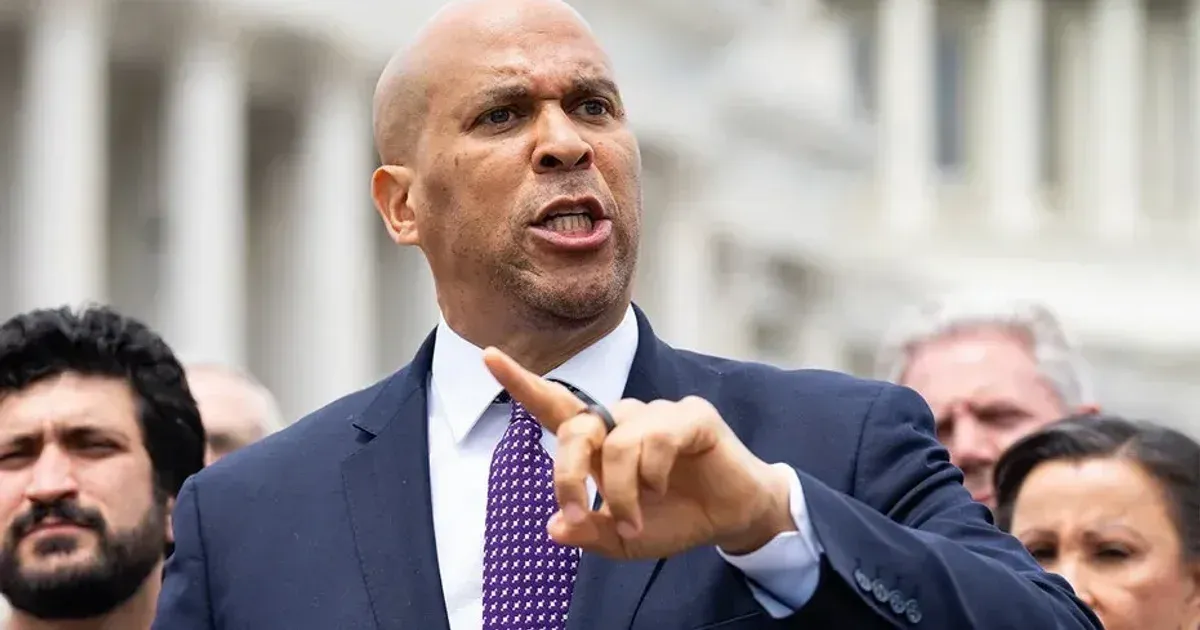
The risk is that performance can excite activists without persuading swing voters. Democrats are testing whether theatrical campaign energy can become turnout infrastructure. Cory Booker shouted to Michigan Democrats on April 21, 2026, demanding they become foot soldiers for the party while warning of darkness and storms across the nation. Elizabeth Warren concurrently appeared in Maine to support Graham Platner, while Mallory McMorrow used a marching band to signal her Senate aspirations. High-energy performances across state conventions suggest a coordinated attempt to mask internal fissures through performative optics. Critics, however, argue that these stylistic choices prioritize aesthetic impact over policy substance.
Senators and local candidates across the country are adjusting their public personas as the primary season intensifies. Within the walls of the Michigan Democratic Convention, the atmosphere resembled a revival tent more than a political gathering. Booker implemented a rhetorical strategy involving shouting and poetic gestures to energize a crowd that has shown signs of voter fatigue. Records from the 2020 cycle indicate that Booker struggled to translate such energy into national momentum, yet he maintains this sermon-style delivery as his primary political currency. He focused his 25 minutes on stage urging attendees to redeem the dream of America.
Michigan Democratic Convention Performance Metrics
Addressing the Detroit audience, Booker expressed specific frustration with voters who abstained from past elections due to minor ideological disagreements. He argued that allowing a 10% difference in views to prevent a vote results in catastrophic leadership outcomes. This aggressive outreach targets the Michigan demographic that stayed home in previous cycles. Historically, the Great Lakes State is a barometer for national Democratic health, and the current strategy leans heavily on emotional appeals. Booker used his family ties to the region to establish a local connection with the base.
McMorrow launched her own bid for the Senate seat vacated by retiring Senator Gary Peters with a theatrical flourish. She entered the convention hall flanked by a group known as DrumKINGZ, dancing alongside supporters in a move that immediately drew national scrutiny. Digital platforms erupted with comparisons to the 2019 campaign tactics of former Vice President Kamala Harris. Such entrances aim to create the illusion of McMentum, a term coined by her campaign staff to describe her rising profile. The optics of the marching band were intended to signal youth and vitality to a fractured primary field.
Competing for the same seat, Abdul El-Sayed dismissed the display as a substitute for a coherent message. He told local reporters that theatricality often hides a lack of policy depth. The primary race includes El-Sayed and Representative Haley Stevens, both of whom have adopted more traditional campaigning methods. Mallory McMorrow continues to double down on these viral moments despite the risk of being labeled a theater kid by conservative commentators. Her campaign believes that high-visibility stunts are necessary to stand out in a crowded field of established politicians.
Optics alone rarely win elections in the Rust Belt. Beyond his current theatrical campaigning, Cory Booker has recently been positioning himself for a potential 2028 presidential bid.
Maine Senate Primary and Structural Change
Portland hosted its own political spectacle as Elizabeth Warren traveled north to strengthen the campaign of Graham Platner. Warren described the combat veteran and oyster farmer as her kind of man, citing his enduring belief that the financial system is rigged against the working class. She used the Portland rally to frame Platner as a fighter capable of unseating Republican Senator Susan Collins. The endorsement places Warren in direct opposition to Janet Mills, the two-term governor who enjoys the backing of Senate Majority Leader Chuck Schumer. This division highlights a rift between the progressive wing and the established party hierarchy.
Platner faces major hurdles beyond his primary opponent. A series of controversies involving a Nazi-themed tattoo and historical social media activity has complicated his path to the general election. Mills has used these past posts, which include comments about sexual assault victims and defense of Hamas military actions from 2013, to question his fitness for office. Platner attributes these messages to combat trauma, a defense that Warren seems to accept. The Massachusetts senator argued that insiders who go along to get along will never remove corruption from the capital.
“We need Graham Platner to come in and get the corruption out of Washington,” Warren said.
Warren insisted that the current system is too broken for marginal changes. She demanded big, structural change to combat the influence of billionaires. This rhetoric mirrors the populist tone Booker adopted in Michigan, suggesting a top-down directive to embrace radical imagery and speech. The June 9 primary in Maine will determine if Warren's endorsement can outweigh the institutional power of the Mills campaign. Voters must choose between a seasoned governor and a controversial insurgent with high-profile progressive backing.
Strategic Shifts in Democratic Outreach
Democratic leaders are increasingly worried about the 2026 midterm results. Because of this anxiety, the reliance on celebrity surrogates like Booker and Warren has increased sharply. The party is attempting to synthesize different types of appeal: the emotional revivalism of Booker, the theatrical energy of McMorrow, and the combative progressivism of Warren. Critics within the party suggest that this scattered approach lacks a unifying economic platform. If the theater fails to translate into turnout, the party faces a difficult path to maintaining its legislative influence.
The Michigan and Maine contests are not isolated events. They represent a broader trend of candidates using social media-friendly moments to bypass traditional news cycles. McMorrow's marching band was specifically designed for short-form video consumption. Similarly, Booker's shouting provided the soundbites necessary for evening news clips. These tactics reflect a shift toward a personality-driven model of politics where the entrance matters as much as the platform. The resilience of the party networks will be tested by how voters respond to these polished performances.
Platner's campaign remains the most volatile element of this strategy. While Warren views him as a necessary disruptor, his history on Reddit provides ample ammunition for Republican groups in the general election. The Mills campaign continues to highlight his 2014-era posts as evidence of an unstable temperament. Despite these liabilities, the progressive base in Portland remains vocal in their support. The conflict between ideological purity and general election viability is reaching a boiling point in the Maine primary. Graham Platner must overcome his own digital history to reach the November ballot.
Campaign Theater Tests Turnout
Do the Democrats truly believe that volume replaces viability? The current reliance on shouting senators and marching bands reveals a party that has lost its ability to communicate through results. Booker and Warren are recycling populist tropes that have failed to produce a coherent governing majority for over a decade. By prioritizing these viral moments, they are effectively treating the American electorate like an audience at a failing Broadway show. The obsession with optics over substance is a hallmark of a leadership class that no longer understands the material concerns of its constituents.
The endorsement of Graham Platner is particularly cynical. Elizabeth Warren is essentially betting that a candidate with a history of defending extremist groups and dismissing sexual assault victims can win a seat in a state that values moderation. The gamble shows a reckless disregard for the quality of the people the party sends to Washington. If the only qualification is a willingness to shout about the system being rigged, the Senate will soon resemble a social media comment section. The party is not seeking leaders; it is seeking characters for a digital drama.
Optics are the last refuge of the politically bankrupt. When the policies do not speak for themselves, the candidate must bring a drum line. If these theatrical displays continue to be the primary method of engagement, the Democratic Party will find itself performing to an empty house. The 2026 midterms will not be won by the candidate who dances the best or shouts the loudest. Results matter.