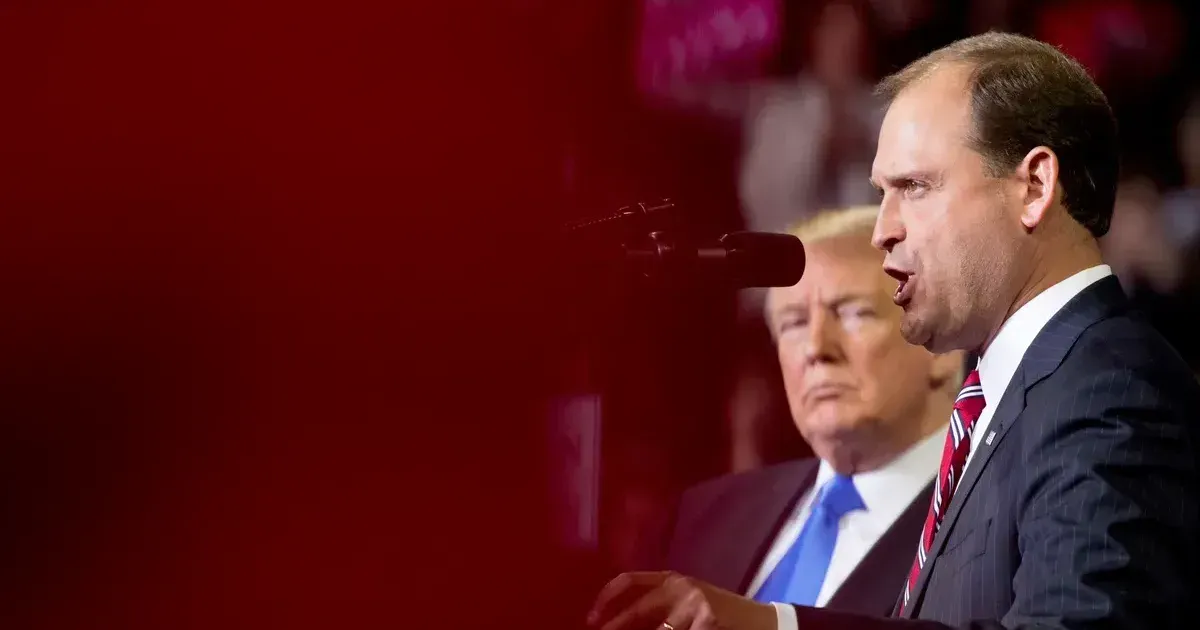
Lexington, Kentucky, serves as the primary battleground for a political experiment that could redefine Democratic strategy in the rural South. Kentucky's 6th District has functioned as a Republican stronghold for over a decade, but the 2026 election cycle is introducing variables that national party strategists believe could finally crack the GOP dominance. Andy Barr, the Republican incumbent who has occupied the seat since 2013, is vacating the post to seek the Senate seat held by the retiring Mitch McConnell. The race was reported on March 13, 2026, as Democrats assessed an open-seat opportunity in Kentucky. McConnell announced his retirement earlier this year, setting off a cascade of political maneuvering across the Bluegrass State. Barr quickly emerged as a frontrunner for the Senate nomination, leaving his House seat open for the first time in 13 years. Democrats see this as their most viable opportunity to regain a foothold in a state where they have been largely shut out of federal representation. The district includes the urban center of Lexington but stretches into 18 surrounding counties that lean heavily toward the Republican Party. Recent data from the 2024 election highlights the magnitude of the challenge facing the Democratic challengers. Barr won his last reelection by 26 points, sharply outperforming Donald Trump, who carried the district by 15 points. This gap suggests that Barr possessed a personal brand that resonated with moderate voters who might otherwise be skeptical of the national Republican platform. His departure removes that incumbency advantage, forcing the GOP to field a new candidate in an era of heightened political polarization. Winning requires a map that does not stop at the Lexington city limits.
Kentucky Sixth Becomes a Target
Voters in the 6th District last sent a Democrat to Washington in 2010.
Candidate Strategy Moves Local
Two primary candidates have emerged in the Democratic primary to test different theories of victory. Zach Dembo, a Navy veteran and former federal prosecutor, is positioning himself as a moderate who can appeal to the law-and-order sensibilities of suburban voters. His campaign focuses on his record of prosecuting corruption and his military service, attempting to insulate himself from GOP attacks regarding the party being soft on crime. Dembo argues that a candidate with a traditional resume is the only way to peel off the 10% of Republicans needed to win.
By contrast, Cherlynn Stevenson is pursuing a strategy built on rural populist appeal. A former state representative, Stevenson identifies as a Mountain Democrat, a term she uses to signal her roots in eastern Kentucky. She focuses her rhetoric on cost-of-living pressures and the perceived failures of national economic policy to reach the working class. Stevenson believes the party must stop focusing exclusively on the urban core of Lexington and instead engage with voters in the outlying counties who feel abandoned by both parties.
Winning right now requires showing up in places where the Democratic brand has been toxic for a decade and proving we care about the price of eggs more than the politics of Washington.
Stevenson used a recent primary debate in Lexington to emphasize her upbringing in a small mining town. She argued that her background allows her to speak the language of rural voters without sounding like a coastal elitist. This approach targets the disconnect that has plagued Democratic candidates in Kentucky for decades. Her campaign points to the success of Governor Andy Beshear, who won two terms by focusing on local issues and maintaining a distance from national ideological battles.
Rural Economics Shape the Message
Internal Democratic polling suggests that voters in the 6th District are increasingly concerned with the impact of federal trade policies. During the primary debate, candidates leveled sharp criticisms at the Trump administration for its reliance on tariffs, which they claim have increased costs for Kentucky businesses. Zach Dembo noted that manufacturing costs in the region rose sharply during the last four years, hurting local employers. These economic arguments are central to the Democratic plan to win over voters in places like Madison and Scott counties. Foreign policy has also entered the local discourse in an unusual way for a House race. Candidates have discussed the decision to strike targets in Iran and the broader instability in the Middle East as factors that contribute to global energy price spikes. Stevenson argues that rural Kentuckians are disproportionately affected by high gas prices, making energy security a kitchen-table issue. This focus on global events is meant to portray the Democratic challengers as serious figures capable of handling the complexities of federal office.
Republicans view the seat as a fortress rather than a swing district. GOP strategists point to the registration advantage they hold in the 18 counties outside of Lexington. While Democrats still hold a registration lead in some rural areas due to historical legacy, these voters have consistently cast ballots for Republicans at the federal level since the early 2000s. The Republican primary to replace Barr is expected to be a crowded affair, with several state legislators and local officials considering bids. National GOP groups have signaled they will spend whatever is necessary to keep the seat in their column.
Open Race Changes the Math
McConnell's retirement transforms the 2026 field in Kentucky from a predictable cycle into a chaotic one. The 6th District race will serve as a bellwether for whether the Democratic Party can successfully replicate the Beshear model in a federal contest. If the Democratic nominee can keep the margin in the rural counties within 15 points while running up the score in Lexington, the seat could flip. But if the GOP maintains its current margins in the suburbs, the open seat will likely remain a Republican stronghold. Outside spending is expected to reach record levels for this House seat. National groups like the DCCC and the NRCC have already begun monitoring internal polling data. The 2018 McGrath race saw nearly $30 million in total spending from all sides, a figure that many analysts expect to be eclipsed in 2026. The influx of cash will flood the Lexington media market with advertisements starting as early as the fall of 2025.
Voter turnout in off-year elections typically favors the party out of power in the White House. Because the 2026 midterms occur during a Republican presidency, Democrats hope for a surge in enthusiasm among their base in Lexington. But they also face the reality that Trump remains popular in the district's rural reaches. The final outcome will depend on which candidate can best handle the cultural chasm that defines modern Kentucky politics.
Bluegrass Politics Still Runs Local
Will the Democratic Party ever learn that biographical checkboxes do not win elections in the South? They are repeating the same exhausted script in Kentucky, pitting a military veteran against a local populist in hopes that one of them will magically dissolve decades of cultural resentment. National strategists seem to believe that if they just find a candidate who can talk about farming or the Navy, rural voters will forget the party's alignment with coastal social agendas. It is a delusional strategy that ignores the reality of the American political realignment.
The 6th District is not a swing seat; it is a Republican district that had a brief flirtation with a moderate Democrat fifteen years ago. Since then, the region has moved firmly into the MAGA orbit, driven by a deep-seated belief that the modern Democratic Party has no place for the working-class white voters who once formed its base. Zach Dembo and Cherlynn Stevenson are undoubtedly capable individuals, but they are fighting an incoming tide with a plastic bucket. Unless the national party undergoes a radical shift in its cultural positioning, seats like this will remain out of reach.
Spending millions of dollars to lose by five points is not a victory; it is a waste of donor capital that could be used to defend vulnerable incumbents elsewhere.