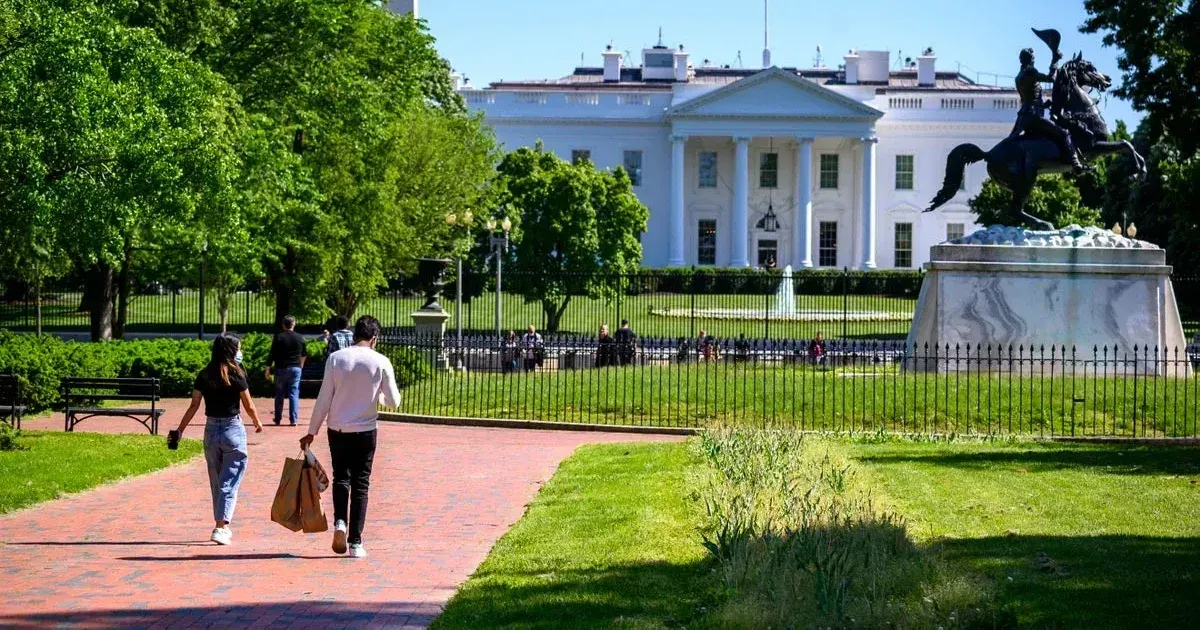
Donald Trump’s response to the Lafayette Park contract allegations moved the dispute from procurement records into direct political combat. The reports center on restoration work, no-bid contracting and firms tied to the former president’s business orbit. What began as a parks project now carries the weight of an ethics investigation. Donald Trump denounced a series of investigative reports on April 26, 2026, regarding allegations that his administration bypassed competitive bidding to repair historic fountains in Lafayette Park. Federal documents suggest the project was awarded through a secret no-bid contract to a construction firm with enduring ties to the Trump family real estate empire. Critics argue the price of the restoration was sharply inflated to provide a financial windfall for the preferred contractor. The fountains, which have stood as landmarks across from the White House for decades, became the center of this procurement scandal after internal memos leaked to the press.
Lafayette Park Fountain Contract Investigation
Government watchdogs began looking into the fountain project when it became clear that the standard transparency requirements for federal infrastructure work were not met. Standard procedure for renovations in Lafayette Park involves a public solicitation of bids to ensure the best value for taxpayers. Records indicate that administrative officials invoked an emergency clause to award the work directly to a firm that has previously managed renovations at various Trump-branded properties. The justification for this emergency status remains a point of contention among legal experts who specialize in federal procurement law. Construction costs for the two fountains reportedly rose to double the initial estimates provided by National Park Service engineers. Independent masonry experts noted that the scope of work described in the contract did not align with the final price tag presented to the Treasury. These discrepancies led to questions about where the surplus funds were actually allocated. Investigative teams are currently tracing the flow of payments to determine if any kickbacks were directed toward political entities or shell companies associated with the administration.
Opposition lawmakers have signaled their intent to launch a formal inquiry into the selection process. Such an investigation would likely focus on the communications between the Department of the Interior and the executive office during the month the contract was finalized. This specific transaction is viewed by many as a potential violation of the Brooks Act, which governs the procurement of design and engineering services. Ethics officials have noted that the lack of competition in this instance is a departure from established federal norms. The contract was to fix a pair of decades-old fountains in Lafayette Park, located across from the White House, using funds that had not been previously allocated for cosmetic repairs.
Trump addressed these concerns during a social media post, characterizing the investigation as a politically motivated attack on his infrastructure record. He asserted that the repairs were necessary to maintain the dignity of the historic space and that the selected firm was the only one capable of performing high-quality work on such a compressed timeline. Public records do not support the claim that other firms were unavailable for the project. Several high-profile contractors in the Washington D.C. area have stated they were never informed that the project was open for bids.
Financial Performance of the Trump Crypto Venture
Parallel to the architectural controversy, the former president moved forward with a high-stakes VIP event to promote his latest digital currency venture. Attendees paid thousands of dollars for access to the gala, which focused on the expansion of the family digital asset portfolio. The atmosphere of the event was at odds with the reality of the market, where the Trump Coin had lost nearly 40% of its value in the hours leading up to the keynote speech. Investors who purchased the token at its peak expressed frustration over the sudden collapse of its trading price. Scrutiny of the family crypto business has intensified as financial analysts look for evidence of market manipulation. The coin in question was marketed as a revolutionary tool for political fundraising and decentralized finance, yet it has shown the same volatility as many speculative celebrity tokens. Large-scale sell-offs by early holders triggered a cascade of liquidation that wiped out millions in paper wealth for retail investors. This price action occurred while the VIP event was still in progress, leading to awkward moments during the live presentation.
Digital asset regulators are reportedly monitoring the situation to see if the promotion of the coin violated any disclosure laws. The connection between the political brand and the financial product creates a complex legal environment that many traditional investors find risky. Despite the plummeting value, the promoters at the gala continued to pitch the token as a long-term hold for loyal supporters. Market data shows that the volume of sell orders sharply outweighed the buy orders during the entire 24-hour period. Financial experts point out that the coin lacks a clear underlying utility, making its value almost entirely dependent on the personal popularity of its namesake. When that popularity is tested by political scandal or legal trouble, the token price reacts with extreme sensitivity. The overlap between the Lafayette Park contract news and the crypto event created a combination of negative sentiment for the digital asset. Traders noted that the price dropped every time a new detail about the fountain investigation hit the wire.
Scrutiny of Administration Procurement Practices
Oversight committees are now looking for patterns across different departments to see if other no-bid contracts were awarded under similar circumstances. The fountain project in Lafayette Park may be the first of many cases where the administration used emergency declarations to bypass oversight. Historical data suggests that use of these specific procurement loopholes has increased by over 300% during the current term. Each instance involves a project that could have been handled through traditional, competitive channels. Procurement officers within the government have privately expressed concerns about the pressure they face to approve these deals. Testimony from anonymous sources within the Department of the Interior suggests that orders to fast-track the fountain contract came directly from the upper levels of the executive branch. These officials were reportedly told that the project was a personal priority for the president. Such direct interference in the technical process of contract awarding is rare and usually triggers internal audits.
The impact of these practices goes beyond the immediate financial cost to the taxpayer. It erodes the competitive landscape of the construction industry by favoring companies with political connections. Small and medium-sized firms that rely on the fair bidding process are effectively locked out of high-visibility projects. This centralization of government spending toward a handful of preferred vendors has become a hallmark of the current administrative strategy. Transparency advocates are calling for a legislative change that would require a 30-day public comment period for any contract involving historic landmarks. It would prevent the kind of rapid, secret deal-making seen in the fountain case. The current law allows for too much discretion on the part of political appointees, who can easily justify any expense as an emergency. Closing these loopholes is now a priority for those seeking to restore integrity to federal spending.
Park Contracts and Crypto Collapse Reveal the Same Extraction Strategy
Political survival in the modern age has become an exercise in managing incongruous realities. We see a leader defending an old-world construction grift involving park fountains while simultaneously presiding over the collapse of a new-world digital currency scheme. It goes beyond a coincidence of timing but a unified strategy of extraction. The use of historic landmarks as a front for no-bid contracts mirrors the use of blockchain as a front for celebrity-branded speculation. Both rely on the erosion of institutional guardrails and the absolute loyalty of a base that ignores the balance sheet in favor of the brand.
The crypto gala, held during a market bloodbath, is the ultimate cynical gesture. It proves that for this administration, the event is the product, and the actual value of the asset is an afterthought. By the time the retail investors realize the Trump Coin is a sinking ship, the VIP access fees have already been collected and the political capital has been spent. It is a recurring pattern of leveraging public office to subsidize private enterprise, whether through the physical masonry of Lafayette Park or the digital ledgers of a volatile token.
Will the public eventually tire of being the liquidity for these ventures? The sheer audacity of awarding a secret contract for the very fountains the public looks at every day suggests a belief in total impunity. If the White House can manifest its own financial reality through no-bid deals and speculative coins, the concept of public service is dead. We are looking at a future where every federal contract is a loyalty test and every policy is a product launch. It is the new standard of governance.