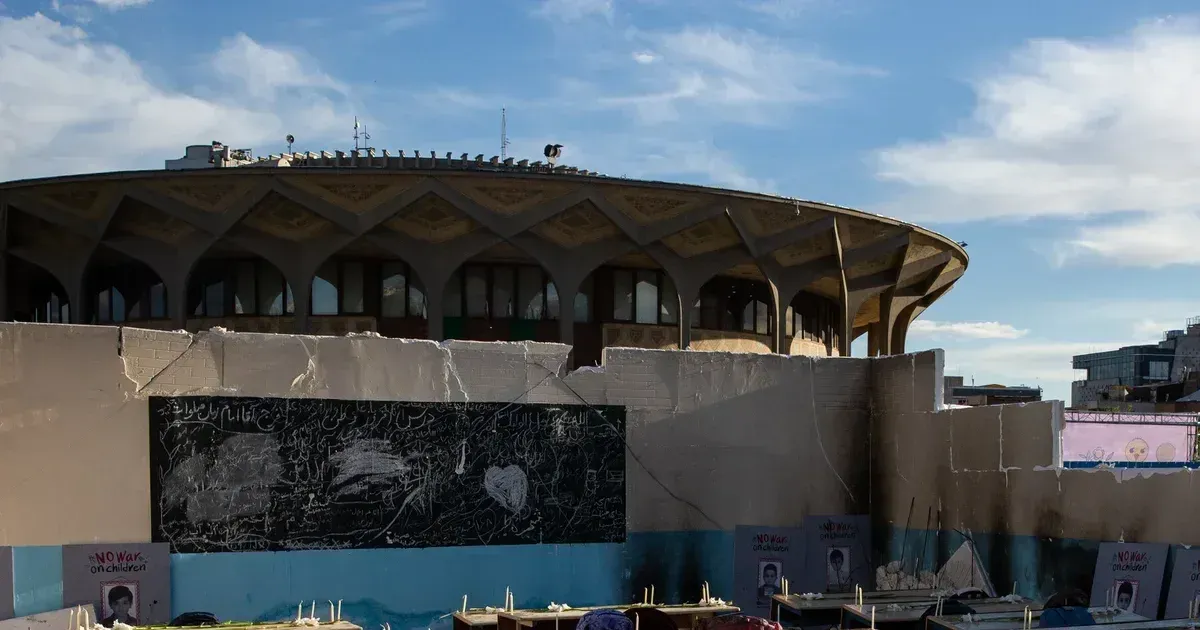
Families from Iran’s Minab region have moved their grief into the Vatican’s diplomatic orbit. Their petition asks Pope Leo to treat a deadly school strike as a moral emergency rather than a remote military file. The appeal places the Holy See between bereaved parents, Washington’s inquiry and a wider debate over accountability. Pope Leo confirmed on April 25, 2026, that his office has reviewed a formal petition from families of more than 100 children killed in a school airstrike in Iran. These parents, representing survivors from the Minab region, are seeking moral intervention after a United States military inquiry admitted to a lethal intelligence error. Initial reports from the Holy See indicate that the Pope was personally moved by the detailed testimonies included in the correspondence. Staff members within the Vatican Secretariat of State are currently translating the full document to prepare a formal diplomatic response.
US Military Acknowledges Lethal Intelligence Failure
Military investigators released a preliminary report earlier this month identifying a catastrophic failure in the target verification process. Ground-level intelligence had incorrectly identified the Minab educational facility as a command center for regional insurgent activity. This single instance of misidentification led to the authorization of an aerial strike during morning hours when classes were in session. United States Central Command officials have expressed regret for the incident while citing technical malfunctions in drone surveillance hardware as a primary factor. Hardware logs indicate that thermal sensors failed to distinguish between adult combatants and adolescents within the structure.
Evidence gathered by local authorities in Iran contradicts several claims made in the early stages of the US investigation. Local witnesses maintain that no military activity occurred within five miles of the school on the day of the attack. Families wrote in their letter that the strike hit during a geography lesson, instantly killing dozens and leaving dozens more with life-altering injuries. Survival rates for those in the immediate blast zone were effectively zero because of the proximity of the impacts to the main assembly hall. Debris from the facility blocked emergency exits, preventing immediate rescue efforts by nearby residents.
Investigators focusing on the chain of command are looking into why multiple layers of oversight failed to flag the school as a protected civilian site. Standard operating procedures require three independent sources of verification before a strike is authorized in a populated area. Records suggest that only two sources were used in this mission, both of which relied on the same flawed sensor data. Pentagon spokespeople have refused to comment on whether specific officers will face disciplinary action under the Uniform Code of Military Justice.
Minab Region Mourns Loss of Local Schoolchildren
Residents of the Minab district have transformed the remains of the school into a sprawling memorial site. Parents who authored the letter to Pope Leo describe a community shattered by the sudden loss of an entire generation of students. Most of the families involved in the appeal have no previous history of political activism, yet they felt compelled to reach out to the Vatican. They argue that traditional diplomatic channels have failed to provide a path toward accountability or restitution. Each signature on the letter is a household that lost at least one child during the April event.
"I have seen the letter from the parents of the children," Pope Leo stated during an address on April 25, 2026.
Catholic relief organizations operating in the Middle East have noted that the appeal to the Pope is a rare instance of direct communication between Iranian civilians and the Vatican. Historically, such interactions are mediated through state-level officials in Tehran. By bypassing the Iranian government, the families are signaling a desire for a purely moral and humanitarian resolution. Religious scholars suggest that the Pope’s role as a global figure for peace makes him a natural arbiter for such a sensitive international dispute. Support for the families has grown across social media platforms, with many calling for an independent international tribunal.
US officials are reportedly considering a compensation package for the survivors, although no formal offers have been extended. Financial restitution remains a disputed issue within the Minab community, as some parents view it as an attempt to buy silence. The letter sent to the Vatican explicitly requests that any resolution includes a public acknowledgment of the victims' innocence. Many in the region believe that the "mistake" label used by the United States military minimizes the gravity of the oversight that led to the deaths. Tension persists between the desire for closure and the demand for a full legal trial.
Pope Leo Considers Vatican Response to Iranian Appeal
Vatican diplomats are weighing the potential consequences of a formal papal intervention in a conflict involving the United States. Pope Leo has a history of addressing civilian casualties in war zones, but the scale of the Minab incident presents a unique challenge. Acknowledging the letter too aggressively could strain relations between the Holy See and Washington. By contrast, ignoring the plea of over 100 families would undermine the Pope’s stated commitment to defending the vulnerable. Senior cardinals are meeting this week to discuss a possible mission to the region to meet with the grieving parents.
Accountability for the 100 children remains the central theme of the families' ongoing advocacy. Beyond the letter to the Pope, the group is also seeking to engage with international human rights organizations in Europe. They have requested that the United Nations conduct its own probe to supplement the findings of the United States military. Such a move would require the cooperation of both the Iranian government and the Pentagon, which is currently unlikely. Efforts to preserve the strike site for independent forensic analysis are currently being hampered by ongoing regional security concerns.
Iranian state media have largely focused on the external pressure the letter puts on the United States. Officials in Tehran have not obstructed the families' efforts to communicate with the Vatican, though they have not officially endorsed the move. This strategic silence allows the government to benefit from the international scrutiny on the US military while maintaining plausible deniability regarding the families' independent actions. Analysts believe that the letter is a potent diplomatic tool that could influence future negotiations regarding military conduct in the region.
Legal Implications of the Preliminary Strike Inquiry
International law experts point to the Minab strike as a potential violation of the principle of distinction under the Geneva Conventions. While the United States claims the incident was an accident, the failure to verify the target could still be classified as criminal negligence. Legal teams representing the families are exploring the possibility of filing a suit in a neutral jurisdiction. The preliminary inquiry results have provided a plan for these legal challenges by identifying the specific technical failures that occurred. Any future trial would likely hinge on whether the military ignored warning signs that the target was a civilian school.
Future military operations will likely face stricter oversight as a direct result of the Minab tragedy. Internal memos from the Pentagon suggest that drone engagement rules are being revised to prevent similar sensor failures from causing collateral damage. These changes come too late for the families who signed the letter to Pope Leo. Their focus is now on ensuring that the names of the 100 children are recorded in the history of the conflict as innocent victims. The letter acts as a permanent record of their existence and their untimely deaths.
Justice for the victims may take years to achieve through formal legal channels. In the interim, the moral weight of the Pope’s potential support provides a sense of hope for the Minab community. Most of the parents believe that a statement from the Vatican would carry more weight than any political resolution. The coming weeks will reveal how the Holy See intends to navigate this complex intersection of faith, law, and global politics. For now, the families wait for a sign that their voices have truly been heard in the halls of the Vatican.
Minab Families Turn to Moral Authority After Legal Accountability Fails
Seeking divine intervention through the Vatican highlights a deep disillusionment with secular international justice. When families in the heart of Iran bypass their own government and the United Nations to appeal to a Catholic pontiff, it signals that the current global architecture for military accountability has failed. The United States military’s admission of a "mistake" is a hollow gesture that does little to bridge the credibility gap created by the deaths of over 100 children. This preference for moral authority over legal procedure suggests that the survivors understand a harsh reality: in modern warfare, legal consequences for superpowers are virtually non-existent.
Washington will likely attempt to smother the fallout with bureaucratic apologies and financial settlements, but the moral ledger persists. The intelligence failure in Minab is not an isolated technical glitch; it is a systemic byproduct of a drone program that prioritizes target acquisition over human verification. Pope Leo now holds a weapon of soft power that could severely damage the Pentagon’s ethical standing if he chooses to wield it. By validating the families' letter, he would be forcing a rare public reckoning with the human cost of remote-controlled violence.
Whether the Vatican has the courage to confront the American military machine is the only question that matters now. The conclusion is unavoidable: justice is no longer expected from courts, but from the pulpit.