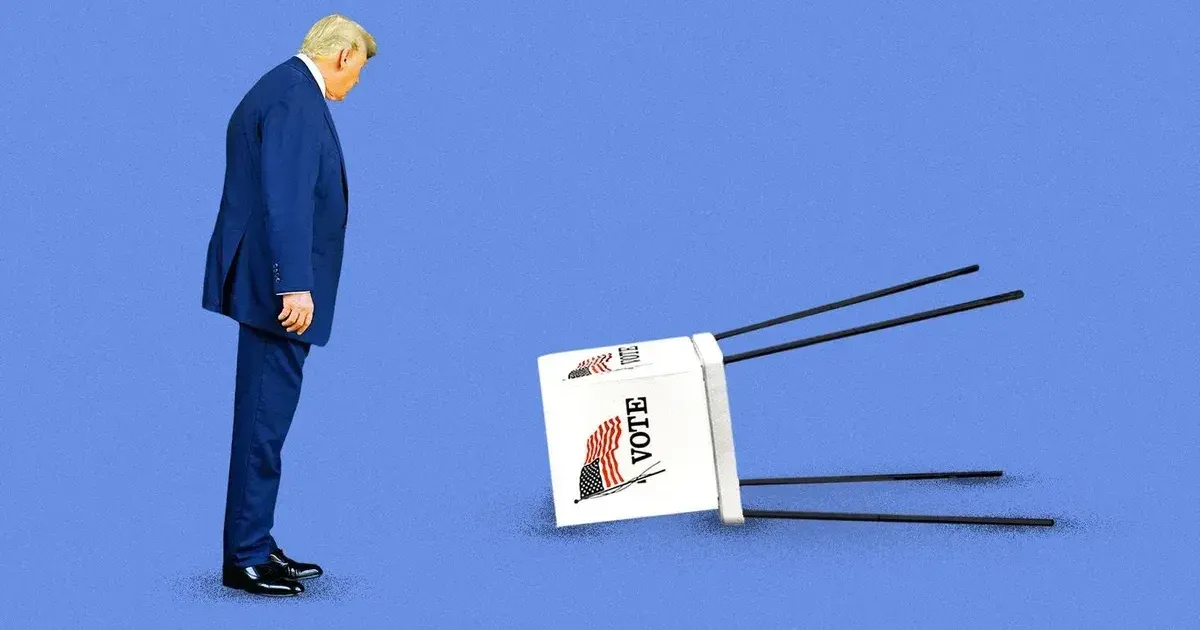
Donald Trump prepares to face the Washington press corps on April 25, 2026, marking his first appearance at the White House Correspondents Dinner in eleven years. Presidential attendance at this event usually indicates a celebration of the First Amendment, yet this return follows a decade of bitter antagonism between the administration and the media. Records show his last attendance was in 2015, long before his first term transformed the relationship into one defined by labels of fake news and revoked credentials. NBC News correspondent Julie Tsirkin reports that the president is breaking an enduring boycott during a period of serious political vulnerability.
Republican polling on economic issues has hit a historic low point. A Fox News survey released this month indicates Democrats lead Republicans by 4 percentage points on economic management. This deficit marks the first time the GOP has trailed on this metric since 2010. Analysts attribute the decline to the volatile effects of aggressive tariffs and the ongoing conflict in Iran. Voters who once viewed the administration as a defense against inflation now cite rising gas prices as a primary concern.
Virginia is the testing ground for the fallout of the Department of Government Efficiency, also known as DOGE. Elon Musk implemented an enormous reduction in the federal workforce over the past year, resulting in approximately 300,000 terminations. Many of these former employees reside in northern Virginia, where their displacement fueled a Democratic surge. Local voters responded by granting Democrats a state trifecta in November, which allowed them to pass a Tuesday referendum on redistricting.
This new map could flip Virginia’s congressional delegation from a 6-5 Democratic advantage to a 10-1 landslide. Abigail Spanberger previously won the state by 15 points, but the new boundaries would essentially isolate Republican incumbents into a single district. Democratic gains in Virginia would effectively wipe out the five-seat gain Trump engineered through a Texas gerrymander last summer. Efforts to maintain a House majority now rely on increasingly thin margins in deep red territories.
Kiersten Pels, a spokesperson for the Republican National Committee, maintains that the party is unified behind a strategy to deliver a midterm victory. She noted that despite the redistricting scheme, Democrats only managed a three-point margin in recent voting. Thomas Massie, however, faces a different reality in Kentucky where the president has actively turned against his own party member. Massie is currently defending his seat against Ed Gallrein, a Navy SEAL whom Trump personally recruited to primary the incumbent.
Massie, a libertarian-leaning farmer known for championing raw milk, has guarded his independence since the Tea Party era. Photographs from the campaign trail show him delivering remarks to friendly crowds in a wedding hall, far from the halls of power in Washington. He previously endorsed Trump late in the 2024 cycle with the hope of becoming the secretary of agriculture. He recounts that the two men discussed the role by phone, but the appointment never materialized after the election concluded.
Trump now labels Massie a totally ineffective loser on social media and at campaign rallies. Primary day on May 19 will test whether the president still possesses the power to unseat Republicans who show flashes of independence. Polls currently show Massie with a lead, but his advantage is far smaller than in previous reelection bids. Political analysts observe that when the president decides he wants a Republican out of Congress, he usually achieves that goal.
"After dumping tens of millions into a gerrymandering scheme, Democrats still barely scraped by with a three-point margin in a state Abigail Spanberger won by 15," said RNC spokesperson Kiersten Pels.
Foreign policy decisions have fractured the populist coalition that secured the 2024 election. Tucker Carlson recently issued a public apology for his advocacy of the administration, citing the war in Iran as a betrayal of promises to end forever wars. While MAGA dissidents like Marjorie Taylor Greene are unlikely to support the opposition, their vocal frustration dampens enthusiasm among young voters. Young men and Joe Rogan listeners who flocked to the movement two years ago now express skepticism about the current military direction.
Gas prices continue to climb, adding pressure to an already strained domestic agenda. Trump is governing like a man who will never face voters again, focusing on long-term policy shifts that his party may struggle to defend. Tariffs intended to protect domestic industry have instead created supply-chain bottlenecks. Economic dominance, once the foundation of the Republican platform, has evaporated despite persistent inflation.
Economic Reversal and the Virginia DOGE Impact
Federal workforce reductions have transformed the suburbs of the nation's capital into a political liability for the GOP. Approximately 300,000 workers lost their positions under the Musk-led DOGE initiative, creating a concentrated block of disenchanted voters. These individuals possess the professional expertise and local influence to mobilize against administration policies. Tuesday's redistricting vote in Virginia is a direct consequence of this shift in the local electorate.
Redistricting battles have escalated into a nationwide arms race between the two parties. The 10-1 map projection in Virginia is a counterweight to the aggressive gerrymandering seen in Republican-led states like Texas. If these projections hold, the GOP will lose its path to a House majority before a single midterm ballot is cast. Democrats are capitalizing on the chaos by framing the job cuts as an attack on the middle class rather than a necessary efficiency measure.
Primary Challenges in the Kentucky Fourth District
Kentucky voters now face a choice between a seasoned constitutionalist and a hand-picked loyalist. Ed Gallrein carries the full weight of the Trump endorsement, appearing at rallies where the president lambastes Massie's record. Massie persists in his campaign by highlighting his voting record on fiscal responsibility and government overreach. He often reminds constituents that he was one of the few members of Congress to challenge both parties on spending long before it was popular.
Primary challenges from within the party often drain resources that would otherwise be spent on general election contests. The millions of dollars flowing into Kentucky to defeat Massie could have been used to defend vulnerable seats in Virginia or Pennsylvania. Such internal warfare suggests a preference for loyalty over electoral math. Massie's lead continues to shrink as the May 19 deadline approaches and the advertising blitz intensifies.
Foreign Policy Frictions and the MAGA Coalition
Conflict in the Middle East has alienated the anti-interventionist wing of the Republican base. Tucker Carlson's extraordinary apology signaled a break with the administration that many grassroots supporters are now feeling. The coalition of libertarians, populists, and traditional conservatives is showing signs of structural fatigue. Disagreements over the necessity of the Iran war have replaced the unity seen during the 2024 campaign. Rising energy costs frequently dictate the mood of the American voter. As tankers remain stalled and global markets react to the threat of expanded conflict, the domestic economy suffers the consequences. Republicans previously won by promising stability and an end to foreign entanglements. The current reality of rising prices and military escalation contradicts those foundational campaign pledges.
Trump’s Loyalty Tests Are Shrinking the Republican Coalition
Calculated destruction defines the final act of a leader with nothing left to lose at the ballot box. Trump is currently dismantling the very coalition that returned him to power, prioritizing personal vendettas against figures like Massie over the long-term health of the Republican Party. By pursuing a war in Iran and overseeing the mass termination of federal employees in key swing regions, the administration has traded tactical victories for strategic insolvency. The GOP now finds itself trailing on the economy for the first time in sixteen years, a metric that historically dictates the outcome of midterm cycles. Is the party prepared to survive the vacuum that follows a term-limited president? The aggressive primarying of incumbents suggests a desire to leave behind a rump party of absolute loyalists, even if that party is relegated to a permanent minority. Virginia's redistricting collapse is not an isolated incident but the first domino in a series of reversals caused by overplaying a populist hand. 2026 will likely be remembered as the year the MAGA movement traded its broad-based appeal for a narrow, ideological purity that the average voter finds increasingly unpalatable. Trump's appearance at the White House Correspondents Dinner is a cosmetic distraction from a crumbling foundation. The image of a president laughing with the press corps cannot mask the reality of a 10-1 congressional flip in Virginia or a 4-point deficit on the economy. Loyalty is a poor substitute for a viable governing majority. The coalition is breaking.