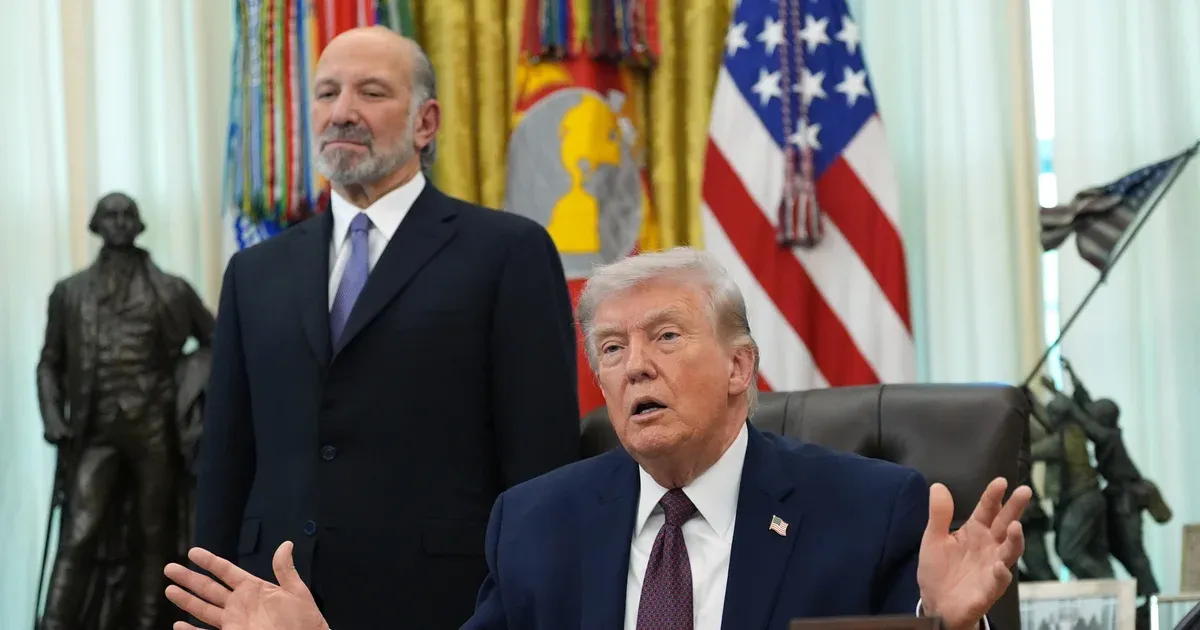
On April 4, 2026, Donald Trump issued an executive order targeting the federal oversight of mail-in voting procedures from the Oval Office. The order reopened a legal fight that election officials already expected, with implementation and state responses set to determine the pace. Proponents of the move argue the directive is necessary to ensure the integrity of federal elections through stricter verification standards. Critics immediately identified the order as an attempt to centralize power over a process traditionally managed by individual states. Legal experts suggested that the president may be overstepping the bounds of the executive branch by dictating how local municipalities handle their ballots.
Lawyers for the administration maintain that the order falls under the scope of national security and the protection of the democratic process. Under the new rules, the federal government would mandate specific criteria for the acceptance of mail-in ballots, effectively narrowing the window for voter participation. States currently maintain a patchwork of regulations regarding witness signatures, postmark deadlines, and ballot drop boxes. The directive seeks to replace this decentralized system with a single federal standard that emphasizes in-person voting. Up to $20 million in federal grants could be withheld from states that refuse to comply with these new administrative hurdles.
Election officials in several swing states expressed concern that the order creates confusion just months before local primaries. The White House released a statement claiming that the goal is to provide a uniform experience for all American voters. Constitutional scholars point to Article I, Section 4, of the Constitution, which grants state legislatures the primary authority to set the times, places, and manner of holding elections. Justice Department officials have already begun reviewing how the order might be implemented without triggering immediate injunctions from federal courts.
Executive Overreach and the Tenth Amendment
Constitutional arguments against the order center on the Tenth Amendment, which reserves powers not delegated to the federal government to the states. Previous administrations have largely avoided direct interference in state election mechanics to prevent claims of partisan manipulation. The current order breaks that tradition by attempting to redefine what constitutes a valid mail-in ballot at the federal level. National voting rights organizations have already labeled the move a direct assault on the sovereignty of the states. The Department of Justice anticipates a flurry of lawsuits from governors who see the order as an infringement on their constitutional duties.
The presidential directive attempts to bypass the legislative process by using agency data to influence voter rolls, a move that likely exceeds the constitutional authority of the executive branch.
While the administration claims the order only provides guidance, the language includes mandates for federal agencies to assist in the compilation of voter lists. Many legal analysts believe the Supreme Court will eventually have to decide if the president can use executive power to regulate election procedures. Federal agencies such as the Social Security Administration and the Department of Homeland Security are now tasked with sharing data to verify the citizenship status of registered voters. Georgia officials have stated that their existing systems are already sufficient for maintaining accurate voter rolls.
This initiative is a serious departure from the 2002 Help America Vote Act, which focused on providing funding rather than dictating specific ballot rules. Officials in the executive branch argue that the landscape of digital security requires a more hands-on federal approach. Using federal databases to scrub voter lists could lead to the removal of eligible citizens if the data is outdated or inaccurate. If these lists are mandated for state use, the resulting litigation could stall election certification processes nationwide.
Federal Database Integration for Voter Purges
Every federal agency with access to citizenship data must now cooperate with the newly formed Election Integrity Task Force. Beyond the logistical challenges, the privacy implications of sharing sensitive citizen data across agencies remain a primary concern for civil rights advocates. Such an integration of data allows the federal government to create a master list of eligible voters that could supersede state-maintained records. Local election boards would be forced to reconcile their data with federal findings or risk losing access to critical infrastructure funding. Donald Trump has frequently questioned the accuracy of state voter files during public rallies.
Legislative aides on Capitol Hill are split on whether the president has the statutory authority to demand such data sharing. This order relies on an expansive interpretation of the 1993 National Voter Registration Act to justify federal intervention. Legal challenges will likely focus on whether the president can unilaterally change the definitions of voter eligibility through an administrative order. Across the country, election clerks are struggling to understand how to implement these changes while preparing for upcoming registration deadlines. The integration of these datasets requires months of technical preparation that most states cannot afford.
The administrative burden placed on local governments could lead to longer wait times for mail-in ballot processing. Contrasting the administration's view, many state secretaries of state argue that mail-in voting is the most secure and accessible method for rural populations. The shift toward a federalized list of eligible voters could disenfranchise those whose data is incorrectly flagged by automated systems. A single error in a federal database could lead to thousands of voters being purged from the rolls without notice.
Civil Rights Groups Prepare for Court Battles
Civil rights attorneys are preparing to file complaints in multiple jurisdictions to block the order before it takes effect. Their strategy involves highlighting the potential for disparate impact on minority communities who rely heavily on mail-in options. Lawyers argue that the order serves no legitimate purpose other than to suppress the vote in specific demographics. Simultaneously, Republican lawmakers in several states have welcomed the federal oversight as a way to strengthen public confidence in election outcomes. The battle over the order will define the relationship between federal power and state autonomy for years to come.
Proponents of the order argue that the federal government has a vested interest in ensuring that only eligible citizens participate in national elections. They claim that the current system is too vulnerable to fraud and that state-level oversight is insufficient. Critics, however, maintain that cases of voter fraud are statistically rare and do not justify the wholesale reorganization of election rules. The tension between these two perspectives has created a polarized environment where even technical administrative changes are viewed through a partisan lens.
The directive leaves no room for local discretion. Any state that fails to adopt the federal standards could face immediate legal action from the executive branch. Such a top-down approach has rarely been attempted in the history of American elections. The final outcome of this executive order will likely depend on the willingness of the judiciary to limit presidential power despite enduring state traditions. The order remains in effect until a court issues a formal stay.
Mail-In Ballot Order Reopens Voting Fight
The order now faces the implementation problem that often defines election fights. Federal agencies can demand data and standards, but state officials and courts will decide how quickly, or whether, the rules take effect.