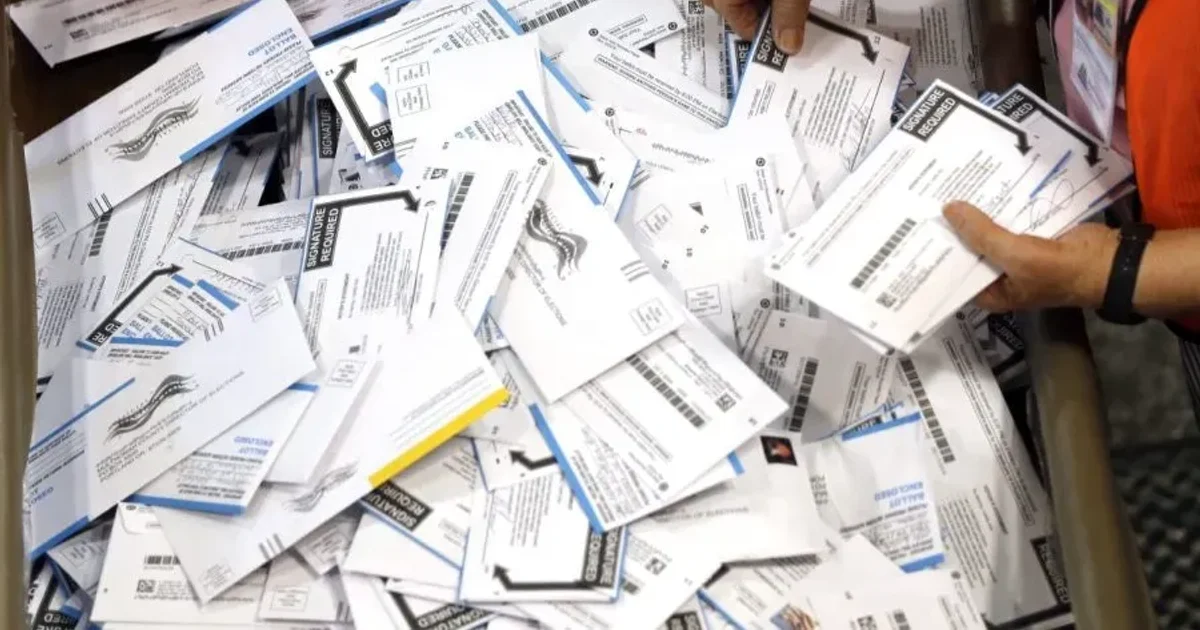
Oregon Attorney General Ellen Rosenblum filed a federal lawsuit to block an executive order from Donald Trump that seeks to restrict mail-in voting across the nation. State officials argue the mandate infringes upon their constitutional right to manage their own electoral processes. Legal filings submitted in Portland contend that the federal government lacks the authority to dictate the specific methods by which states collect and count ballots. This direct confrontation between Salem and Washington marks a new phase in the ongoing debate over voter access and election integrity. The April 4, 2026 filing moved Oregon into a direct fight over federal election limits.
Oregon officials maintain that its system has functioned without serious incident for over two decades. Residents approved Measure 60 in 1998, making Oregon the first state to conduct all elections entirely by mail. Since that transition, the state has consistently reported some of the highest voter turnout rates in the United States. Data from the Oregon Secretary of State shows participation often exceeds 80 percent in general election cycles. Attorneys for the state claim the new federal restrictions would force a costly and unnecessary transition to in-person polling during a time of limited municipal budgets.
Oregon Election History and Mail Ballot Success
Voters in Oregon have used mail-in ballots as their primary method of participation since the late 1990s. The process involves mailing a ballot to every registered voter at least two weeks before an election. Individuals return these ballots through the U.S. Postal Service or by placing them in secure drop boxes located at libraries and government buildings. Security experts point to the state's signature verification system as a primary defense against fraud. Election workers compare the signature on every ballot envelope with the one stored in the voter registration database. Any discrepancy triggers a notification process where the voter must provide further identification to clear the ballot for counting.
Donald Trump frequently criticized these procedures during his previous campaigns and subsequent administration. His newest executive order aims to standardize voting hours and locations, effectively banning the 24-hour drop boxes that Oregonians rely on. Proponents of the federal order argue that in-person voting provides a more secure environment and immediate verification. Oregon leaders dismiss these claims, noting that their system provides a paper trail that is inherently more audit-ready than many electronic voting machines. Records show that $11 million was spent by the state in the last decade alone to upgrade ballot tracking software and hardware.
Legal Conflict Over Tenth Amendment Authority
Constitutional scholars focus on the Tenth Amendment as the primary battleground for this litigation. The amendment reserves to the states all powers not specifically delegated to the federal government. Traditionally, the time, place, and manner of elections fall under state jurisdiction. Oregon argues that a federal mandate to restrict mail-in options exceeds the reach of the executive branch. Federal attorneys are expected to counter by citing the need for national security and uniform standards to prevent foreign interference. This legal friction places the judicial branch in the position of refereeing a dispute over the very foundations of American federalism. Legal observers are watching to see if the Department of Justice will defend the president's mandate in court.
"Oregonians vote by mail, and Oregon will keep running its own elections regardless of federal interference," a spokesperson for the Oregon Department of Justice said.
Recent polling suggests that 74 percent of Oregon residents support the continuation of the current system. Republicans and Democrats within the state have historically used mail voting at similar rates. Analysts find that the system does not provide a clear partisan advantage to either major party in state-level contests. Instead, the primary impact appears to be increased engagement among rural voters who live far from traditional polling sites. These individuals would face meaningful travel burdens if the federal order forced a return to localized, in-person precinct voting.
Security Records and Fraud Prevention Data
Critics of the federal order point to the lack of evidence regarding widespread fraud in mail-based systems. A multi-year study by the Brennan Center for Justice found that the rate of voting fraud in Oregon is statistically negligible. Specifically, the state has prosecuted fewer than 20 cases of attempted double-voting or signature forgery out of more than 50 million ballots cast since 2000. These figures suggest that the internal controls and barcoded envelope tracking effectively prevent systemic abuse. The centralized nature of the counting process also allows for more rigorous bipartisan oversight than decentralized precinct-based systems. Oregon has 2.4 million registered voters who all receive ballots automatically through the mail.
Federal mandates often require immediate implementation, creating logistical hurdles for state agencies. Oregon would need to secure hundreds of physical polling locations and recruit thousands of temporary workers to comply with the new rules. Secretary of State officials estimate that such a transition would cost the state treasury at least $45 million in the first year alone. This figure includes the procurement of voting machines and the training of poll watchers. State legislators have expressed concern that these funds would have to be diverted from education or public health programs. Financial planners in Salem argue that the federal government has provided no funding to assist with these mandated changes.
Other states are closely watching the outcome of the Oregon lawsuit. Washington, Colorado, and Utah also use universal mail-in systems and may join the litigation as intervenors. If the federal order stands, it could set a precedent for further executive intervention in state-level administrative tasks. Civil rights organizations worry that the sudden shift in voting methods will confuse elderly voters and those with disabilities. These populations have grown accustomed to the convenience and accessibility of the home-based ballot. The loss of drop boxes specifically targets voters who work non-traditional hours and cannot reach a government office during standard business hours.
Federal officials have not yet filed their formal response to the lawsuit in the U.S. District Court. Donald Trump remains vocal about his preference for one-day, in-person voting across the entire country. His administration argues that mail-in voting stretches the counting process over several days, leading to public distrust in the results. Oregon counters this by noting that its results are typically finalized and certified within the same timeframe as states using electronic machines. The state allows officials to begin signature verification as soon as ballots arrive. That early processing ensures that the majority of votes are ready for the final tally as soon as polls close at 8:00 p.m. on election night.
Oregon Vote Fight Tests Federal Election Power
Oregon's challenge keeps election administration in court rather than inside routine state practice. The outcome will matter for mail voting, voter-list management and the limits of federal pressure on local systems.