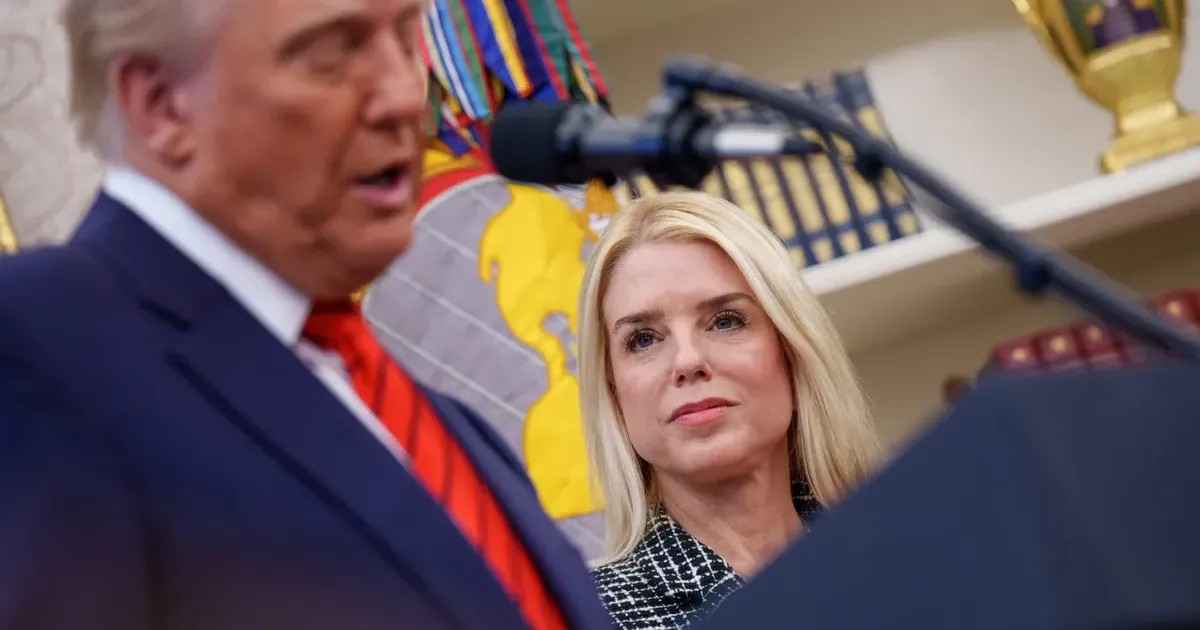
Donald Trump's removal of Attorney General Pam Bondi did not end the Justice Department turmoil. It moved the conflict into a new phase. Todd Blanche, Trump's former personal lawyer and Bondi's deputy, became acting attorney general and is now seeking permanent confirmation under intense Senate scrutiny.
Blanche's appointment matters because the Justice Department is not an ordinary cabinet agency in public perception. It prosecutes, investigates, defends federal power and decides when the president's demands have to stop at the law. Replacing Bondi with Blanche therefore raised a direct question: whether the department is being led as a national law-enforcement institution or as an instrument of presidential loyalty.
Bondi's Removal Sent a Message
Bondi entered office as a Trump loyalist, but that did not protect her. Her ouster signaled that loyalty alone was not enough if the White House wanted faster action on politically sensitive priorities, personnel changes or document disputes.
The loyalty message is dangerous inside the Justice Department. Senior officials need enough independence to disappoint the president when evidence, court orders or ethics rules require it. If every attorney general understands the job as a test of visible obedience, the department's internal culture changes quickly.
Blanche Carries an Unusual Conflict Burden
Blanche's resume includes serious legal experience, including former federal-prosecutor work. The problem is proximity, not a lack of legal credentials. He previously represented Trump personally and then moved into senior Justice Department leadership under the same president.
Blanche's history with Trump will follow every recusal decision, every politically charged charging choice and every document release involving Trump allies or adversaries. An attorney general can insist on independence, but the public also needs visible distance from former clients and personal loyalties.
The Confirmation Hearing Is About More Than One Nominee
Senators questioning Blanche have focused on whether he can separate his oath from Trump's political agenda. The issues include January 6 pardons, treatment of career Justice Department staff, politically sensitive prosecutions, ICE accountability, Epstein-file redactions and a controversial anti-weaponization fund tied to a Trump tax settlement.
The list turns the hearing from a personnel proceeding into a public audit of what the Justice Department has become since Bondi's removal. Blanche's answers matter less as polished assurances than as commitments that can be tested later by documents, recusals and enforcement decisions.
The Epstein Files Created a Trust Crisis
The Epstein-file dispute added legal and political pressure because it combined survivor privacy, public disclosure demands, court limits and conspiracy-driven expectations inside Trump's own base. Any attorney general handling those files has to move carefully.
Blanche's role in the release process and later criticism over redaction errors make the issue more serious. Moving too quickly can expose victims or compromise legal limits. Moving too slowly can look like concealment. The department needs a process that protects victims and produces credible disclosure, not a political performance built around selective outrage.
The Fund and Tax Deal Raised Republican Doubts
The proposed anti-weaponization fund and related tax-settlement controversy gave Blanche a different problem: skepticism from senators who might otherwise be expected to support a Trump nominee. Questions about whether the fund could be revived, whether Trump received special protection and whether DOJ judgment was distorted by presidential interest go to the core of equal treatment under law.
If the attorney general appears to help design legal benefits for the president or his allies, the damage goes beyond procedure and tells the public that federal law can be negotiated differently for power. Blanche has tried to reassure senators, but the issue will not disappear unless the department's paper trail and future conduct support that assurance.
Independence Has to Be Proven in Decisions
The attorney general serves the United States, not the president's private grievance list. The principle is familiar, but it only means something when a president wants a case filed, a file released, a critic punished or an ally protected.
Blanche's confirmation fight is therefore a stress test for the Senate as much as for him. Lawmakers have to decide whether professional credentials outweigh the conflict shadow created by his past representation of Trump and his conduct as acting attorney general. If they confirm him, their oversight burden grows rather than ends.
Bondi's removal and Blanche's rise have made Justice Department independence a daily question instead of a background norm. A department that controls prosecutions, federal investigations and sensitive disclosures cannot afford to look like a private legal department for the president. If the line between law and loyalty is erased, the damage will not wait for history books. It will appear in every case where the public wonders whether law or loyalty came first.