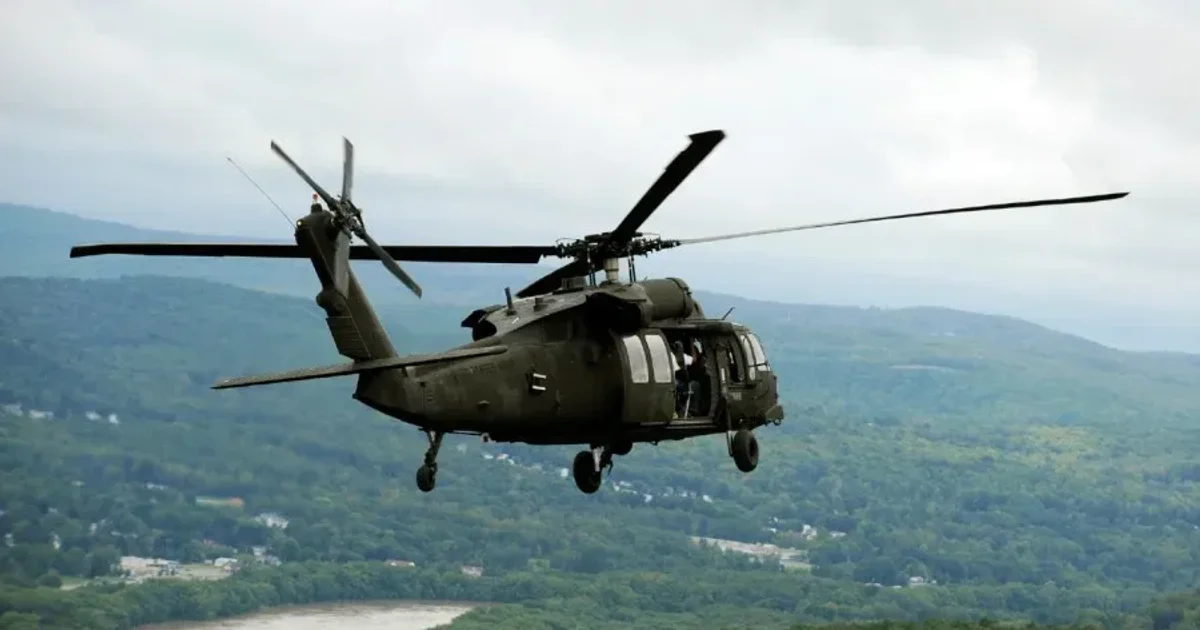
American aircraft came under Iranian fire during a search-and-rescue operation for downed personnel. The attack turned a recovery mission into a direct escalation point between Washington and Iran. Air Force crews moved Black Hawk helicopters into the area while commanders assessed whether the rescue corridor could remain open. The April 4, 2026, attack unfolded within a widening personnel-recovery crisis.
Military officials confirmed that one crew member from the initial fighter jet crash remains missing in hostile territory. White House officials have repeatedly attempted to characterize the Iranian military as a degraded force, yet recent intelligence reports suggest a high level of operational readiness within Tehran's air defense networks. Recovery teams faced heavy resistance throughout Friday's mission. Iranian soldiers used sophisticated anti-aircraft systems to disrupt the extraction of the downed pilot.
Iranian Fire Targets US Black Hawk Recovery Mission
Battlefield details reveal that the UH-60 Black Hawk was operating in a high-threat environment when the engagement began. Iranian forces positioned near the crash site opened fire as the recovery team descended toward the wreckage. Damage to the primary search aircraft included multiple hits to the fuselage, though the airframe remained flightworthy long enough to clear the immediate combat zone. A second search-and-rescue helicopter also took fire during the scramble to depart. Tactical commanders on the ground described the volume of fire as an orchestrated attempt to seize the missing crew member.
Military analysts at Foreign Policy observed that the sophistication of the Iranian response contradicts previous Pentagon assessments. While the administration in Washington portrays the Iranian military as defeated, the reality on the ground reflects a disciplined and capable adversary. Satellite imagery confirms that Iranian mobile missile units have moved into the region where the fighter jet went down. Pilots involved in the rescue attempt reported seeing several launches of surface-to-air missiles during their flight path. Iranian radar systems maintained locks on the U.S. aircraft for the duration of the incursion.
Recovery efforts now face meaningful hurdles as the search area expands. Environmental conditions and the threat of further anti-aircraft fire have slowed the pace of the investigation. Pentagon sources maintain that the priority is the safe return of the missing personnel. Iranian state media have not yet confirmed whether the pilot is in their custody. Electronic signals from the crash site ceased shortly after the initial incident occurred.
Congressional Resistance to Israeli-US Military Operations
Capitol Hill responded to the helicopter strikes with immediate legislative tension regarding the duration of the conflict. John Curtis, a Republican senator from Utah, announced that week that he would oppose continued military operations in Iran without a formal declaration of war. Curtis argued that the current trajectory of the U.S.-Israeli offensive lacks the necessary congressional mandate for a long-term engagement. Writing in the Salt Lake City-based Deseret News, the senator highlighted the constraints of the 1973 War Powers Resolution.
The War Powers Resolution of 1973 limits the president’s period of time to respond to emerging threats.
Senator John Curtis stated he would withdraw his support for the mission once the conflict reaches its 60-day mark. This legislative deadline puts immense pressure on the White House to achieve its military objectives within a narrow window. Lawmakers in both parties have begun to question the legality of sustained air strikes that have not received specific authorization from Congress. Curtis belongs to a growing faction of Republicans who are wary of open-ended foreign interventions. Foreign policy experts note that without Republican unity, the administration will struggle to secure funding for extended operations. The recent search-and-rescue operation was launched following the loss of a downed fighter jet over hostile territory.
Legal scholars suggest the 60-day threshold is the most serious hurdle for the executive branch in the coming weeks. Congressional leaders have requested a classified briefing to determine the exact goals of the Iranian campaign. Curtis emphasized that his stance is rooted in constitutional fidelity rather than a critique of the military's performance. The Utah senator insists that the executive branch must seek a formal vote before the conflict transforms into a permanent war. Public polling in Utah suggests a shift toward non-interventionism among his constituency.
Intelligence Reports Contradict White House Assessments
Data from U.S. intelligence agencies paint a more complex picture than the optimistic briefings provided by the White House. While the administration claims that Iranian command structures are in disarray, field reports show cohesive unit movements. The downing of the fighter jet and the subsequent attack on recovery helicopters prove that Iran's air defense remains a lethal threat. Foreign Policy reported that Iranian engineers have successfully integrated newer electronic warfare suites into their older mobile launchers. These upgrades allowed them to track and engage the Black Hawk despite its stealth coatings.
Search-and-rescue teams are operating under the assumption that the missing pilot may have been moved. Signal intercepts suggest that Iranian intelligence officers arrived at the crash site within minutes of the downing. This rapid response indicates a high level of preparedness that the White House has publicly downplayed. Military commanders in the region have requested additional electronic jamming assets to protect future recovery flights. Iranian coastal defenses have shown no signs of retreating from their forward positions. Logistics chains for the Iranian military are still functioning with efficiency across the southern provinces.
Credibility gaps between the executive branch and the intelligence community have created friction in Washington. Analysts argue that underestimating Iranian resolve led to the vulnerability of the rescue helicopters. The decision to send two lightly armed aircraft into a contested zone is now under internal review at the Pentagon. Iranian military leaders have used the incident for domestic propaganda purposes. Video footage of the damaged helicopters has been circulated on state-aligned social media channels. American intelligence officials believe the conflict is entering a more dangerous phase where Iranian forces will seek to capture U.S. personnel for leverage.
Rescue Attack Raises Pressure on Washington
The helicopter attack narrows Washington's room for error. Recovery teams still have to find missing personnel, but every new flight now carries a political cost as well as a battlefield risk.