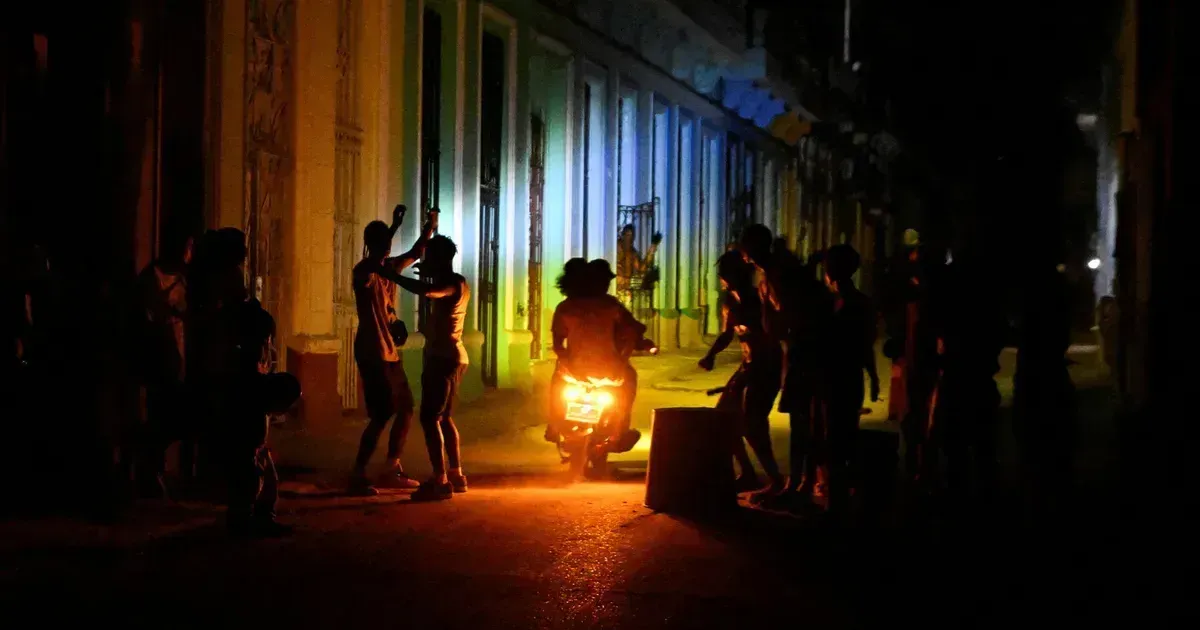
Donald Trump signaled his intent to seize Cuba on Monday while the island nation struggled with a total collapse of its electrical infrastructure. Donald Trump noted that taking control of the Caribbean territory would be a big honor, a statement that immediately shifted the geopolitical focus from the Middle East to the Florida Straits. Emergency teams in Havana spent the evening attempting to revive a defunct power grid that had plunged 10 million people into absolute darkness. Fossil fuel shortages and aging equipment finally reached a breaking point, leaving the communist government in its most vulnerable state in decades.
Havana officials reported the nationwide blackout occurred on Monday afternoon. Citizens across the island found themselves without refrigeration, air conditioning, or reliable communication. Streets that usually bustle with activity became silent corridors of shadows. For many residents, the failure represents the logical conclusion of a system starved of maintenance and investment. The collapse forced the administration of Miguel Diaz-Canel to confront the reality that his government can no longer provide basic services to the population.
But the darkness provided a backdrop for a more aggressive posture from Washington. President Trump has already intensified pressure on Iran and maintained a strict grip on Venezuelan policy. Now, the White House appears to have turned its sights toward the final remnant of the Cold War in the Western hemisphere. Critics of the administration argue that the rhetoric is intended to provoke a regime change that has eluded American presidents since the 1950s. Supporters, by contrast, view the move as a necessary step to secure the region from adversarial influence.
Energy Grid Failure Paralyzes Havana and Provinces
Havana residents described a scene of total confusion as the lights went out simultaneously in every municipality. Public transport ground to a halt and hospitals were forced to rely on limited diesel generators to keep life-support systems functioning. Many families had already been enduring rolling blackouts for months, but a total systemic failure was something few expected to happen so quickly. The government has struggled to explain the timeline for a full restoration of services. In fact, the Cuban Ministry of Energy and Mines admitted that the Antonio Guiteras power plant, the largest on the island, had failed completely. Repair crews faced a lack of spare parts due to trade restrictions and a lack of hard currency. Without the ability to buy components on the international market, technicians have been forced to scavenge from older, defunct facilities. This cannibalization of the energy sector has left the country with zero margin for error. The grid remains on the edge of a permanent shutdown.
The United States is inflicting collective punishment on the Cuban people during plans to seize the country. Yet, the crisis is not just technical. It is a direct result of a crumbling economic model that relies on subsidized fuel from allies who are themselves under extreme pressure. For decades, the island survived on the largesse of the Soviet Union and then Venezuela. With those pipelines drying up, the state has no viable alternative for energy generation. The result is a nation of millions waiting for a light switch that may never again produce a glow.
Washington Restricts Oil Shipments to Island Ports
Havana has seen its oil imports drop by nearly fifty percent over the last fiscal year. The US Treasury Department has aggressively targeted tankers that attempt to dock at Cuban refineries. Insurance companies have been warned that providing coverage for these vessels will result in heavy fines and exclusion from the American financial system. Most international shipping firms have decided that the risk of losing access to US markets outweighs the profit from a Cuban contract. This strategy has effectively choked the lifeblood out of the Cuban economy.
Still, the Trump administration remains unapologetic about the economic squeeze. Officials in Washington argue that the Cuban government provides military and intelligence support to Caracas, which undermines American interests in South America. By cutting off the flow of fuel, the US aims to force the leadership in Havana to choose between their ideological allies and the survival of their own domestic stability. The pressure has created a vacuum that is rapidly being filled by external powers.
Separately, the rhetoric coming from the White House has moved beyond simple sanctions. Trump has hinted that military intervention is a viable tool for resolving the long-standing dispute. He told reporters that his predecessors were too soft on the Cuban leadership. He suggested that a direct takeover would be a clean solution to a problem that has persisted for 67 years. This language has caused alarm among diplomats in the region who fear a return to the era of American territorial expansion. The Monroe Doctrine has seemingly been revived with a 21st-century intensity.
And the legal structure for such an intervention is still a subject of intense debate in the halls of Congress. Some legislators believe that the president has the authority to act under existing national security statutes. Others contend that any military action would require a formal declaration or a specific authorization from the legislative branch. Meanwhile, the Cuban military has been placed on high alert. Soldiers have been seen reinforcing coastal defenses and conducting drills in urban centers. The government in Havana is preparing for a conflict they believe is inevitable.
Regional Fallout
The Cuba threat turns an energy emergency into a sovereignty crisis. Even if no military move follows, the statement gives Havana and its allies a powerful argument that U.S. pressure is aimed at control rather than reform.