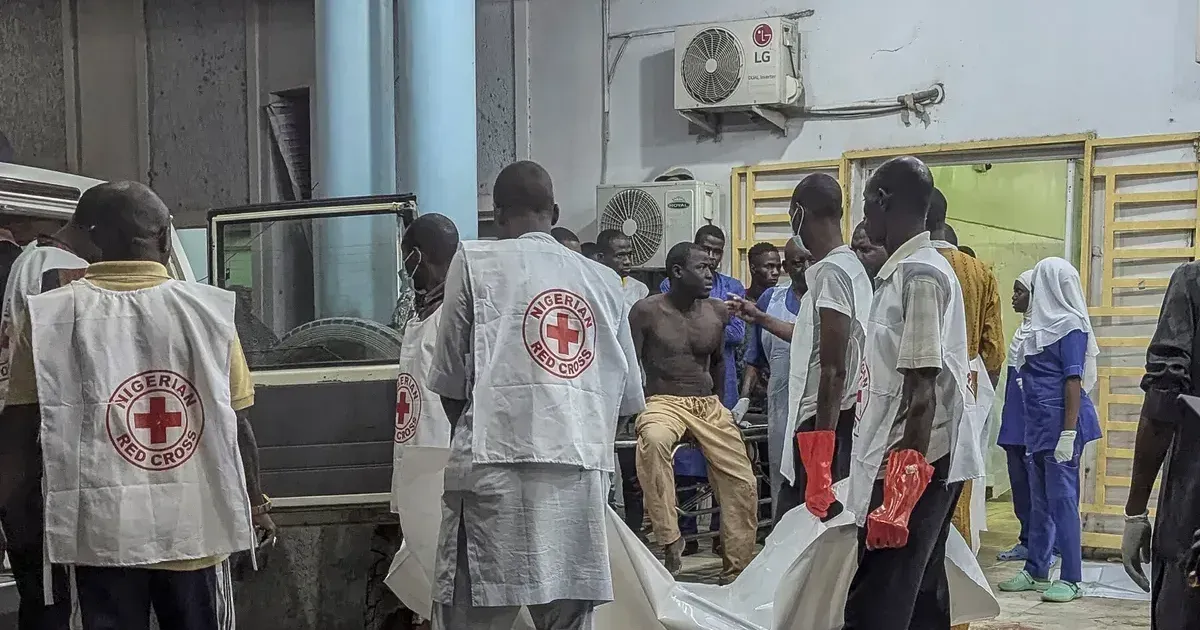
Boko Haram militants struck the city of Maiduguri on Monday evening, killing at least 23 people in a series of coordinated suicide bombings during the Ramadan fast. Multiple explosions tore through high-traffic civilian zones, including a teaching hospital and two crowded market areas. Monday night transformed into a scene of carnage as rescue workers waded through debris to locate survivors among more than 100 injured civilians. Targets included the post office and the main gate of the University of Maiduguri teaching hospital, where victims were already seeking medical care for separate ailments.
One explosion detonated as families gathered for iftar, the traditional breaking of the fast. Second and third blasts followed in rapid succession near the city center markets, catching bystanders who had rushed to help those wounded in the initial strike. Survivors described a series of deafening roars followed by plumes of black smoke that choked the evening air. Blood stained the pavement outside the hospital entrance where a bomber detonated a vest packed with ball bearings. Emergency vehicles struggled to handle the narrow streets of the Borno State capital as panicked residents fled the blast sites. Doctors at the teaching hospital worked through the night under dim emergency lighting to stabilize patients with severe shrapnel wounds and burns. Military officials confirmed the death toll reached 23 by dawn, though they cautioned that many of the 100 injured remain in critical condition. Hospital wards were quickly overwhelmed, forcing staff to treat some victims on floor mats in the hallways. Explosions at the post office caused structural damage to nearby shops, shattering windows for several blocks. Security cordons now restrict access to the affected markets while forensic teams scan for unexploded devices.
Maiduguri Security Perimeter Breached
Maiduguri was once a relative sanctuary in north-eastern Nigeria, largely protected from the rural violence that has plagued Borno State for over a decade. Yet the recent breach suggests that insurgent cells have successfully re-established a presence within the urban core. Boko Haram militants had previously been pushed into the Sambisa Forest and the Lake Chad marshes by a series of military offensives. Residents now fear the return of regular urban warfare that characterized the early years of the conflict. Military checkpoints around the city failed to detect the bombers, who likely entered the metropolitan area days before the strike.
For one, the infiltration of such a high number of explosives indicates a sophisticated logistics network still operating under the nose of the Nigerian intelligence services. Security analysts in Abuja suggest the attackers may have used civilian disguises to bypass the perimeter trenches and sandbagged outposts. Even so, the failure to protect a high-profile location like the university hospital prompts scrutiny about the effectiveness of current patrolling schedules. Nigeria has received significant counter-terrorism support from the West to prevent exactly this type of urban penetration. Intelligence sharing between regional partners apparently failed to identify the specific threat level in Borno this week. The United States has provided more than $500 million in security assistance to Nigeria over the last several years to strengthen its fight against Islamic extremism. Intelligence assets and drone surveillance are supposed to provide a shield for cities like Maiduguri. Nigerian commanders frequently cite these technological advantages when briefing the press on their successes in the hinterlands. In turn, the focus on rural mop-up operations may have left the city centers vulnerable to sleeper cell activation. Urban warfare requires a different intelligence set than the scorched-earth tactics used in the forest.
Boko Haram Urban Resurgence Tactics
Boko Haram has historically used suicide bombings to maximize civilian casualties and sow distrust between the population and the government. Many of these attackers are coerced or brainwashed, often including young women or teenagers tasked with walking into crowded spaces. The group had largely abandoned these tactics in 2024 and 2025 in favor of hit-and-run raids on military outposts. Borno State Governor Babagana Zulum has frequently called for a more proactive stance on urban intelligence to prevent a regression into the chaos of the 2010s. Still, the porous nature of the city's outskirts makes total containment a logistical nightmare.
Maiduguri residents have lived under a state of high alert for years, yet the timing of these attacks during Ramadan feels particularly calculated to demoralize the public. Breaking the fast is a communal activity, meaning the markets and post office areas were at their peak capacity on Monday. Violence during holy periods is a recurring theme for the insurgents, who use such timing to assert their presence. Markets that were recently reopened to encourage economic recovery now stand empty as shopkeepers wait for further security guarantees. Separately, the Nigerian Air Force has increased its sorties over the Sambisa region in an attempt to locate the command structure behind the Monday bombings.
Investigation into the explosives used reveals a level of technical skill consistent with previous Boko Haram munitions experts. Forensic teams identified traces of military-grade plastic explosives mixed with ammonium nitrate in several of the blast remnants. Local police in Borno State have arrested three individuals for questioning in connection with the transport of the bombers. The problem remains one of human intelligence rather than just hardware or firepower. Political leaders in the region often complain that the local population is too terrified of insurgent reprisals to report suspicious activity to the army.
Failure of International Military Assistance
Corruption within the Nigerian procurement system has long hampered the delivery of essential equipment to the front lines. Soldiers in the north-east have occasionally protested over lack of ammunition or delayed pay, even as the defense budget continues to swell. To that end, international partners like the United Kingdom and the United States have started to attach stricter conditions to their military aid packages. Counter-terrorism trainers from the U.S. AFRICOM mission have been working with Nigerian special forces to improve urban response times. The Pentagon maintains a small footprint of advisors who provide tactical guidance during major operations.
Critics point out that despite this aid, the fundamental security of the Borno State capital remains fragile. Nigerian officials often present a sanitized version of the conflict to international donors to keep the funding flowing. Borno residents, however, tell a story of a military that is often reactive rather than preemptive. Families of the victims gathered on Tuesday morning to begin the grim process of identifying bodies at the hospital morgue. Community leaders in Maiduguri have called for a complete overhaul of the city's internal security architecture. Funeral processions passed through the quieted streets as the city began a week of mourning.
The carnage we saw at the market gates was beyond anything the recent peace had prepared us for, with innocent people blown apart as they waited for food.
Maiduguri remains the administrative heart of the fight against the insurgency, and its fall or destabilization would be a catastrophic blow to the central government. International aid groups, which use the city as a hub for their operations throughout the Lake Chad Basin, have restricted staff movements in response to the bombings. Relief supplies for displaced persons in rural camps are currently stalled as trucks are searched at every major intersection. Humanitarian workers warn that a prolonged security lockdown could lead to food shortages in the outlying districts. Markets in the western part of the city remained closed Tuesday as soldiers conducted door-to-door searches.
In fact, the reliance on foreign drones and satellite imagery has not replaced the need for effective ground-level policing. Stability in the north-east depends on the government's ability to convince the residents that the military can actually protect their daily lives. Nigeria continues to struggle with the asymmetrical nature of a conflict that has no clear front line. Borno State officials have promised a full investigation into how four bombers managed to reach the center of the city undetected. The governor is scheduled to visit the wounded at the teaching hospital later this evening.
What Maiduguri Reveals About Security Fatigue
Decades of tactical inertia and billions of dollars in mismanaged security funding have rendered the Nigerian military's rural successes largely performative. While the Pentagon and Whitehall pat themselves on the back for delivering high-tech hardware, the core of the Borno State conflict remains an intelligence vacuum that Boko Haram fills with ease. This is not a failure of equipment but a failure of will and local integration. If the military cannot secure a hospital entrance in its most fortified northern city, the narrative of a defeated insurgency is a dangerous lie sold to both the Nigerian public and international donors.
We are seeing a cyclical nightmare where the government declares victory in the forest while the suburbs are left to burn. The influx of Western aid has created a dependency on technology that is useless against a teenager with a concealed vest and a death wish. Until Abuja cleanses its own ranks of the corruption that siphons off soldier pay and ammunition budgets, Maiduguri will remain an open target. We must stop pretending that another shipment of drones will solve a problem rooted in deep-seated social neglect and a military hierarchy that is more interested in procurement contracts than neighborhood patrols. The 23 lives lost on Monday are the price of this collective delusion.