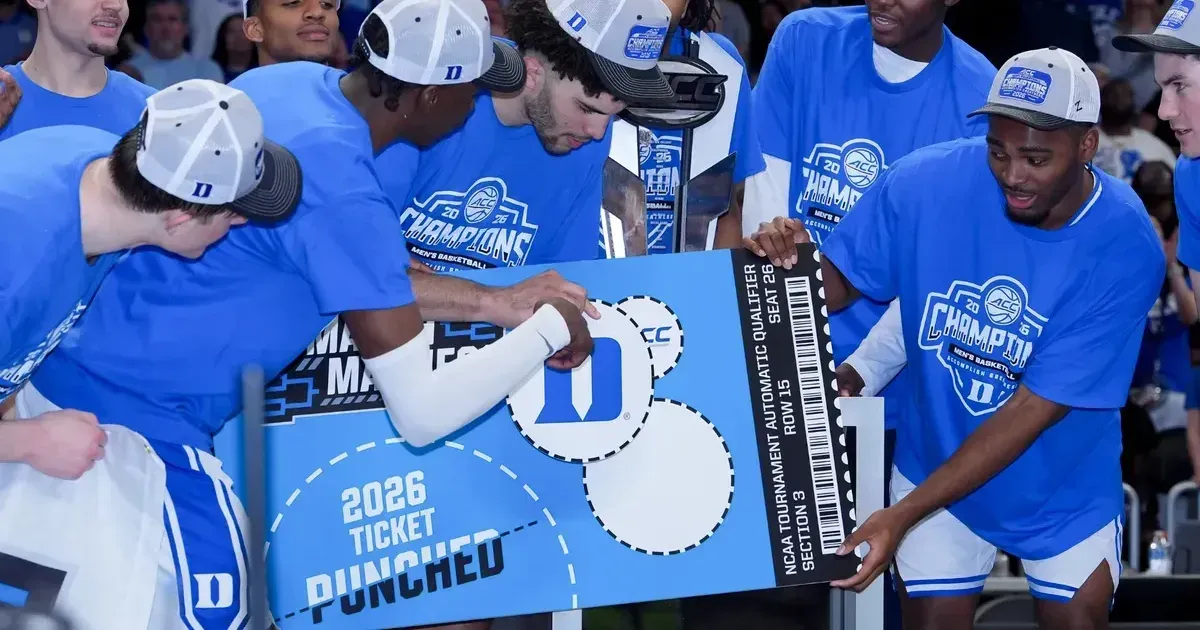
Spectrum Center in Charlotte provided the stage for a display of conference dominance on Saturday night. Duke, now the top-ranked team in the nation, secured its second consecutive Atlantic Coast Conference tournament trophy. They defeated tenth-ranked Virginia in a contest defined by defensive attrition and clinical late-game execution. Duke stands alone at the summit of the conference. Jon Scheyer has officially cemented his own legacy in Durham after four seasons at the helm. This victory marks his second straight tournament championship and his third title in the last four years. While the shadow of the previous era remains long, Scheyer is carving a distinct path characterized by versatile recruiting and a fluid offensive system. The transition from legendary leadership to modern efficiency appears complete.
Duke Holds Off Virginia
Winning championships has become a routine expectation for the Blue Devils in the mid-2020s. Saturday's result was not just about a single trophy but rather the confirmation of a sustainable system. Scheyer managed the rotation with surgical precision, using a deep bench to wear down a disciplined Virginia squad. The depth of the roster allowed Duke to maintain a high defensive intensity for the full forty minutes. Many critics wondered if the program would see a dip in performance following the departure of iconic figures. Those doubts have been answered with three banners in four seasons. Duke has now won the tournament in 2023, 2025, and 2026, establishing a new rhythm of success. This victory ensures they enter the NCAA tournament as the presumptive number one overall seed. Success under pressure is the defining trait of this Duke group. During the final four minutes, when Virginia cut the lead to a single possession, the Blue Devils responded with three consecutive stops. The victory required every ounce of energy the starters could provide. Efficiency on the perimeter proved to be the deciding factor in a game where points inside the paint were hard to come by.
Scheyer Adds Another ACC Title
Virginia entered the game hoping to slow the pace and force the Blue Devils into a half-court grind. Tony Bennett used his signature defensive schemes to frustrate the Duke backcourt for much of the first half. The Cavaliers could not find enough offensive rhythm to capitalize on those defensive stops. Their shooting percentage hovered below forty percent for the duration of the match. But the biggest struggle for the Cavaliers was rebounding. Duke managed to collect twelve offensive boards, leading to second-chance points that effectively killed any momentum Virginia built. For instance, a critical tip-in following a missed free throw late in the second half pushed the lead back to six. Such errors are rare for a Bennett-coached team, but the physicality of the Blue Devils seemed to overwhelm them in the closing stages. In particular, the struggle to contain Duke on the wing forced Virginia into early foul trouble. Two of their primary defenders had to sit for extended periods during the second half. That absence allowed the Blue Devils to attack the rim with less resistance. The final score reflected a game that was closer than the statistics suggested, but the outcome never truly felt in doubt after the ten-minute mark.
Tournament Seeding Picture Sharpens
Spectrum Center was filled to capacity with a crowd split between the blue of Durham and the orange of Charlottesville. Local officials reported that the tournament brought major economic activity to the Queen City. Hotels and restaurants in the Uptown area saw record bookings for the third year in a row. Meanwhile, the energy inside the arena reached a fever pitch during the final two minutes of the championship game.
Revenue figures for the 2026 tournament are expected to exceed previous records due to increased television interest and premium seating sales. The ACC tournament remains the premier event in East Coast collegiate athletics. The atmosphere in Charlotte served as a reminder of the enduring tribalism that fuels college basketball. Fans from across the region converged to see if the Cavaliers could pull off the upset.
The logistics of hosting such an event have become a point of pride for the city. From security to transport, the execution was flawless according to tournament directors. This event has become a foundation of the regional economy, attracting fans who stay for multiple days. The financial success of the tournament ensures that Charlotte will remain a top choice for future championship rotations.
Duke will likely see its name at the very top of the bracket when the selection committee reveals the field on Sunday. Their resume includes multiple wins over top-ten opponents and a regular-season title to go with this tournament victory. They have established themselves as the team to beat in the coming weeks. Analysts believe their path to the Final Four will be sharply easier as the top overall seed.
Selection Sunday always brings a mix of anxiety and excitement, but for the Blue Devils, it is a formality. They have checked every box required of a national title contender. Virginia will likely settle for a mid-level seed, perhaps a four or five, depending on how other conference tournaments conclude. Their performance in Charlotte showed they can compete with anyone, even if they lack the depth to finish against elite competition.
Winning the ACC tournament provides a psychological edge that cannot be quantified by data alone. The Blue Devils enter the national stage with the confidence of back-to-back champions. Every player on the roster has now experienced the pressure of a title game environment. The focus shifts from regional dominance to the quest for a sixth national championship banner.
Duke Kept Control Late
Does the continued dominance of a single program signal the death of parity in the ACC? While fans in Durham celebrate another trophy, the rest of the conference must confront an uncomfortable reality. The gap between Duke and the other fourteen members is no longer a gap; it is a canyon. We are seeing a consolidation of talent and resources that threatens to make the tournament a foregone conclusion before the first tip-off.
Virginia fought valiantly, but their reliance on a rigid, slow-paced system felt like a relic of a bygone era when compared to the modern athletic machine Scheyer has built. The conference office may enjoy the television ratings that a Duke dynasty brings, but the long-term health of the league depends on competitive balance. If the ACC becomes a one-team show, the prestige of the tournament will eventually erode. We should be skeptical of any story that paints this as a healthy sign for the sport.
Instead of celebrating the repetition of the same champion, we should be asking why the other blue-blood programs have allowed themselves to fall so far behind. The 2026 season ends with a familiar sight, but the implications for the future of collegiate athletics are anything but comforting.