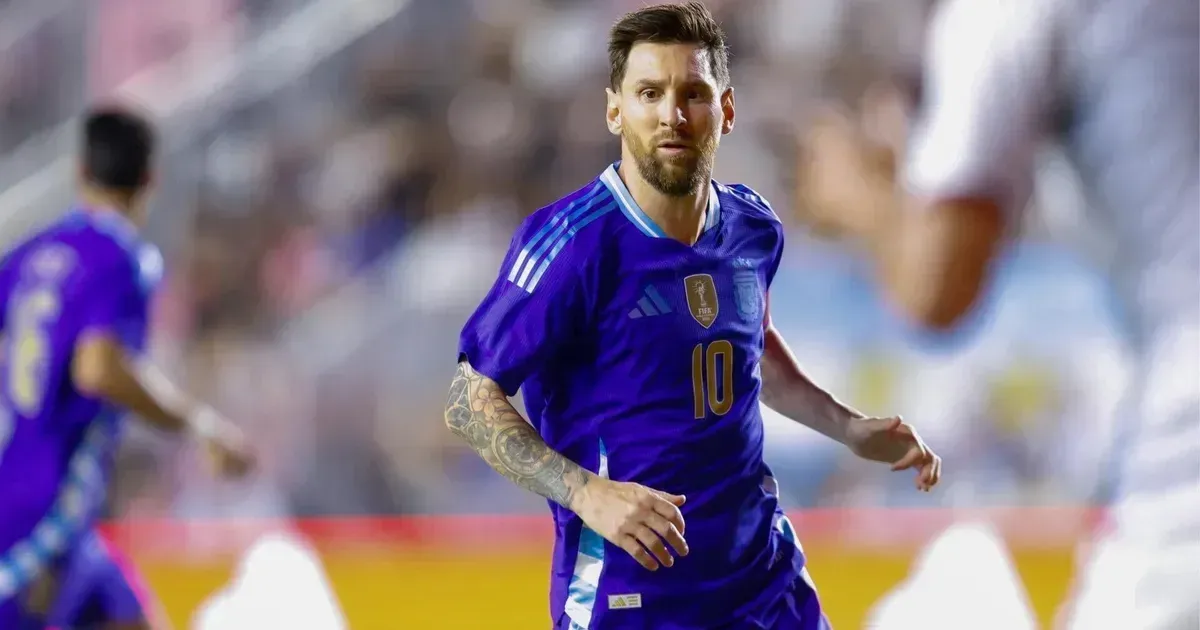
Doha hotel lobbies sat eerily quiet this morning as news of the sudden athletic retreat filtered through the city. The anticipated showdown between Spain and Argentina scheduled for Qatar this month collapsed Sunday following official confirmation from UEFA. Organizers cited the escalating regional conflict as the primary driver for the decision. European champions Spain were originally scheduled to take on Copa America winners Argentina on March 27 in a match designed to showcase the two most dominant national teams on the planet. But the reality of regional instability proved too great a risk for the international footballing bodies. Spain and Argentina had been preparing for weeks for a match that many saw as a symbolic passing of the torch. Fans were eager to see Lionel Messi face off against his young Barcelona successor, Lamine Yamal. Now, those fans are left holding worthless digital vouchers while the teams scramble to adjust their international calendars. Financial losses for the host city are expected to be substantial. Security assessments performed by independent firms and state intelligence agencies reportedly turned negative over the last forty-eight hours. Rising tensions involving the Iran war forced a total rethink of the logistical safety net required for an event of this magnitude. FIFA officials were not directly in charge of the event, yet they reportedly advised the regional federations to seek safer harbor.
Finalissima Clash Is Canceled
Doha remains a global hub for aviation and commerce, but its proximity to the active theater of the Iran war has created an insurance nightmare. Sources close to the Spanish Football Federation suggest that air travel corridors were no longer guaranteed to be clear of military activity. These concerns grew after several commercial flights were diverted away from the Persian Gulf last week. Argentine officials expressed similar reservations about the safety of their star-studded roster. Lionel Scaloni, the head coach of Argentina, had previously voiced his desire for a stable environment to test his veteran squad against European opposition. He stated that the health and peace of mind of the players must come before any commercial obligation in the Middle East. UEFA confirmed the cancellation through a brief statement released in the early hours of Sunday morning. It noted that the decision was made in full consultation with CONMEBOL and the local organizing committee. No immediate reschedule date was offered to the public. Meanwhile, the Spanish national team is expected to return to Madrid immediately to begin preparations for alternative friendly matches.
Safety is our top concern during this period of regional instability, and we cannot justify the presence of thousands of international visitors in a potential conflict zone.
Footballing authorities rarely cancel such high-profile events so close to the opening whistle. This fixture was the center of a multimillion-dollar marketing campaign. Billboards featuring Yamal and Messi still line the highways leading into Lusail. Local vendors have already printed thousands of shirts that may never be worn by a paying customer.
Regional Security Hits Football Logistics
Estimates regarding the total lost revenue suggest a figure close to $85 million across all sectors. This includes broadcast rights, ticket sales, and hospitality packages that were already sold out. Broadcasters in both Europe and South America had cleared their prime-time schedules for the event. Those networks are now left with a major programming gap to fill on short notice. Argentina was set to receive a substantial appearance fee from the Qatari government. The Argentine Football Association relies heavily on these offshore friendly matches to fund its domestic programs. Losing this payday creates a hole in their annual budget that will be difficult to repair before the next World Cup cycle. The Spanish federation is better insulated by its central UEFA funding. Sponsors are now demanding clawback clauses in their contracts. Brands that paid for pitch-side advertising and stadium naming rights are now in talks with legal counsel. The complexity of force majeure clauses in sports contracts will likely lead to months of litigation. Qatar has promised to honor its financial obligations to some extent, though the details remain opaque.
Sponsors Face a Costly Gap
Lionel Messi remains the biggest draw in world sports, and his absence is a blow to the Qatari tourism strategy. The aging legend had planned to use this match as one of his final competitive appearances on the soil where he lifted the World Cup in 2022. Fans who traveled from as far as Buenos Aires and Tokyo are now stranded without a game to watch. Some have already started protests at the offices of the local organizers. Lamine Yamal is the other half of this broken story. The teenage sensation has been compared to Messi since he first stepped onto the pitch for Barcelona. This match was marketed as the ultimate validation of his rising status. Instead of a clash of generations, we are left with highlights of past performances.
Infrastructure in the region has been stressed by the needs of the military and the resulting supply chain disruptions. Shipping lanes are congested, making the delivery of specialized equipment for the stadium nearly impossible. Even the catering services for the luxury boxes reported shortages of imported goods. These small failures added up to a broader realization that the match could not be staged at a premium level.
Qatar had hoped to use the Finalissima to prove its continued relevance as a global sports destination. The nation has invested billions in its sporting infrastructure over the last decade. However, geography cannot be changed by wealth. The proximity to the Iran war has turned a luxury oasis into a logistical liability. Security drones were spotted patrolling the perimeter of the Lusail Stadium twice yesterday.
Journalists from every major sports outlet had already checked into their hotels. They are now filing stories about war and politics rather than tactics and goals. The press center, once buzzing with tactical debates, is now a room full of people booking flights home. The pitch remains empty under the scorching sun.
CONMEBOL officials have suggested that the match could be moved to a neutral site in the United States or Europe later this summer. But such a move would require a complete renegotiation of every existing contract. Spain and Argentina have packed schedules, leaving very few windows for an intercontinental flight. Money cannot buy safety or time when the world is at war.
Sport Cannot Outrun Regional Risk
When will global football federations stop pretending that money can sanitize a war zone? The decision to award a high-profile fixture like the Finalissima to a region simmering with the heat of the Iran war was an exercise in pure corporate greed. UEFA and CONMEBOL chased a Qatari paycheck while ignoring the glaring warnings of every major intelligence agency. It is a predictable failure of leadership that prioritizes bank balances over the physical safety of players and traveling supporters.
The reliance on oil-rich states to prop up international football has created a fragile system where matches can be wiped out by a single drone strike or a closed airspace. We should be asking why a match between the champions of Europe and South America was even being held in Doha in the first place. The answer is obvious, but the fallout is expensive. Qatar tried to buy another moment of glory, but reality finally broke through the PR shield.
If football wants to remain a global game, it must learn that some regions are now incompatible with the spectacle of sport. The pitch in Lusail is a perfect metaphor for the current state of the industry: expensive, pristine, and utterly useless in a crisis.