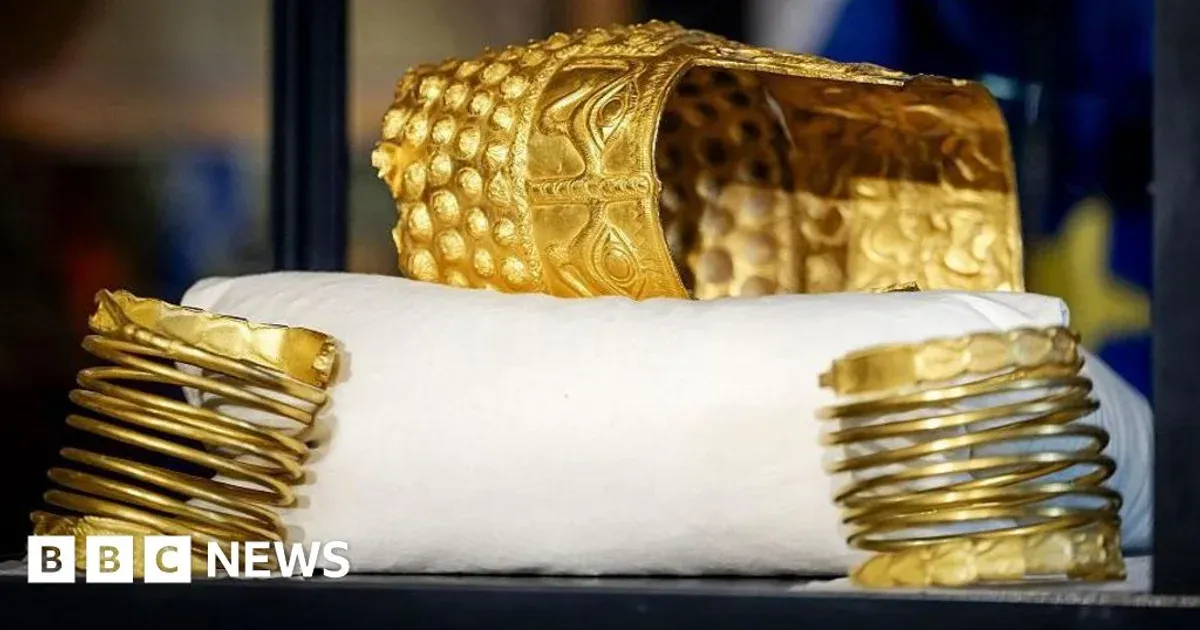
Dutch authorities' recovery of the 2,500-year-old Cotofenesti golden helmet gave Romania a major cultural relief after the explosive Drents Museum theft. The helmet, one of the country's best-known Dacian treasures, was stolen from the museum in Assen along with three gold bracelets while on loan from Romania.
The return was not a clean ending. Two bracelets were recovered with the helmet, but a third remained missing. Officials also said the helmet had suffered limited damage, including a dent, though conservators expected it could be restored. For an ordinary stolen object that might sound minor. For a national treasure, even small damage carries weight.
The Recovery Prevented a Worse Cultural Loss
The greatest fear after the heist was that the gold objects might be damaged, hidden indefinitely or broken up for material value. Famous antiquities are difficult to sell openly, but recognizability does not make them safe. Their recognizability can turn them into leverage, bargaining pieces or targets for destruction.
Recovering the helmet and two bracelets therefore matters beyond insurance value. These objects are part of Romania's public memory and archaeological story. Their value sits in history, craft, symbolism and context, not in the metal alone.
The Missing Bracelet Keeps the Case Open
The third bracelet is not a small loose end. A set broken apart loses historical and display context, and investigators still need to know where the missing piece went, who controlled it and whether it was damaged. Partial recovery is still better than disappearance, but it leaves the theft unfinished.
The missing bracelet also matters for accountability. Until every item is found, prosecutors, insurers, museum officials and Romanian authorities are dealing with an incomplete chain of evidence. Celebration and pressure have to run at the same time.
The Loan Made the Theft Politically Sharper
The stolen pieces were not owned by the Drents Museum. They were Romanian heritage objects entrusted to a Dutch institution for public display. The ownership distinction explains why the theft caused diplomatic anger as well as cultural shock.
International loans depend on trust. The lending country accepts risk because cultural exchange has value. The host institution accepts responsibility because the object is not replaceable. When explosives are used against a museum and national treasures vanish, the issue extends beyond local security to whether future loans can be justified on the same terms.
Security Cannot Be Treated as Background Work
The Drents Museum raid showed how quickly portable, high-value artifacts can become criminal targets. Explosive entry, limited response time and the absence of immediate physical resistance can defeat a display environment designed mainly around visitors rather than organized theft.
Museums do not need to become bunkers, but they do need security planning that matches the objects in the room. Loan agreements, night staffing, alarms, barriers, police response plans, transport procedures and insurance terms are part of cultural stewardship. They are not administrative details separate from scholarship.
Legal Deals Can Recover Art, but They Leave Questions
Reports described the recovery as linked to pressure on suspects and a deal-shaped legal context. A legal trade-off can be defensible when the priority is saving irreplaceable objects. Art-crime cases often require uncomfortable trade-offs because the artifact may be more important than a clean courtroom narrative.
Still, any deal has to be transparent enough to preserve public confidence. Romania needs to know why the objects were vulnerable, how the recovered pieces were handled and what remains necessary to find the final bracelet. The Netherlands needs to show that recovery was not the end of accountability.
The Market Sees Gold; History Sees Context
The Cotofenesti helmet is not merchandise with a dramatic backstory. It is evidence of ancient craft, political identity and ritual culture. The same is true of the Dacian bracelets. Their meaning depends on preservation, public access and the relationship between objects, not on a melt value or an auction fantasy.
The security failure should echo beyond one museum. The recovery is meaningful, but the theft still exposed a failure in how exceptional objects are protected during international display. Cultural exchange can continue only if countries believe their treasures will return home intact, complete and treated as more than valuable metal.