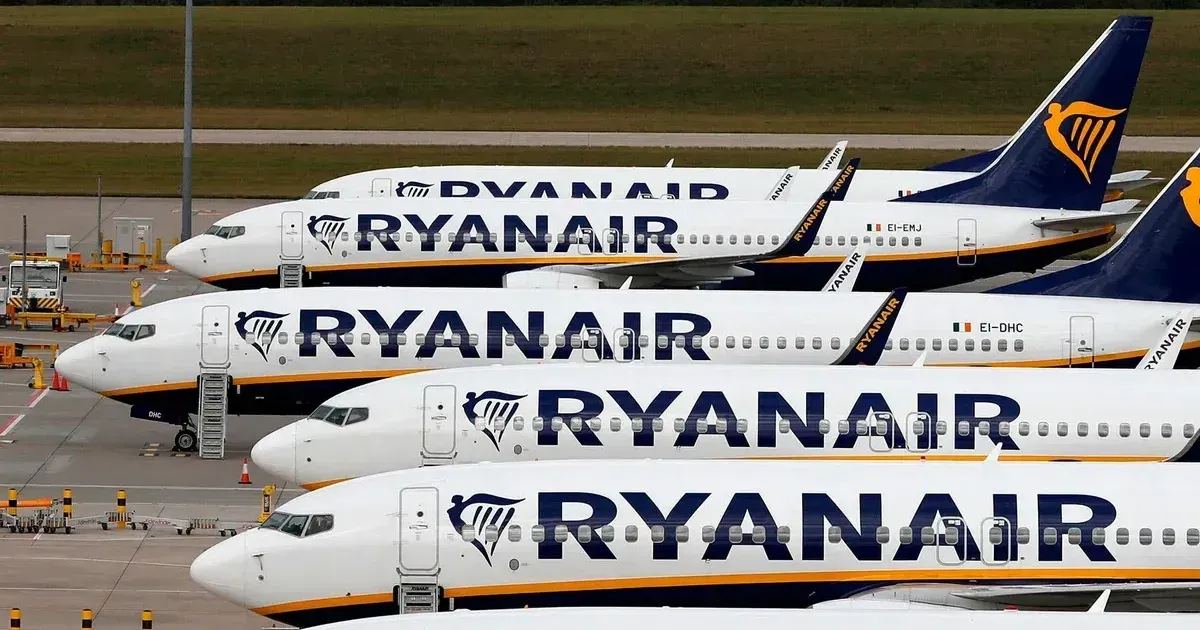
European airlines received warnings that jet fuel reserves could vanish within weeks if tankers remain blocked from the Strait of Hormuz. Carriers depend on a fragile network of specialized vessels to move refined product from Middle Eastern refineries directly to European ports. The fuel warning matters because airlines have limited short-term substitutes for jet supply. Maritime traffic through the world's most critical oil chokepoint had stopped by April 16, 2026, cutting off the primary source of kerosene for the continent.
Industry analysts at the International Air Transport Association indicated that current stockpiles at major hubs like London Heathrow and Frankfurt might last less than 21 days. Many carriers lack the storage capacity to weather a prolonged maritime blockade. Storage tanks at major international airports typically hold enough fuel for only a few days of operations, relying on constant replenishment from coastal refineries and incoming tankers.
Refined petroleum products, including the Jet A1 fuel used by commercial aircraft, cannot be easily rerouted across land. European refinery capacity has fallen by more than 15% over the last decade. This decline forced major players like Lufthansa to rely on long-haul imports to maintain their flight schedules. Existing European pipelines often prioritize heating oil or diesel, leaving the aviation sector vulnerable to maritime disruptions.
Supply chain constraints have left several national flag carriers with few alternatives to maritime transit.
Jet Fuel Supply Chains Halt at Hormuz
Refineries located in the Persian Gulf provide nearly one-third of the jet fuel consumed by European air traffic. Without these shipments, carriers must look to the United States or East Asia for replacement supplies. Prices for kerosene in North European markets spiked by 40% in the last 48 hours. Traders have begun diverting the few available cargoes in the Atlantic toward Rotterdam to prevent a total collapse of the refueling network.
Recent data from Kpler shows that 12 tankers carrying aviation fuel are currently anchored outside the blockade zone. These vessels hold enough kerosene to power every flight across Europe for approximately five days. Logistical experts suggest that even if the strait reopened tomorrow, the delay in arrivals would still cause a gap in supply. Port congestion often follows such closures, slowing the unloading process even further. Logistics managers at Air France-KLM are reportedly evaluating fuel-rationing protocols for long-haul routes. These plans involve carrying extra fuel on inbound flights from Asia or the Americas, a practice known as tankering. Carrying the extra weight of fuel increases total consumption and reduces the available payload for passengers and cargo. This fuel deficit threatens to ground non-essential routes within three weeks.
Alternative rail routes across Eurasia provide little relief due to technical differences in transport containers. Military intervention at the Strait of Hormuz remains a central point of debate regarding the ongoing blockade.
Infrastructure Limits Hinder Alternative Fuel Sources
European fuel infrastructure was designed for a steady flow of sea-borne imports rather than a resilient domestic loop. Pipeline systems connecting the Mediterranean coast to inland hubs like Munich or Zurich operate at near-maximum capacity. Increasing the throughput of kerosene would require reducing the flow of other essential fuels. National governments have shown little willingness to prioritize aviation over home heating or emergency services.
Analysts suggest that the suddenness of the blockade caught the industry during a period of low inventory. European airports moved to a just-in-time delivery model to reduce storage costs and environmental risks over the past twenty years. Strategic reserves held by member states usually consist of crude oil, which requires refining before it can be used in aircraft engines. Most European refineries are currently optimized for diesel production. Without a dedicated strategic reserve for refined jet fuel, the aviation sector is effectively the first to suffer during maritime crises. Fuel suppliers have already notified smaller regional airports that deliveries may be suspended to prioritize major international hubs. Private jet operators and small cargo firms face the most immediate risk of grounding. Commercial airlines are now competing with military logistics for the same limited pool of kerosene.
"The global aviation industry is currently facing a supply crisis with no immediate alternative routes for large-scale kerosene delivery," a spokesperson for the International Air Transport Association said.
Major carriers are preparing for grounded fleets as financial markets reacted sharply to the news of the fuel shortfall, with airline stocks across the FTSE 100 and DAX dropping sharply. Investors fear that a prolonged shutdown will erase the profit margins built up during the recent travel boom. Credit rating agencies have placed several mid-sized European carriers on a negative watch list. The cost of insuring aviation fuel contracts has risen to levels not seen since the early 2020s.
Energy markets are currently locked in a bidding war for the few available tankers currently in the Atlantic basin. While the United States maintains meaningful refining capacity, its own domestic demand limits the amount of jet fuel available for export to Europe. Shipping fuel from the U.S. Gulf Coast to Europe takes approximately 14 days. These timelines do not align with the three-week window remaining before European reserves are depleted. Middle Eastern refineries like those in Jubail and Al-Zour were supposed to be the backbone of the European energy transition away from Russian oil. The current blockade demonstrates the risk of replacing one single-point-of-failure with another located in a volatile maritime corridor. Emergency meetings in Brussels have yet to produce a viable plan for a continent-wide fuel sharing agreement. Every nation is currently prioritizing its own domestic flight requirements.
Economic Consequences for European Connectivity
European connectivity depends on the constant movement of aircraft through the continent's interconnected hub-and-spoke system. A fuel shortage at a single major hub like Paris Charles de Gaulle causes a wider effect throughout the entire network. Cancelled flights lead to stranded passengers and disrupted cargo shipments, impacting global trade. The pharmaceutical and electronics sectors are particularly dependent on high-speed air freight for their supply chains.
Jet fuel accounts for nearly 30% of an airline's total operating expenses. The current price surge, combined with the prospect of grounded planes, threatens the solvency of airlines with low cash reserves, a risk already visible in airline bailout failures. Regional economies that rely heavily on tourism are bracing for a wave of cancellations ahead of the peak summer season. Hotel occupancy rates in the Mediterranean have already started to trend downward in anticipation of flight disruptions.
Security of supply has become the primary concern for the European Union's transport commission. Officials are reportedly discussing the temporary suspension of environmental taxes on fuel to offset the enormous price spikes. Such measures would do little to address the physical absence of kerosene in storage tanks. The situation is still deteriorating as more tankers are diverted away from the region due to rising insurance premiums.
Energy Security Stakes
The warning exposes Europe’s dependence on imported refined fuel and just-in-time airport deliveries. Lower domestic refining capacity and limited kerosene storage leave airlines with few quick alternatives when the Strait of Hormuz is blocked.
Governments can coordinate cargoes, prioritize major hubs and temporarily adjust taxes, but those measures do not create additional physical supply. Tankering also carries a fuel and payload penalty, while replacement shipments from the U.S. Gulf Coast take much of the remaining three-week window to arrive.
A prolonged disruption would test whether European states share scarce fuel or protect their own flag carriers first. The immediate priority is maintaining essential routes; the longer-term issue is whether dedicated jet-fuel reserves and more diverse refining sources are needed to reduce the same vulnerability.