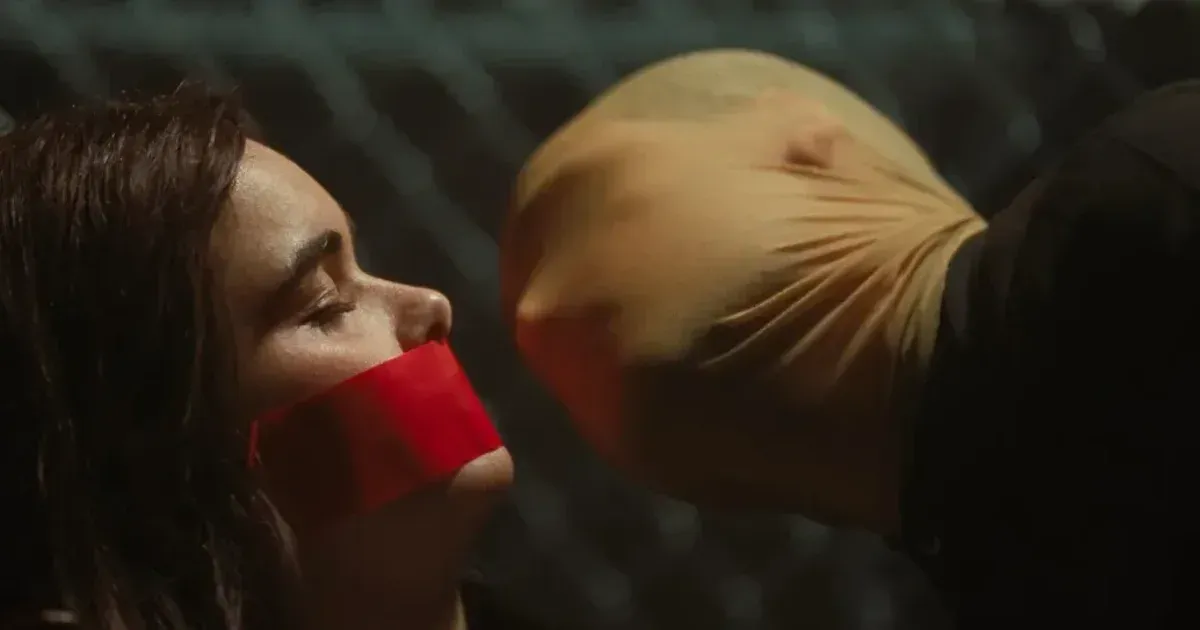
The new Faces of Death debate is about whether shock cinema can survive a digital update. That question matters because the original title already blurred marketing, myth and exploitation. On April 6, 2026, Daniel Goldhaber premiered a reworked version of the horror staple, drawing split reactions over gore, media satire and the legacy of the 1978 cult film. Some critics saw a deliberate grindhouse revival, while others argued the remake lingered on violence without enough purpose. Barbie Ferreira and Dacre Montgomery lead the cast in a story about online moderation and violent videos that echo the original film’s reputation.
Barbie Ferreira and Dacre Montgomery star in this updated narrative, which centers on a moderator for a social media platform who discovers a series of violent videos that mimic the original 1978 film. The script introduces a character named Arthur, a figure who goes beyond the typical tropes of a serial killer by functioning as a byproduct of the modern attention economy. Reviewers at Variety noted that while the concept of a killer fueled by digital engagement is provocative, the execution feels somewhat facile. Arthur is more than a predator; he is a participant in a culture that rewards extreme visibility at any cost. Goldhaber, who gained recognition for the techno-thriller Cam and the activist drama How to Blow Up a Pipeline, brings a specific interest in social mechanics to this project. His direction attempts to bridge the gap between the lo-fi aesthetic of the original and the high-definition horror of the 21st century. The original 1978 film achieved notoriety by blurring the lines between real and staged death scenes, a tactic that led to it being banned in multiple countries. Goldhaber replicates this unease by integrating the voyeurism inherent in modern streaming platforms into the plot.
Daniel Goldhaber Explores Digital Death Realism
“The idea that a sicko like Arthur isn’t just a serial killer but part of the new anything-goes attention economy is provocative but facile.”
Hollywood Reporter critics argue that the film struggles to justify its existence beyond its brand name recognition. They suggested that the graphic nature of the scenes, which include recreations of infamous moments from the original series, often feels forced. While the 1978 version relied on the mystery of whether the footage was authentic, the 2026 audience is far more cynical regarding digital manipulation. This cynicism creates a barrier that Daniel Goldhaber must overcome through stylistic choices rather than pure shock tactics.
Barbie Ferreira and Dacre Montgomery Lead Violent Cast
Performances from Barbie Ferreira and Dacre Montgomery provide a human anchor for the increasingly erratic plot. Ferreira portrays the moderator with a sense of escalating dread that mirrors the audience's own journey through the film's darker segments. Montgomery provides a contrasting energy, though some critics felt his character was underutilized in the second act. Their chemistry is the primary driver for the film's more grounded moments, even as the surrounding environment dissolves into chaos. Supporting cast members contribute to the oppressive atmosphere, though few receive enough screen time to develop beyond their immediate function in the horror set pieces.
Technical execution remains a point of contention among industry professionals. Cinematography in the remake intentionally mimics the grainy, washed-out look of 16mm film to evoke a sense of nostalgia for the grindhouse era. Variety praised this texture, suggesting it gives the movie a grit that modern, overly polished horror films often lack. Use of practical effects over digital gore also won points with purists who value the tactile nature of traditional horror filmmaking. Every prosthetic limb and blood squib was designed to feel heavy and uncomfortable.
The remake also asks whether grindhouse aesthetics can still shock audiences in an attention economy already saturated with violent online imagery.
Marketing for the original 1978 release famously claimed the film was banned in 46 countries, a statistic that was largely fabricated to drive ticket sales. Daniel Goldhaber utilizes this history by incorporating themes of misinformation and viral notoriety into his narrative. The remake posits that the quest for views is the modern equivalent of the basement-tape trading culture that kept the original alive for decades. It explores how the act of watching violence changes the observer, a theme Goldhaber previously touched upon in Cam. This thematic through-line provides the ambitious trash label Variety applied to the film.
Financial projections for the opening weekend suggest that the divisive nature of the reviews has not dampened audience curiosity. Genre fans historically gravitate toward films that critics label as gratuitous or extreme. Faces of Death occupies a unique space in horror history that guarantees a certain level of baseline interest from collectors and enthusiasts. Production companies behind the remake, including Legendary Entertainment, are banking on the title's name recognition to carry it through a crowded spring release schedule. Early ticket sales in major urban markets show a strong preference among the 18 to 35 demographic. Critics at The Hollywood Reporter noted that the film's reliance on the past might limit its appeal to a broader audience. While horror enthusiasts will appreciate the nods to the 1978 original, general moviegoers may find the lack of a traditional narrative structure off-putting. The film operates more as a series of vignettes tied together by the protagonist's digital investigation. This structure was a hallmark of the original series but presents challenges for a modern feature-length film. Narrative flow is frequently interrupted by the very videos the protagonist is tasked with reviewing.
Grindhouse Horror Reframed
Daniel Goldhaber is attempting to perform a cinematic autopsy on a franchise that was never meant to be high art. By injecting the concept of the attention economy into a series known for its exploitation roots, he is trying to have his cake and eat it too. He wants the prestige of a social commentary filmmaker while simultaneously drenching the screen in the kind of viscera that made the 1978 original a pariah of polite society. The tension is where the film either succeeds as a transgressive experiment or fails as a confused hybrid. The result is a project that feels perpetually at odds with its own legacy.
Can a remake truly capture the lightning-in-a-bottle infamy of a film that flourished at a time before the internet? The answer is likely no. In 1978, the mystery of the footage was the product. In 2026, the product is the commentary on the footage. The shift fundamentally alters the relationship between the viewer and the screen. Goldhaber’s film is a sophisticated piece of meta-horror, but it lacks the raw, dangerous energy of something that might actually be illegal. It is a controlled burn in a fire-proof room. Faces of Death is now a brand, and brands are rarely truly dangerous. It is polished provocateurism.