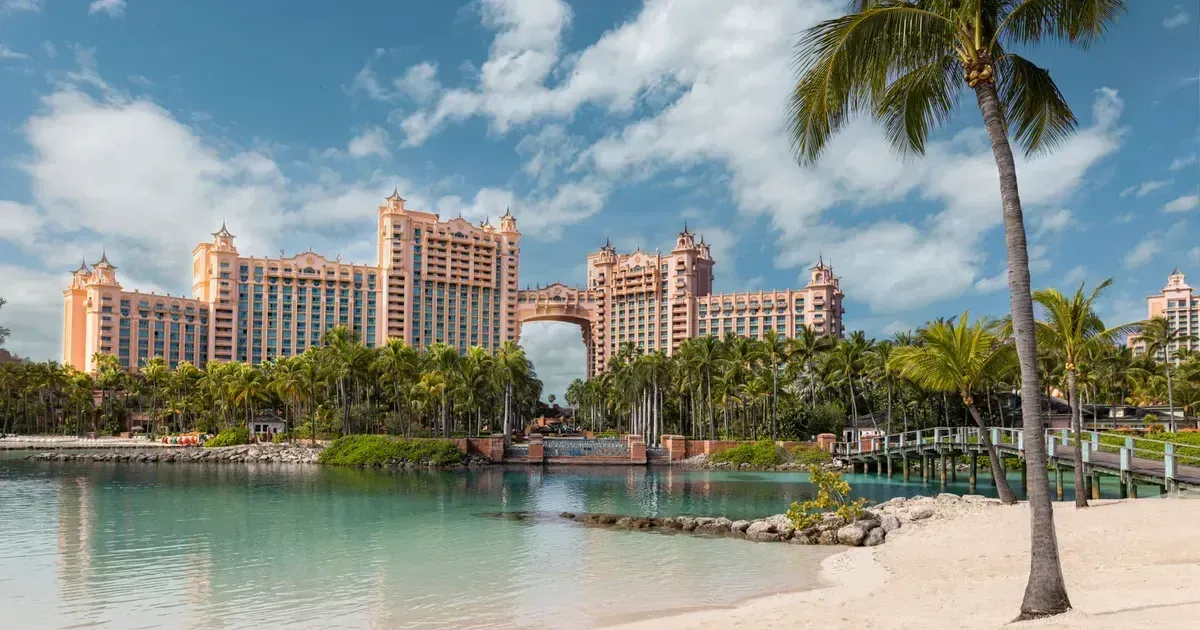
The Bahamas is seeing luxury family travel move beyond beach access and into more expensive, service-heavy stays.
Tourism officials reported that luxury resort bookings had reached a five-year seasonal high. On April 6, 2026, resorts were selling villas, water parks, childcare and conservation programming as one package. The demand is being driven by multigenerational travel from the United States and the United Kingdom, with families staying longer and asking for more private space.
Paradise Island Maintains Dominance in Family Luxury
Atlantis Paradise Island remains a central foundation of the Bahamian tourism economy. Recent upgrades to The Coral, a tower specifically designed for family travelers, include a dedicated teen nightclub and an ice cream parlor. The resort grounds house the 141-acre Aquaventure water park, which uses 20 million gallons of water to operate its high-speed slides and mile-long river ride. Engineers maintain these facilities with a complex filtration system that minimizes saltwater intrusion into the local water table.
Marine education programs at Atlantis have shifted toward interactive conservation. Children can participate in the Sea Squirts program, where they feed baby stingrays and learn about coral reef restoration. The resort maintains one of the largest open-air marine habitats in the world, featuring 14 lagoons and more than 50,000 aquatic animals. These ecological assets serve as primary differentiators for the property. Management recently added a blue-hole snorkeling experience to the excursion list.
"Tourism performance continues to outpace expectations with the family segment driving the highest yields per room," said Chester Cooper, Minister of Tourism.
Baha Mar Redefines Multigenerational Resort Standards
Baha Mar, located on Cable Beach, has established itself as the primary competitor to Paradise Island. The development features three distinct hotels: the Grand Hyatt, SLS, and Rosewood. Each hotel targets a specific demographic, but the shared amenities provide a cohesive experience for large families. The Baha Bay water park, a $200 million investment, offers 24 water slides and a luxury surf simulator. It occupies 15 oceanfront acres and limits daily capacity to ensure a premium experience for hotel guests.
Rosewood Baha Mar provides a more intimate atmosphere with its Rosewood Explorers club. This program focuses on Bahamian culture and environmental stewardship through art and cooking classes. Simultaneously, the Grand Hyatt Baha Mar manages the largest room inventory, offering 1,800 rooms and suites that cater to large groups. The resort also operates The Current, an on-site gallery and studio that hosts local artists-in-residence. Guests can view over 2,500 pieces of Bahamian art throughout the public spaces.
Operationally, Atlantis has diversified its lodging options to capture different income segments within the luxury market. The Cove offers a secluded environment for families with older children, while The Royal is the center of the action. High-net-worth individuals often book the Bridge Suite, which spans the space between the two Royal towers. A single night in this suite costs approximately $25,000 during the peak spring season.
Environmentally, the resort manages an 11-acre sanctuary for local wildlife. The Baha Mar Sanctuary houses flamingos, sea turtles, and nurse sharks, providing educational tours led by resident biologists. These programs aim to inform visitors about the fragility of the Bahamian ecosystem. The Sanctuary also participates in breeding programs for endangered species native to the archipelago. Daily flamingo parades attract hundreds of spectators to the central gardens.
Geographically, the trend toward family luxury is moving beyond Nassau and Paradise Island. Grand Isle Resort and Residences in the Exumas reports a surge in demand for three-bedroom villas with full kitchens. These units allow families to maintain a domestic routine while accessing resort-level services. The property overlooks Emerald Bay, providing a launch point for excursions to the swimming pigs at Big Major Cay. Rental rates for these villas have increased by 15% since 2024.
Logistically, the Out Islands offer a slower pace of life that appeals to families seeking privacy. Smaller boutique properties like Kamalame Cay provide a private island experience with minimal outside contact. The lack of traditional television and internet in some guest rooms encourages a focus on outdoor activities. Guests typically move around the island via golf carts or bicycles. This isolation is a luxury that commands prices exceeding $1,500 per person per night during the holidays.
Family Travel Moves Upmarket
Should the Bahamas continue its current trajectory toward becoming a playground exclusively for the ultra-wealthy, the nation risks a total decoupling from its local economic realities. The sheer scale of projects like Baha Mar and Atlantis creates a gravity well that pulls resources, labor, and capital away from traditional Bahamian industries. While the tourism ministry celebrates record occupancy, the middle-class traveler is being methodically priced out of the market. It creates an unstable monoculture where the entire national economy is tied to the discretionary spending of the American upper class.
History suggests that regional tourism bubbles often burst when over-commercialization replaces local character with a sanitized, corporate version of island life. The water parks and luxury boutiques found in Nassau are increasingly indistinguishable from those in Dubai or Singapore. If the Bahamas loses its cultural specificity, it becomes a commodity susceptible to price competition from cheaper Caribbean rivals. Protecting the exclusivity of the Out Islands is the only way to maintain long-term brand equity. The government must resist the urge to approve every high-density development proposal that reaches the Cabinet.