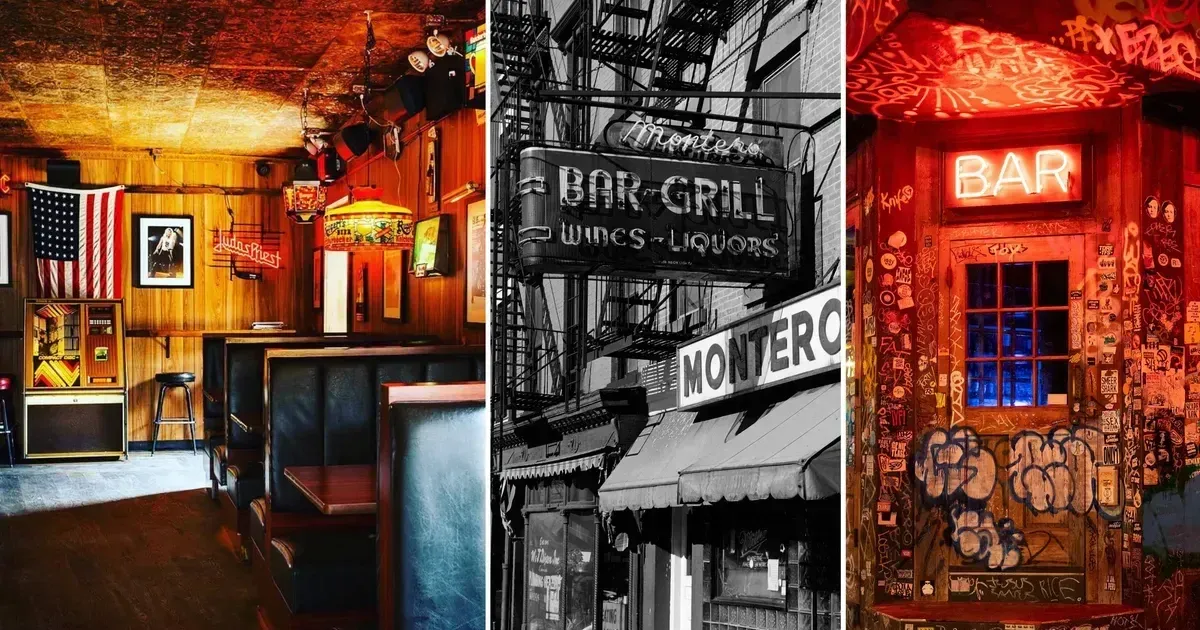
New York City dive bars are being squeezed by the same real estate forces that reshape the neighborhoods around them. Sunny's Bar in Red Hook shows why survival is no longer just a matter of loyal regulars.
The bar remains a visible link to Brooklyn's working waterfront past. Regulars still treat it as an everyday room, not a museum piece. On April 6, 2026, that contrast underscored why commercial rents, property assessments and regulatory costs have turned legacy bars into preservation cases.
Historical Evolution of Manhattan Watering Holes
Manhattan's dive bar history traces back to the mid-19th century when saloons doubled as political clubhouses and community centers. Prohibition forced these operations underground, creating a network of speakeasies that later transitioned back to legal bars. Rudy's Bar & Grill in Midtown remains one of the top examples of this transition. Opened shortly after the repeal of the 18th Amendment, the venue maintains its famous duct-taped booths and neon signage. It is a reminder of an era when Midtown was less defined by corporate glass towers.
Behind the bar, the prices for a basic beer and a shot remain considerably lower than the neighborhood average. The business relies on high volume to offset the escalating costs of operating in a primary transit hub.
Gentrification Pressures on Outer Borough Institutions
Brooklyn and Queens have experienced the most rapid transformation of their traditional drinking landscapes. In neighborhoods like Williamsburg and Long Island City, the dive bar has often been the first casualty of rezoning. Local activists argue that these bars provide essential social cohesion in rapidly changing areas. When a bar closes, the social network of its regulars often scatters. The loss of these spaces coincides with a broader trend of commercial homogenization across the five boroughs. Milano's Bar in Nolita is a counterpoint, surviving decades of intense neighborhood gentrification. It occupies a narrow storefront on Houston Street where patrons often stand shoulder-to-shoulder during peak hours. The bar opened in 1880.
Economic viability for these venues often depends on the owner also holding the deed to the property. Landlords in trendy neighborhoods can demand upward of $20,000 a month for small commercial spaces. This monthly overhead is impossible to meet with five-dollar draft beers alone. Some businesses have added kitchen services or curated craft beer lists to increase their margins. Others rely on a loyal base of neighborhood regulars who visit daily. The demographic shift in Brooklyn has introduced a younger clientele that values the irony and perceived authenticity of the dive bar experience. Marketing experts describe this phenomenon as the commodification of the unrefined. Nightly revenue at these locations fluctuates based on seasonal tourism trends.
Lower East Side venues like the 7B Horseshoe Bar reflect the gritty environment of the 1970s and 1980s. Film crews frequently use this specific location to capture an authentic New York City atmosphere. While newer cocktail lounges attempt to replicate this aesthetic, the wear on the floorboards at 7B comes from decades of foot traffic. Developers have increasingly targeted the blocks surrounding Tompkins Square Park for luxury condominiums. The proximity of these high-value residences puts pressure on old-school bars to modernize or risk noise complaints from new neighbors. Records show that 7B has occupied the same corner since the Great Depression.
Midtown Holdouts Defy Real Estate Logic
The survival of a dive bar in Midtown Manhattan defies standard real estate logic. Space in this district is among the most expensive in the world, yet pockets of the old city persist. Jimmy's Corner, located just off Times Square, provides a sanctuary from the sensory overload of the tourist district. The walls are covered in boxing memorabilia, paying homage to the late owner's career as a trainer. Patrons include Broadway stagehands, office workers, and international tourists looking for a cheap drink. This diversity of clientele is a hallmark of the classic New York City dive bar.
Commercial property taxes in the area have increased every year for the past five years. The city currently taxes these properties based on their potential market value rather than current usage.
Small business owners often feel the brunt of these tax assessments. Without the backing of a large hospitality group, independent operators have little leverage in lease negotiations. The New York State Liquor Authority maintains strict oversight of these venues, requiring annual fees and compliance with complex safety codes. Inspections are frequent and can result in heavy fines for minor infractions. Many owners claim that the regulatory environment is increasingly hostile to small-scale operations. In response, some bars have formed coalitions to lobby for small business protections. The number of active liquor licenses for traditional bars has decreased by 12 percent since 2019.
Why Preservation Is Hard to Price
Nineteenth-century saloons were once the only social safety net for the urban poor, providing heat, news, and community in exchange for a few cents. We must view the current decline of the New York City dive bar not as an organic shift in consumer taste, but as a direct result of hyper-capitalist real estate policy. The city government has allowed developers to dictate the terms of neighborhood evolution, treating communal spaces as mere square footage to be improved for maximum yield. It is a deliberate hollowing-out of urban culture.
When we lose a venue like Sunny's or Rudy's, we lose the physical evidence of the working-class struggle that built this city. The modern fascination with the dive bar aesthetic among the wealthy is a form of cultural taxidermy. They want the look of the grit without the economic reality of the people who created it.