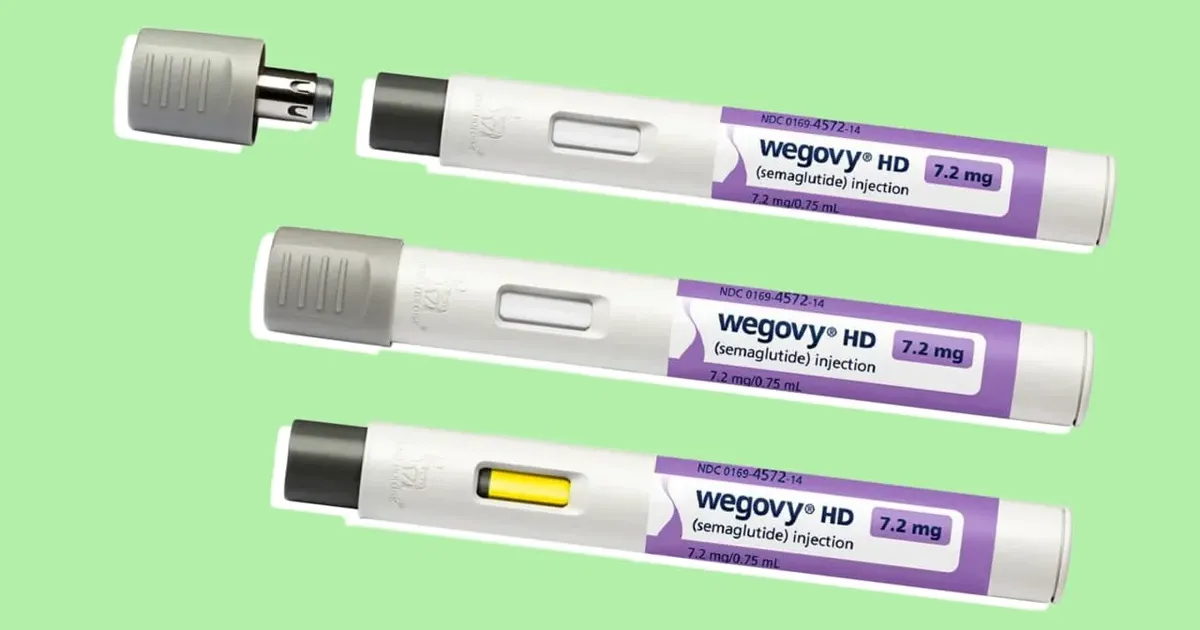
Novo Nordisk secured a critical victory on March 19, 2026, when federal regulators cleared a 7.2 mg dose of Wegovy for the U. S. market. This high-potency injection directly targets the market dominance currently held by Eli Lilly and its blockbuster GLP-1 treatments. Clinical data submitted to the FDA revealed that patients utilizing this increased dosage achieved weight reduction results that were previously unattainable with lower concentrations. Analysts monitoring the sector noted that the approval marks a strategic response to shifting physician preferences and patient plateaus.
Patients participating in the 72-week phase three trial experienced an average weight loss of 20.7%, according to data published by CNBC. Some subsets of the study group reached even higher thresholds, with individuals losing up to 21% of their total body mass. This specific dosage seeks to address patients who have become desensitized to the standard 2.4 mg maintenance dose. Medical professionals have frequently reported that weight loss often stalls after the first year of treatment. Higher concentrations offer a pharmaceutical ladder for those seeking to break through these physiological ceilings.
Wegovy 7.2 mg Dose Approval and Clinical Metrics
Regulators reviewed extensive safety profiles before granting the green light for the 7.2 mg variant. While the 2.4 mg dose remains the standard starting point, the new 7.2 mg option provides a stronger secondary phase for chronic obesity management. Novo Nordisk aims to recover ground lost to competitors whose products showed slightly higher efficacy in recent head-to-head comparisons. In particular, the competition for market share has forced manufacturers to focus on increasingly aggressive dosing schedules.
Market dominance now hinges on manufacturing capacity rather than clinical superiority.
The high-dose Wegovy helped patients with obesity lose an average 20.7% of their weight after 72 weeks in a phase three trial.
According to MarketWatch, the 7.2 mg approval allows Novo Nordisk to compete more effectively with the highest doses of tirzepatide. Doctors must now weigh the benefit of increased weight loss against the potential for more severe gastrointestinal side effects. Nausea and vomiting were reported more frequently in the high-dose cohort than in the placebo group. Even so, the demand for more effective chemical interventions for obesity appears to outweigh concerns regarding patient discomfort.
Eli Lilly Retatrutide Success in Diabetes Trials
Eli Lilly is simultaneously moving forward with its next-generation obesity drug, retatrutide. This experimental treatment recently cleared its first late-stage diabetes trial, signaling a transition toward broader regulatory submission. Retatrutide is a triple-hormone receptor agonist, targeting glucagon-like peptide-1 (GLP-1), glucose-dependent insulinotropic polypeptide (GIP), and glucagon receptors. Experts believe this triple-action mechanism may produce weight loss results exceeding 25% in clinical settings. By contrast, current dual-action drugs primarily focus on the first two receptors.
Success in the diabetes trial provides the necessary safety data to advance retatrutide for a general obesity indication. Eli Lilly executives have described the drug as a future pillar of their metabolic portfolio. It will eventually sit alongside Zepbound and the upcoming oral medication orforglipron. The pharmaceutical giant is betting that a multi-pronged approach will insulate its revenue from generic competition in the coming decade. Separately, the company is investing billions in manufacturing facilities to prevent the supply shortages that plagued its previous launches.
Clinical results alone do not guarantee commercial success.
Supply chain reliability has become the defining metric for the pharmaceutical industry in 2026. Novo Nordisk and Eli Lilly have both struggled to keep pace with global demand for injectable weight-loss therapies. In fact, many pharmacies still report backorders for the most popular dosages. The introduction of the 7.2 mg Wegovy dose requires Novo Nordisk to scale its production of specialized auto-injector pens. Any failure to meet this demand would allow competitors to seize the momentum provided by the recent FDA news.
Pharmaceutical Market Share Strategies for Weight Loss Drugs
Investors reacted positively to the news, pushing the market capitalization of these firms into new territory. The total value of the obesity drug market is projected to surpass $100 billion by the end of the decade. Pricing strategies remain a point of contention between manufacturers and insurance providers. Many private insurers have restricted coverage for weight-loss medications due to the high monthly costs. Yet, the long-term savings associated with reduced rates of diabetes and heart disease may eventually change the actuarial math for these firms.
Medicare coverage for obesity drugs is still a legislative battleground in Washington. Current laws prevent the program from paying for drugs used solely for weight loss, though exceptions exist for cardiovascular benefits. Novo Nordisk has actively lobbied for changes to these regulations to expand its patient base. For instance, recent studies linking Wegovy to improved heart health have provided the firm with the leverage needed to challenge existing payout structures. Eli Lilly is expected to follow a similar path once retatrutide data is finalized.
Pricing for the 7.2 mg dose is expected to mirror the current costs of the 2.4 mg version. Pharmaceutical companies typically use a flat-pricing model for different strengths of the same medication to simplify billing. But, the actual cost to the consumer often depends on manufacturer coupons and pharmacy benefit manager negotiations. To that end, both companies have launched aggressive marketing campaigns to build brand loyalty among patients before new competitors enter the fray.
But the focus remains on the looming arrival of retatrutide. If the drug achieves the 25% weight loss threshold in its final phase three obesity trials, it could reset the standard for the entire category. Novo Nordisk researchers are reportedly working on their own multi-receptor compounds to keep pace with these developments. The technical race to combine more hormones into a single injection has fundamentally changed the direction of metabolic research. High-dose injections represent only one side of a broader strategy to dominate the chronic weight management sector.
The Elite Tribune Perspective
Greed and medical necessity have collided to form a trillion-dollar pharmaceutical gold rush that shows no signs of stabilizing. While the clinical advancements of Wegovy and retatrutide are scientifically sound, the predatory pricing models employed by Novo Nordisk and Eli Lilly are becoming unsustainable for the Western healthcare system. We are watching a calculated arms race where the primary objective is not patient health, but the capture of lifetime subscription revenue from a desperate population.
The pivot to higher doses like the 7.2 mg Wegovy variant is a convenient way to restart the patent clock and justify premium pricing for a slight chemical tweak. If these companies were genuinely concerned with public health, they would focus on price transparency and supply stability over the perpetual introduction of marginal potency increases. The medical community must stop celebrating these incremental approvals as humanitarian breakthroughs and start questioning why a single vial costs more than a monthly mortgage payment in many regions.
Without aggressive government intervention or the entry of low-cost generic competitors, the benefits of these triple-agonist therapies will remain a luxury for the wealthy. The current path rewards corporate escalation while leaving the average patient at the mercy of insurance gatekeepers and stock-market-driven research priorities.