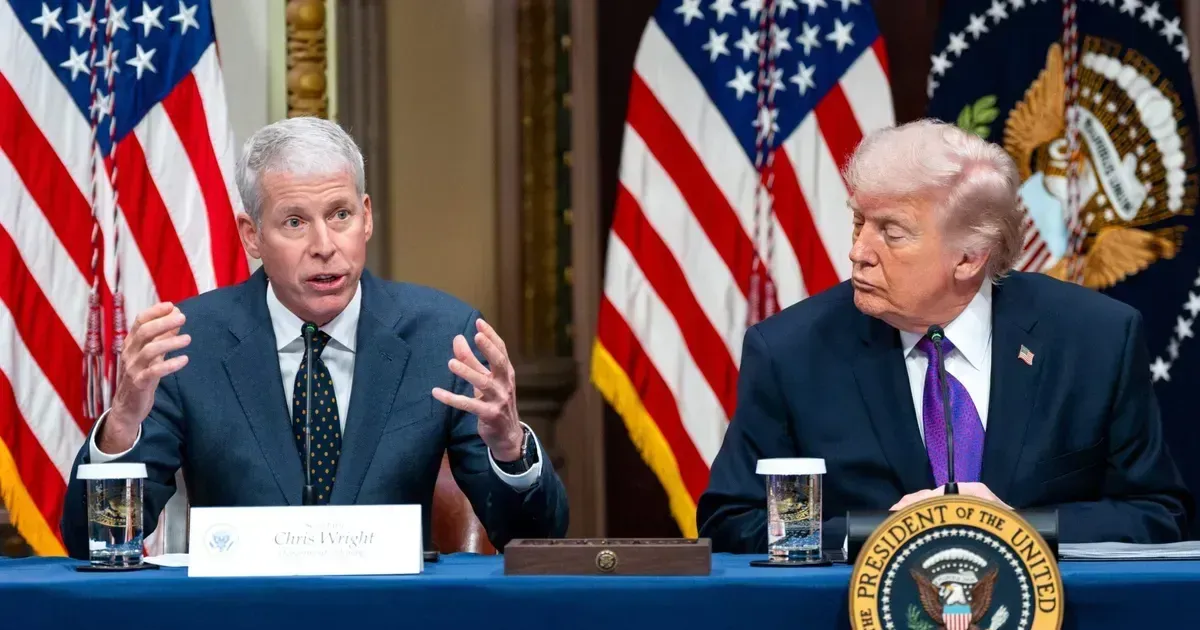
Secretary Chris Wright and the White House faced immediate pushback from the Energy Department on March 18 regarding gasoline price recovery timelines. While the Trump administration continues to project a swift decline in costs for American motorists, internal statistical data paints a far more grueling picture of the next two years. Prices at the pump have reached a level not seen in years, shattering months of relative stability. Meanwhile, the domestic impact of the conflict in Iran is visible on brightly lit neon signs outside tens of thousands of gas stations across the country. Average fuel prices currently sit at $3.84 a gallon, representing an increase of 31% from just one month ago. Drivers in high-cost regions like California and the Northeast are seeing numbers much higher, leading to immediate political friction in Washington.
In fact, the administration has framed these spiking gasoline prices as short-lived pain that will resolve itself by the summer. Wright told NBC over the weekend that he saw a very good chance that gas prices would dip below $3 a gallon in the coming months. This optimistic outlook contradicts the long-term modeling performed by the agency Wright oversees, creating a rare public rift between political messaging and bureaucratic forecasting. Rising inflation pushed stocks lower as investors weighed the possibility of a prolonged energy shock.
Gasoline Price Projections and Economic Reality
According to the Energy Information Administration, gasoline costs in the U.S. for 2026 could average around $3.34 a gallon including taxes. This projection appeared in a report published last week and is a direct rebuttal to the idea of a rapid return to normalcy. Statistical analysts at the agency suggest that the era of sub-$3 fuel may be over for the foreseeable future, despite the promises coming from the White House podium.
Separately, the EIA expects the situation to remain stagnant through next year. Per gallon prices are forecast to average out at $3.18 in 2027, which is a major revision from the data released in February. Before the conflict began, the expected average for 2026 was just $2.91, illustrating how quickly geopolitical instability can dismantle domestic economic planning. Even if hostilities cease tomorrow, the supply chain lacks the elasticity to revert to previous pricing levels overnight.
Americans will feel it for a few more weeks, but we see a very good chance that gas prices will dip below $3 a gallon come summer.
But the semi-independent statistical agency under the Energy Department's purview remains skeptical of such timelines. Its analysts point to the reality of global inventory levels and the logistical hurdles of restarting shuttered trade routes. Many predictions are pricing in a prolonged recovery period that stretches into the next decade, according to market participants in New York and London. Yet, the administration continues to hold the line on its short-term recovery narrative. Officials argue that domestic production increases will offset the loss of Middle Eastern imports faster than the EIA models predict. Industry experts, however, suggest that ramping up extraction and refining capacity takes months, if not years, to manifest at the local gas station pump.
Strait of Hormuz Blockade Impacts Global Supply
For instance, a rapid drawdown in gasoline prices would require an immediate reopening of the Strait of Hormuz. This maritime corridor used to ferry most Persian Gulf fossil fuel exports to the rest of the world before the recent escalation. Current intelligence suggests the strait remains effectively closed to commercial traffic, forcing tankers to take longer, more expensive routes around the Cape of Good Hope. Each additional mile added to a tanker's journey translates directly to higher insurance premiums and fuel surcharges.
Maritime security firms report that the threat level in the region shows no signs of dissipating. Insurers have raised rates for any vessel attempting to handle the Persian Gulf, and several major shipping lines have suspended operations in the area entirely. To that end, the bottleneck at the strait is no longer a temporary hurdle but a systemic blockage in the global energy artery. Logistics firms are already adjusting their quarterly guidance to reflect higher surcharges.
In turn, the global nature of the oil market means that no nation is insulated from the price shocks occurring at this chokepoint. While the U.S. has increased its domestic output, the price of crude is set on the world stage, and that stage is currently defined by scarcity. Even so, some traders in Houston suggest that the market has already priced in the worst-case scenario, though this provides little comfort to consumers paying 31% more than they did in February.
British Fuel Markets Respond to Crude Volatility
British motorists face a similar squeeze as the price of Brent crude remains elevated. For every $10 rise in oil prices, drivers in the UK face paying roughly 7p per litre more for petrol and diesel. London markets have been particularly sensitive to the disruption in the Persian Gulf, as the UK relies heavily on the stability of international shipping lanes for its energy security. By contrast, the Treasury in London has offered little in the way of new subsidies or tax breaks to offset the rising costs. Government ministers have echoed the sentiment of their American counterparts, suggesting the price spike is a temporary phenomenon. Data from the RAC and other motoring groups suggests that the average cost of filling a family car has reached a five-year high, putting immense pressure on household budgets across the country.
Market analysts note that the relationship between crude prices and pump prices is often asymmetrical. When oil prices rise, fuel retailers tend to pass those costs to consumers almost instantly. When oil prices fall, those same retailers are much slower to lower the prices at the British pump, a phenomenon often described as rocket and feather pricing by consumer advocacy groups. Price volatility in Europe is further worsened by the ongoing shift toward renewable energy. Refineries that have been converted or decommissioned cannot be easily brought back online to handle surges in demand for fossil fuels. The structural constraint means that even a resolution to the conflict in Iran might not bring the immediate relief that political leaders are promising to their constituents.
Why the Fuel Forecast Fight Matters
The uncomfortable reading is that fuel forecasts are now political weapons as much as technical documents. If the Energy Department is right, the White House risks asking voters to trust a gasoline story that pump prices may not support. If the administration is right, agency forecasters look detached from the economic pressure households already feel.
Either way, consumers are left paying for a credibility fight they did not start. The administration wants relief to arrive on a campaign-friendly timeline, but energy markets do not care about press schedules. When official optimism collides with refinery limits, shipping risk and a closed Hormuz corridor, the pump becomes the fact-checker. Households will believe the price on the sign long before they believe another promise from Washington.