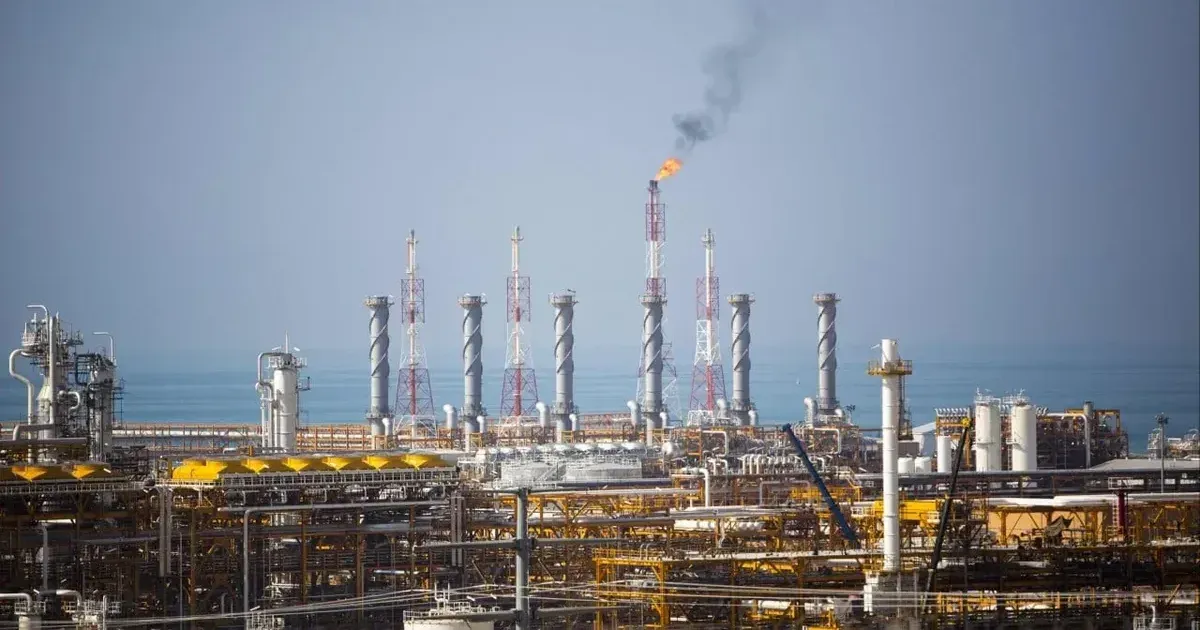
Israel and the United States struck Iran’s South Pars gas field, turning the war toward energy infrastructure and global fuel risk. The attack was the first direct hit on Iranian upstream energy assets since the conflict began in late February. Brent crude jumped more than 5 percent as traders priced in a wider infrastructure campaign. Tehran answered by listing Gulf energy facilities it said could become retaliation targets. The warning pushed markets to consider not only shipping disruption in Hormuz but also direct attacks on production assets.
Meanwhile, the Persian Gulf has become a theatre for direct attacks on industrial assets rather than just shipping vessels. South Pars is recognized as the largest natural gas reserve in the world and is a critical component of the Iranian domestic electricity grid. The facility is geographically shared with Qatar, which manages its portion of the field to produce roughly one-fifth of the world's total supply of liquefied natural gas. Qatari officials condemned the military action as a dangerous and irresponsible step toward regional collapse.
South Pars Strike and Regional Instability
Tehran reacted to the strike with a declaration of military intent that extends beyond its own borders. Iran’s military joint command confirmed it would escalate the war in new ways following the damage to its gas production. The joint command issued specific threats against petrochemical complexes and refineries located in neighboring countries. Saudi Arabia and the United Arab Emirates are now on high alert as military analysts prepare for potential missile or drone salvos.
Iran’s military joint command said it would escalate the war "in new ways."
In turn, Qatar faces significant economic pressure due to its shared ownership of the targeted gas field. The Qatari foreign ministry released a statement highlighting the risk to global LNG supplies if the fire or damage spreads to the North Field side of the reservoir. Qatar maintains a delicate diplomatic position, attempting to mediate between Western powers and Iranian leadership. Total gas production from the region is currently operating at reduced capacity due to safety concerns. For one, the technical damage to the Iranian gas processing units could take months to repair under current sanctions. Engineering crews at South Pars are struggling to contain leaks while military activity persists in the surrounding waters. Iran uses this gas to fuel more than 70% of its power plants. Blackouts are already being reported in major urban centers like Tehran and Isfahan.
Global Energy Markets React to Infrastructure Damage
The energy market is struggling with a massive pricing delta between regional benchmarks. While WTI crude in the United States is trading around $96 per barrel, Asian benchmarks are seeing record highs. Dubai crude hit an all-time high above $150 a barrel last week. Oman crude settled at a similar level of $152 on Monday morning. Asian buyers are paying a massive premium for any available cargo that does not originate in the Persian Gulf.
By contrast, the American market remains somewhat insulated by domestic production and logistical distance. The Trump administration has focused on maintaining internal supply stability through policy shifts and reserve management. But the global nature of oil pricing means that even US consumers are seeing the highest gas prices since 2023. Retail fuel prices in the United States have climbed nearly a dollar since the first day of the war. Even so, the International Energy Agency attempted to cool the rally by announcing the largest emergency reserve release in its history. The coordinated effort will bring 400 million barrels of crude to the market over several months. The United States specifically committed to releasing 172 million barrels from the Strategic Petroleum Reserve. This volume will be distributed over a 120-day period to offset the loss of Middle Eastern supply.
Tehran Threatens Saudi and Emirati Energy Assets
Separately, the Iranian military command named the Samref refinery and the Jubail petrochemical complex in Saudi Arabia as primary targets for retaliation. These facilities are owned by Saudi Aramco and represent essential nodes in the global chemical supply chain. The Al Hosn gas field in the United Arab Emirates was also included on the Iranian target list. Emirati officials have reportedly increased air defense patrols around their critical energy infrastructure.
For instance, the Samref refinery on the Red Sea coast handles roughly 400,000 barrels of crude per day. A strike on this facility would further deplete the world's spare refining capacity. Saudi Aramco has not released a formal comment on the specific threats but has confirmed that security protocols are at their highest level. The Jubail complex is one of the largest industrial cities in the world. To that end, tankers are now avoiding the region entirely to seek more expensive alternatives from West Africa and the North Sea. Shipping insurance rates have reached levels where many operators find it impossible to secure coverage for Gulf voyages. The lack of available transport is creating a physical bottleneck that transcends simple market speculation. Global inventory levels are dropping at the fastest rate in a decade.
Emergency Reserve Strategy and Market Volatility
Yet, the release of emergency reserves has not yet stopped the upward price movement. Market participants argue that 400 million barrels is insufficient to cover a long-term closure of the Strait of Hormuz. The daily flow through the strait is nearly 21 million barrels, meaning the IEA release covers fewer than 20 days of lost transit. Traders are focusing on the depletion of these reserves rather than their immediate market impact. Still, the Trump administration is seeking domestic legislative relief to lower transport costs. The administration announced a temporary waiver on the Jones Act on Wednesday. This law usually requires goods shipped between US ports to be carried on ships built, owned, and operated by United States citizens. The waiver is intended to allow foreign tankers to move oil between the Gulf Coast and the East Coast more efficiently.
But the Al Hosn gas field in the UAE is still a point of high tension for European buyers. The field provides a major portion of the gas used for desalination and power generation in Abu Dhabi. If Iran follows through on its threat to strike this asset, the humanitarian impact on the local population would be severe. Water security in the Gulf is tied directly to the stability of these energy facilities. And the Jubail petrochemical complex is a critical source of plastics and fertilizers for the global agricultural sector. Any disruption here would likely lead to secondary price spikes in food commodities. Iranian military officials have stated that no energy facility in the region is safe until their own infrastructure is secure. The conflict has moved into a phase of mutual economic destruction.
Persian Gulf stability has reached its lowest point since the late 1980s. Intelligence reports indicate that Iran has moved mobile missile launchers to its southern coast. Israel has maintained a presence in the region to monitor for further escalations. Military satellites are tracking activity around the remaining Iranian oil terminals at Kharg Island. Global buyers are now scrambling to secure long-term contracts for American LNG and Canadian heavy crude. The shift in trade routes will likely remain permanent even if the conflict ends in the near term. Infrastructure damage of this scale cannot be quickly reversed. The world energy map is being redrawn through kinetic action.
The Energy War Moves From Chokepoints to Fields
Energy markets are currently witnessing the death of the strategic reserve as a credible deterrent against geopolitical aggression. Washington and its allies are attempting to fight a physical supply war with paper releases from the Strategic Petroleum Reserve, a strategy that fails to account for the permanence of infrastructure destruction. Releasing 172 million barrels is a cosmetic gesture when the Strait of Hormuz is effectively a dead zone for commercial shipping. The strike on South Pars was a tactical success that has created a strategic nightmare by legitimizing Iranian attacks on Saudi and Emirati soil.
If Saudi Aramco assets are hit, the $110 price point will look like a bargain compared to the parabolic surge that will follow. Western leaders are operating on the delusional hope that Iran will accept the destruction of its primary revenue source without incinerating the neighbors who enabled the strike. The reality is that the era of cheap, accessible Middle Eastern energy ended the moment the first missile hit the gas field. We are no longer discussing a temporary market fluctuation but a terminal shift in the global energy order. The Jones Act waiver and IEA announcements are mere distractions from the fact that the Persian Gulf is now a scorched-earth battleground.