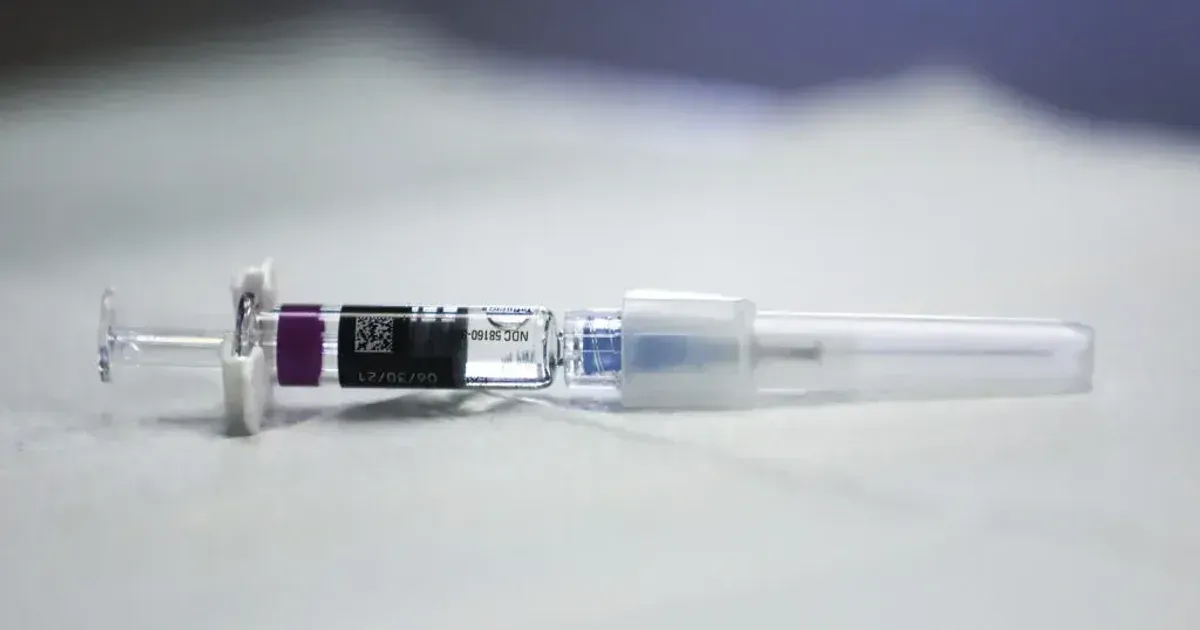
US influenza vaccines for the 2026-27 season moved forward with three updated components after the Food and Drug Administration's vaccine advisory committee voted unanimously for separate egg-based and non-egg formulations on March 12, 2026.
The decision was not a vote on whether seasonal vaccination works, nor was it an attempt to predict one exact virus months in advance. Advisers reviewed global and domestic surveillance, genetic and antigenic data, human antibody responses, preliminary effectiveness information and the availability of candidate vaccine viruses and manufacturing reagents.
Both Recommendations Passed 7-0
For egg-based vaccines, the committee recommended an A/Missouri/11/2025 (H1N1)pdm09-like virus, an A/Darwin/1454/2025 (H3N2)-like virus and a B/Tokyo/EIS13-175/2025 (B/Victoria lineage)-like virus.
For vaccines made with cell culture, recombinant protein or nucleic-acid platforms, the committee recommended the same A/Missouri H1N1 component, but an A/Darwin/1415/2025 (H3N2)-like virus and a B/Pennsylvania/14/2025 (B/Victoria lineage) virus. Each recommendation received seven yes votes, no opposing votes and no abstentions.
A/Victoria, A/Thailand and B/Austria names used in earlier seasonal formulas are not the 2026-27 choices. FDA's 2026 briefing says the H1N1, H3N2 and B components all required updates for the coming Northern Hemisphere season.
The Production Platform Changes the Reference Virus
Influenza viruses can adapt when propagated in eggs. FDA's briefing explains that the different recommendations reflect adaptation during manufacturing in different production systems. That is why the egg and non-egg formulations do not use identical H3N2 and B/Victoria reference viruses.
For H3N2, a subclade identified as K had become predominant in most regions and was poorly recognized by antibodies generated against the 2025-26 vaccine strains. Antisera raised against the new Darwin candidate viruses showed better recognition of recently circulating K viruses.
For B/Victoria, emerging C.3 and C.3.1 subclades were poorly recognized by antibodies against the current vaccine strains. The cell-propagated B/Pennsylvania candidate recognized recently circulating viruses well in the cited laboratory testing. The egg-propagated B/Tokyo candidate acquired egg-adaptive changes, illustrating why regulators evaluate manufacturing context rather than simply copy one virus across platforms.
These laboratory and surveillance findings support the strain update. They do not provide a guaranteed effectiveness percentage for a season that has not yet occurred. Protection will depend partly on which viruses circulate, how they change and how well vaccine-induced immunity matches them.
Trivalent Does Not Mean a New Reduction
The 2026-27 formula remains trivalent: two influenza A components, H1N1 and H3N2, plus one influenza B/Victoria component. The shift away from quadrivalent US vaccines was made earlier. FDA recommended removing B/Yamagata for the 2024-25 season after no confirmed detection of circulating B/Yamagata lineage viruses worldwide after March 2020.
Removing that fourth component did not begin at the March 2026 meeting, and the committee did not newly conclude that the lineage had been extinguished by pandemic restrictions. The verified record supports a narrower statement: confirmed global surveillance had not detected circulating B/Yamagata after March 2020, and regulators judged that its continued inclusion was no longer warranted.
The 2026 meeting also was not a bird-flu vaccine decision. Seasonal H1N1, H3N2 and B/Victoria composition should not be presented as protection against H5N1, and the official voting questions did not add an H5 component. Pandemic preparedness and zoonotic candidate vaccine viruses are tracked through separate work.
Strain Selection Manages Uncertainty; It Does Not Eliminate It
The FDA briefing says the World Health Organization's February recommendation drew on a surveillance network of 165 institutions in 135 countries, including US partners. The committee then considered the strains for US-licensed vaccines and FDA's regulatory pathway for manufacturers.
Advisers also discussed the possibility of including two H3N2 strains in a future vaccine to address continuing antigenic drift. The meeting minutes record regulatory challenges and a need for broader coverage, but no such quadrivalent H3N2 formulation was approved at this meeting.
Sensational metaphors about betting or combat replace a documented scientific process with spectacle. Seasonal selection is an explicit decision under uncertainty, constrained by viral evolution, manufacturing and delivery time. That uncertainty is exactly why the votes, briefing documents, strain names and later effectiveness results must remain public. Trust is not built by pretending the forecast cannot miss; it is built by showing the data behind the choice and measuring honestly what the finished vaccine does.