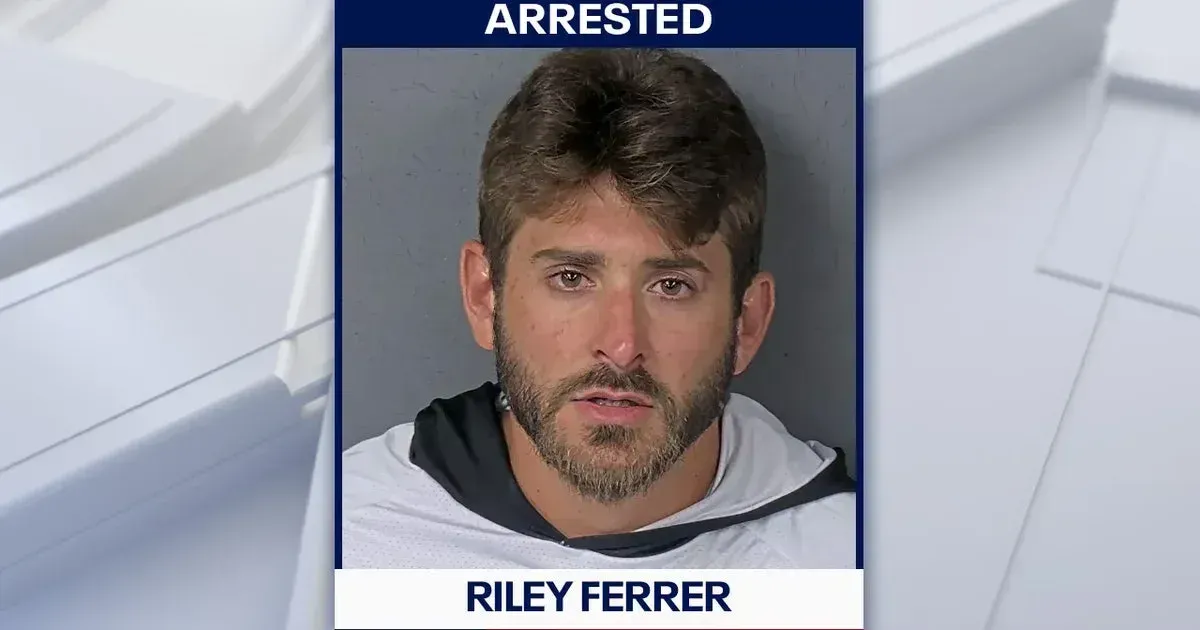
A Florida man is accused of trying to steal a medical helicopter after a crash on Interstate 75 in Hernando County, turning an emergency response into a second law-enforcement problem. Authorities said the aircraft had landed to help transport injured people when the attempted theft occurred. The allegation is striking because a helicopter landing zone is one of the most controlled spaces at a crash scene. By June 20, 2026, investigators were treating the attempted theft as both a criminal case and an emergency-scene security warning.
The incident was reported by FOX 13 Tampa Bay, The Independent and the New York Post. Local reporting identified the suspect as Riley Ferrer and said the crash happened before the confrontation at the helicopter landing area. On June 19, 2026, the reports described a sequence in which a traffic crash, emergency medical response and criminal allegations unfolded in the same narrow window.
The Florida helicopter case is unusual because the alleged attempt happened during an active medical response. First responders were already managing crash victims, traffic risk and aircraft safety when they also had to stop a person from interfering with the helicopter. That kind of split-second shift can force crews to delay transport decisions while law enforcement secures the scene. The public may remember the case for its unusual allegation, but emergency workers will read it as a reminder that landing-zone discipline is not optional.
Crash Scene Became a Security Scene
FOX 13 reported that Ferrer was involved in a crash on I-75 before the helicopter arrived to transport patients. The highway setting made the response more complicated because troopers, deputies, medical crews and flight personnel had to work around traffic and limited space. Interstate scenes are noisy, exposed and difficult to lock down, especially when vehicles, witnesses and emergency apparatus are spread across lanes and shoulders.
According to the reports, Ferrer allegedly moved toward or into the medical helicopter while emergency personnel were preparing patients. That action would have shifted the priority from medical transport alone to securing the aircraft and preventing further harm.
A rescue helicopter is not just a vehicle at a crash scene; it is part of the emergency medical system.
The Independent reported that the suspect was accused of trying to get away in the aircraft. Authorities stopped the attempt, and the allegations later included resisting-related counts and a burglary accusation tied to the occupied conveyance.
Those charges reflect the seriousness of interfering with an emergency aircraft. Even a brief disruption can delay treatment, create rotor-zone danger and force crews to reset a response that depends on timing.
Medical Transport Depends on Control
Air ambulances operate under strict safety routines. The approach path, rotor area, patient loading path and crew communication all depend on bystanders and crash participants staying outside the controlled zone. Landing zones must be controlled, crews need clear access to patients and unauthorized movement near the aircraft can create risk for everyone at the scene.
Hernando County responders were dealing with injured people, a damaged vehicle and a suspect whose behavior allegedly escalated after the crash. That combination can stretch a scene command quickly, especially on an interstate at night.
The case also shows why crash response is not only medical. A patient can need rapid transport at the same time officers are trying to determine who caused the crash, who may be impaired and who poses an immediate risk. Law enforcement may need to secure drivers, passengers, witnesses and bystanders while paramedics focus on injuries and flight crews prepare transport.
Reports said Ferrer later resisted deputies and had to be handled at a hospital and detention facility. Those details will matter in court, but the core public issue is how quickly responders contained the helicopter threat without losing control of patient care.
The Public Risk Was Broader Than Theft
The alleged act was not simply a bizarre attempted vehicle theft. A medical helicopter at a crash scene carries patients, crew, fuel and spinning aircraft systems, so unauthorized access can create immediate physical danger. It can also force a flight crew to pause a mission, reassess aircraft security and coordinate with officers before loading or departing.
The next phase of the case should clarify the crash sequence, the condition of the injured people and the exact conduct that led to the charges. It should also show whether any response protocols need adjustment for securing aircraft at chaotic scenes. The Florida case will likely draw attention because of its strange facts, but the operational lesson is straightforward. Emergency scenes depend on controlled space, and when that control breaks down, responders must protect the rescue itself before it can save anyone. The practical takeaway is simple but serious for every agency handling highway rescues. That is why the case now sits in both the criminal docket and the larger conversation about how highway rescue scenes are secured.